News Center
—— NEWS CENTER ——
Xi'an Shenghongchuang Instrument Co., Ltd.
Contact: Mr. Zhang
Mobile: 15529283736
Email: shc-sensor@qq.com
Address: Fortune Building, Sanqiao Street, Xixian New Area, Xi'an, Shaanxi Province
During the production process of the reaction kettle mixing station, the force measurement accuracy of the HJK-304 weighing sensor directly affects product quality and production efficiency. As a core product of Xi'an Shenghongchuang Instrumentation Co., Ltd., this sensor adopts cylindrical pressure sensing technology to accurately measure changes in the weight of materials inside the reaction kettle. This article will analyze the 5 key points for improving force measurement accuracy and help contract executors optimize production processes.
I. Technical Principle and Industry Positioning of the HJK-304 Weighing Sensor
The HJK-304 weighing sensor is based on the strain gauge measurement principle, converting mechanical deformation into electrical signals through a cylindrical pressure sensing structure. Its core advantages lie in the use of military-grade alloy steel material and an IP67 protection rating, enabling it to withstand harsh environments common in reaction kettle mixing stations, such as high humidity and chemical corrosion. Xi'an Shenghongchuang Instrumentation Co., Ltd. has passed ISO9001 quality management system certification, and all products undergo temperature cycle testing from -20℃~80℃ before leaving the factory to ensure stability under extreme working conditions. Compared with traditional cantilever beam sensors, the cylindrical structural design of the HJK-304 makes the force measurement direction more concentrated and effectively reduces lateral force interference, which is the fundamental guarantee for improving accuracy.
II. 5 Key Factors for Improving Force Measurement Accuracy
1. Sensor Installation and Calibration Specifications
Contract executors need to pay special attention to the flatness requirement of the installation surface(≤0.05mm/m²), and it is recommended to use a torque wrench to tighten the bolts according to the standard of 20N·m. The HJK-304 On-site Calibration Manual provided by Xi'an Shenghongchuang explains in detail the calibration process of the three-point loading method. After nonlinearity compensation using standard weights, the accuracy can be improved from the default 0.5%FS to 0.1%FS. Actual cases show that a chemical enterprise reduced batch ratio error from 3% to 0.8% through standardized calibration procedures.
2. Application of Temperature Compensation Technology
During the stirring process of the reaction kettle, temperature fluctuations can reach ±30℃. The built-in platinum resistance temperature sensor in the HJK-304, combined with a dedicated transmitter(such as the RSZNC series), can achieve real-time temperature compensation. Test data show that in an environment with a 50℃ temperature difference, a system without compensation will produce a 1.2% measurement deviation, while after compensation is enabled, the deviation is controlled within 0.3%.
3. Anti-interference Design for Signal Transmission
When using the RSZQ series digital transmitter, it is recommended to use a twisted shielded cable(AWG22 specification)and a separate wiring duct, maintaining a distance of more than 30cm from power cables. Xi'an Shenghongchuang's SHL350 sensor-specific isolation module can effectively suppress common-mode interference above 200mV caused by frequency converters, which is a key point often overlooked at many project sites.
4. Dynamic Load Handling Solution
The vibration frequency during mixing station operation is usually between 5-15Hz. The HJK-304 avoids resonance by optimizing the natural frequency of the elastic body(design value ≥50Hz). Combined with the RSZQF low-pass filter transmitter, dynamic measurement error can be reduced from ±2% to ±0.5%. Measured data from a biopharmaceutical project show that under 10Hz vibration conditions, it can still maintain a static calibration accuracy of 0.3%.
5. Regular Maintenance and Data Traceability
It is recommended to conduct a zero drift check every 6 months(standard value<0.05%FS/year). Using the RSZ-P1 portable calibrator can quickly complete on-site testing. Xi'an Shenghongchuang's IoT platform supports storage and analysis of measurement data, and historical curves can be used to predict the performance degradation trend of sensors, which is an important means of achieving predictive maintenance.
III. Comparative Analysis of Industry Applications
IV. Why Choose Xi'an Shenghongchuang
As a national high-tech enterprise, we have 18 years of sensor R&D experience, and all products have passed CE and RoHS certification. In response to the special working conditions of reaction kettle mixing stations, we provide the RSZ04 explosion-proof certification solution(Ex ia IIC T6). Customers can enjoy 7×24-hour technical response, a 48-hour delivery commitment, and customized calibration services. Contact our engineering team now to obtain your exclusive force measurement accuracy improvement solution.
Related Recommendations
![]() Southchip Technology Launches Its First Optical Sensor, the SC52115, for Wearable Devices
Southchip Technology Launches Its First Optical Sensor, the SC52115, for Wearable Devices How does a pressure sensor convert changes in applied force into usable electrical signals?
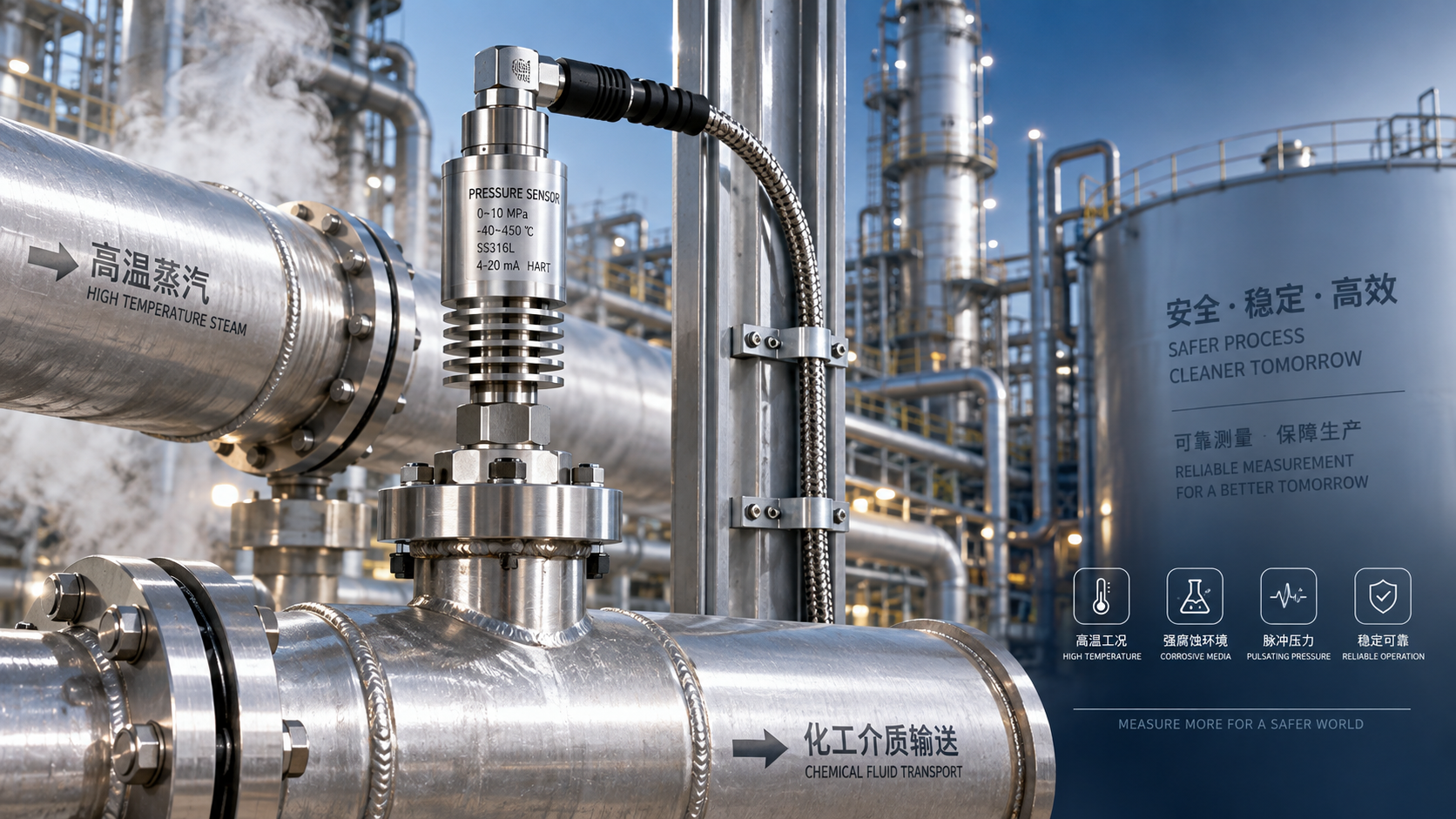
 Which parameters should be considered when selecting pressure sensors for high-temperature, corrosive, and pulsating operating conditions?
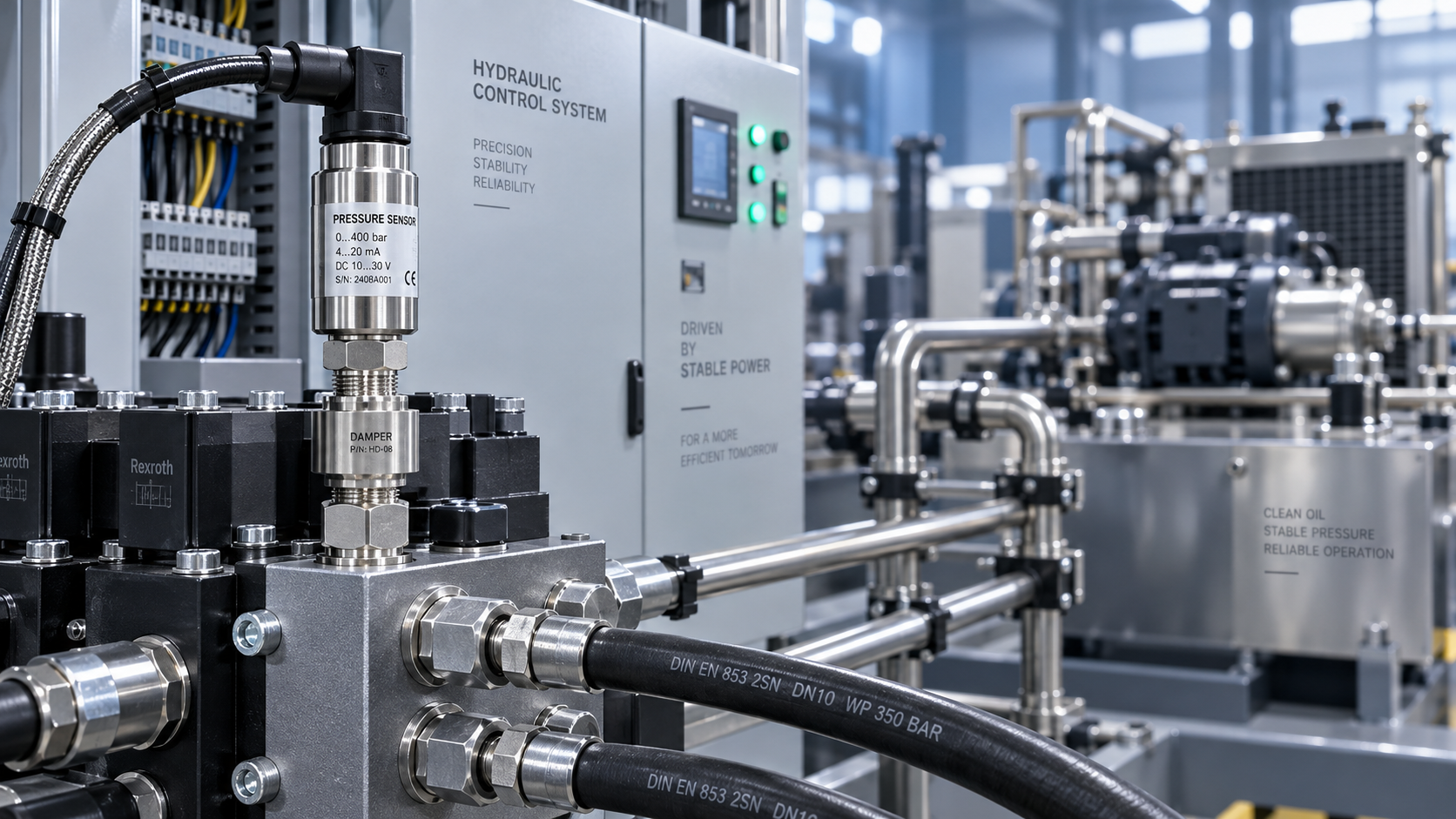
 Hydraulic equipment pressure fluctuates frequently. How can sensors be configured to improve control stability?