News Center
—— NEWS CENTER ——
Xi'an Shenghongchuang Instrument Co., Ltd.
Contact: Mr. Zhang
Mobile: 15529283736
Email: shc-sensor@qq.com
Address: Fortune Building, Sanqiao Street, Xixian New Area, Xi'an, Shaanxi Province
When selecting the DH709 rigid rod insertion level transmitter, how can you avoid common pitfalls?
As a core measuring instrument in the field of flow control equipment, the selection of a rigid rod insertion level transmitter directly affects the reliability and safety of industrial processes. Based on more than ten years of industry experience at Xi'an Shenghongchuang Instrumentation Co., Ltd., this article provides an in-depth analysis of the 5 technical parameters most easily overlooked in commercial evaluation for mainstream stainless steel level sensor series such as DH709, LDUCC, and PLUS, helping procurement personnel avoid selection risks.
Parameter 1: Measurement accuracy and linearity——the choice from ±0.5%FS to ±0.1%FS
When comparing the CP210 and BOS-H208-K models, it can be found that both have a nominal accuracy of ±0.2%FS, but their linearity performance under actual operating conditions differs significantly. It is recommended to use the three-point verification method: test the output signal deviation respectively at the 20%、50%、80% points of the measuring range, and pay special attention to the impact of medium density changes on WIDE series wide-range models. According to the GB/T 17614-2018 standard, the hysteresis of a high-quality transmitter should be less than 50% of the basic error limit.
Parameter 2: Process connection and sealing rating——an underestimated safety barrier
Although PT311L3 and DB502 both use G1/2" threaded connections, the former is configured with a double O-ring sealing structure and can still maintain an IP68 protection rating under vibrating operating conditions. For highly corrosive media, it is recommended to choose the PLUS series transmitter with a Hastelloy diaphragm. Its flange connection uses a metal/graphite wound gasket, and its pressure resistance can reach above 16MPa. Special attention is required: under medium crystallization conditions, avoid selecting a flat flange structure to prevent sealing surface failure.
Parameter 3: Signal output and communication protocol——the hidden cost of intelligence
Mainstream models such as LDUCC support the 4-20mA+HART protocol, while the new CP210 model is already equipped with an RS485-Modbus interface. During evaluation, it is necessary to consider: on-site DCS system compatibility, attenuation compensation caused by signal transmission distance, and communication delay when networking multiple devices. Actual test data shows that when the transmission distance exceeds 800 meters, the DH709 with digital compensation improves signal stability by 37% compared with the analog-output BOS-H208-K.
Parameter 4: Temperature adaptability——the challenge from -40℃ to 200℃
In high-temperature steam applications, the ordinary silicone oil-filled WIDE series may experience medium vaporization. For such operating conditions, it is recommended to select the OM133T model with a fluorinated oil filling system, whose temperature coefficient is as low as 0.005%/K. In low-temperature environments, attention should also be paid to the special low-temperature cable material of PT311L3 to avoid embrittlement and fracture. According to experience in the chemical industry, temperature cycle testing should be conducted no fewer than 50 times (-40℃~150℃ alternating) in order to verify sensor reliability.
Parameter 5: Dynamic response and damping adjustment——a solution for transient processes
For dynamic scenarios such as stirred tanks and rapid filling systems, the adjustable damping function (0-32 seconds) equipped on the YKKT-1C can effectively suppress output fluctuations. Test data shows that when medium viscosity increases from 1cP to 1000cP, the response time deviation of the DB502 with an adaptive algorithm is less than 5%, while the deviation of traditional models can reach above 20%. It is recommended to conduct a step response test before procurement to verify the stability of the transmitter under sudden-change operating conditions.
Professional selection recommendations and technical service support
As a high-tech enterprise, Xi'an Shenghongchuang Instrumentation Co., Ltd. can provide commercial evaluation personnel with value-added services such as ① free sample testing, ② operating condition simulation reports, and ③ full life-cycle cost analysis. For different models of rigid rod insertion level transmitters such as DH709 and CP210, we have a complete comparative testing database to help you accurately match project requirements.
Contact our technical consultants now to obtain the stainless steel level sensor selection white paper and customized solutions. Call 029-xxxxxxx or visit the official website for online consultation, and let our professional team support your procurement decisions.
Related Recommendations
![]() Southchip Technology Launches Its First Optical Sensor, the SC52115, for Wearable Devices
Southchip Technology Launches Its First Optical Sensor, the SC52115, for Wearable Devices How does a pressure sensor convert changes in applied force into usable electrical signals?
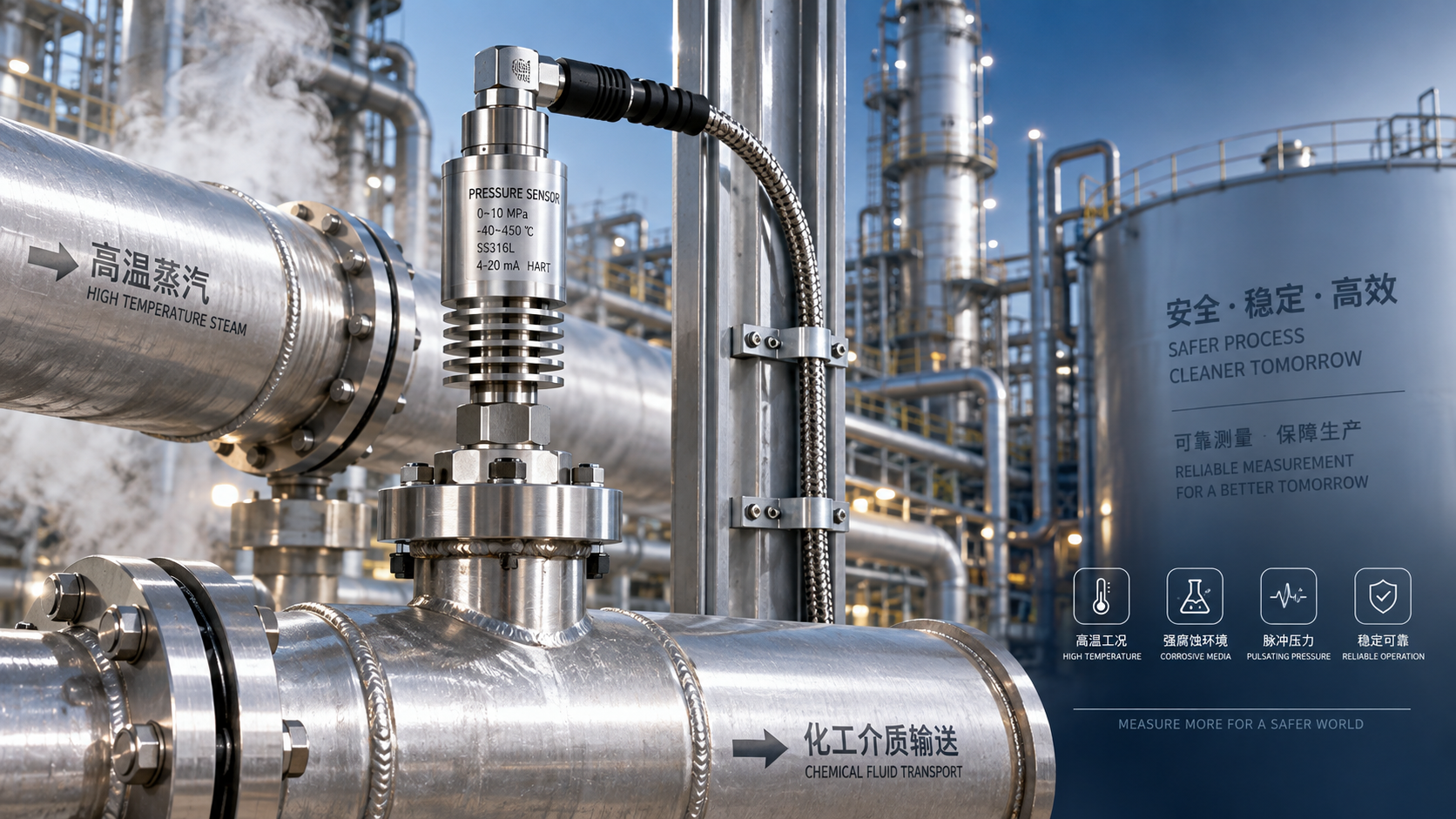
 Which parameters should be considered when selecting pressure sensors for high-temperature, corrosive, and pulsating operating conditions?
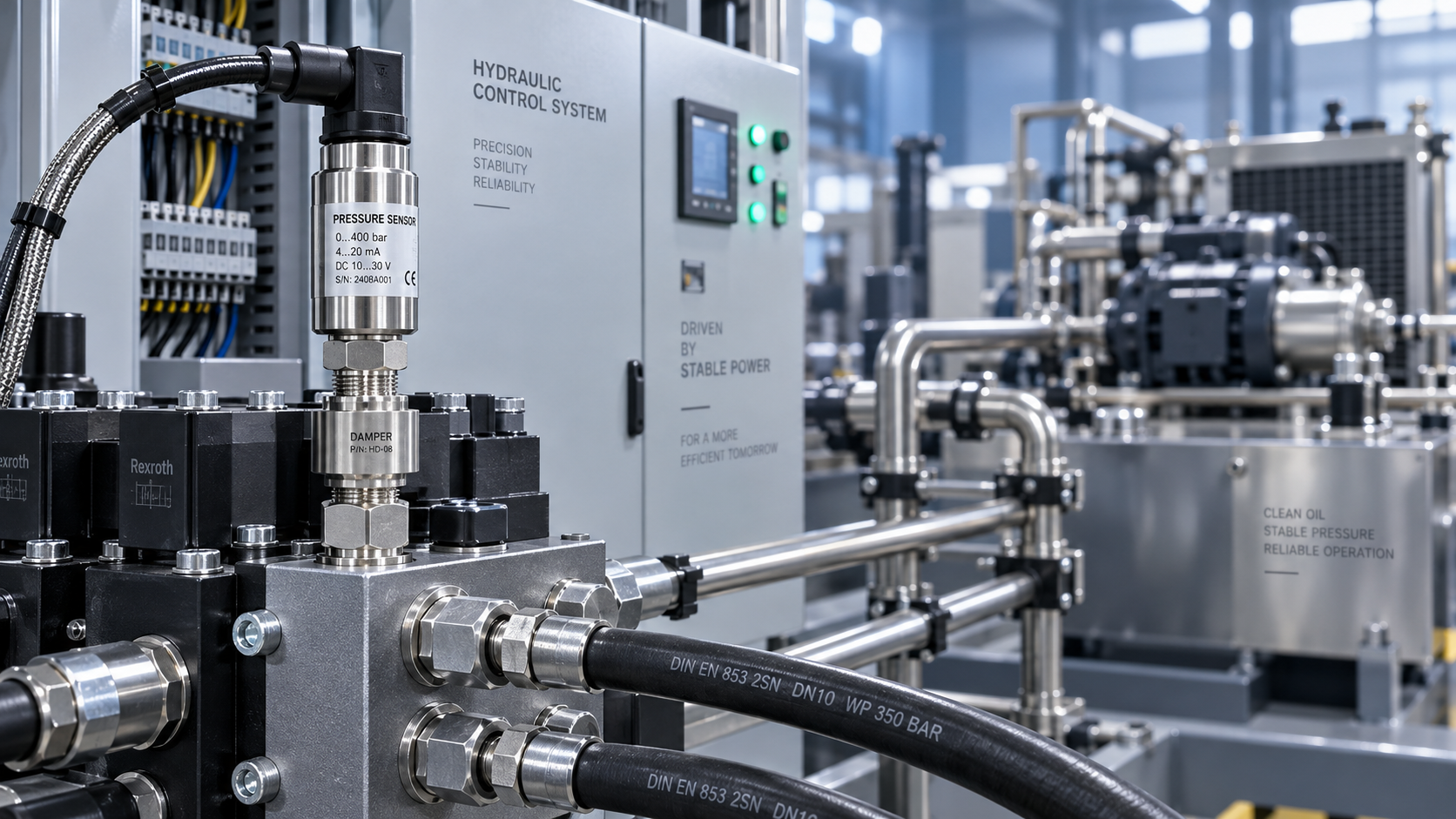
 Hydraulic equipment pressure fluctuates frequently. How can sensors be configured to improve control stability?