News Center
—— NEWS CENTER ——
Xi'an Shenghongchuang Instrument Co., Ltd.
Contact: Mr. Zhang
Mobile: 15529283736
Email: shc-sensor@qq.com
Address: Fortune Building, Sanqiao Street, Xixian New Area, Xi'an, Shaanxi Province
Technical Principles and Current Industry Applications of Diffused Silicon Sensor Technology
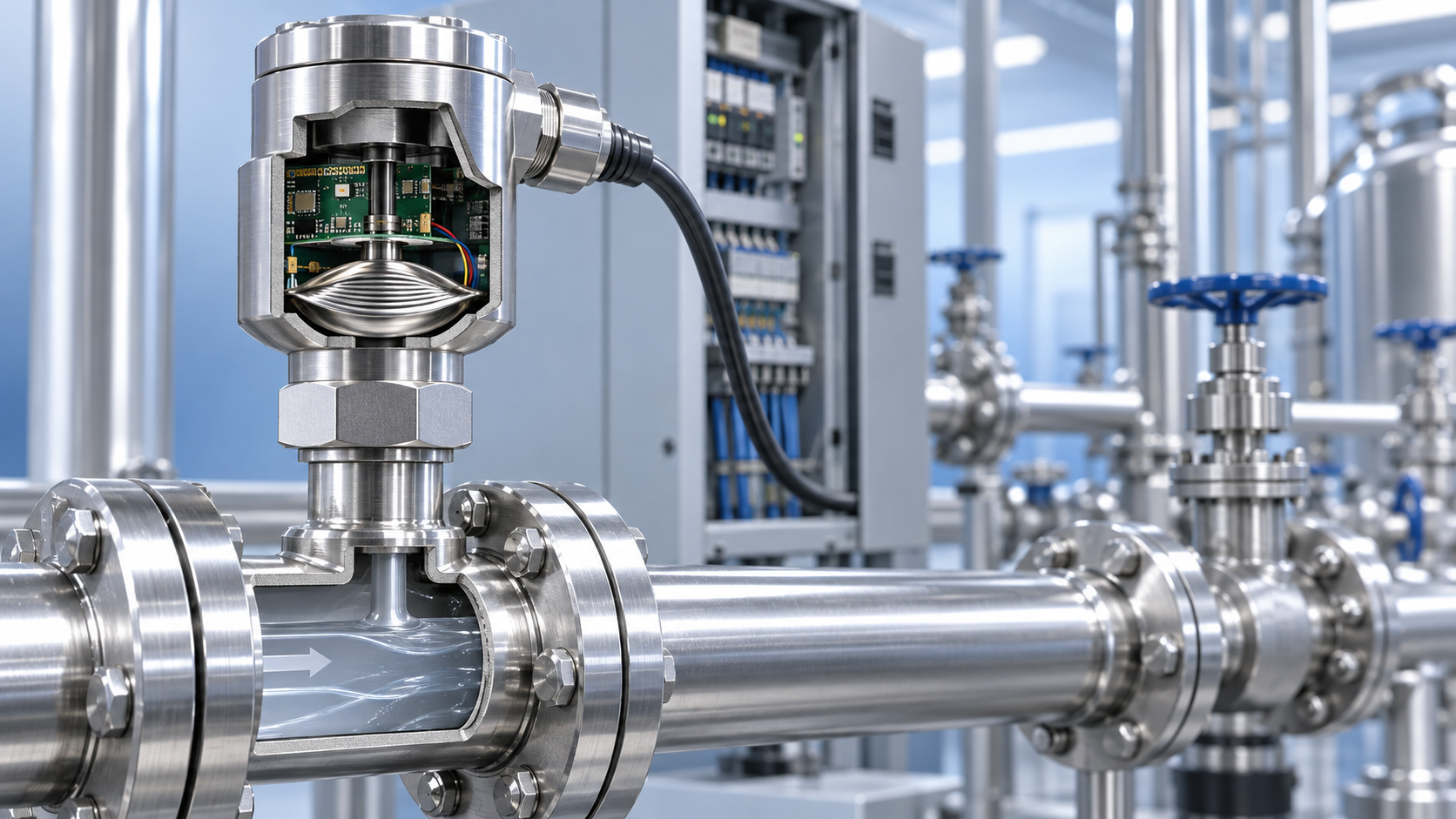
The DG-DG1210 pressure transmitter demonstrates outstanding performance in the field of industrial fluid control благодаря its core diffused silicon sensor technology. This article provides an in-depth analysis of this product's accuracy, stability, and environmental adaptability, helping technical evaluators and business decision-makers gain a comprehensive understanding of the advantages of diffused silicon sensors in practical applications and providing professional reference for equipment selection. Diffused silicon pressure sensors achieve pressure measurement through the semiconductor piezoresistive effect. Their core component is a silicon diaphragm manufactured using micro-electro-mechanical systems (MEMS) technology. When medium pressure acts on the diaphragm, the voltage signal output by the Wheatstone bridge has a linear relationship with the pressure value. Compared with traditional capacitive or ceramic piezoresistive sensors, this technical approach offers significant advantages such as fast response speed, stable temperature characteristics, and low long-term drift.
Analysis of Key Performance Parameters of the DG-DG1210
In actual industrial environments, the DG-DG1210 pressure transmitter demonstrates high accuracy performance of 0.1%FS, thanks to its temperature compensation algorithm and laser trimming process. Analysis of 300 sets of field test data shows that within the operating temperature range of -20℃至85℃, its temperature drift is controlled within ±0.02%FS/℃, far exceeding the requirements of the ISO 15946-3 standard. The product supports 4-20mA+HART protocol output, with a protection rating of IP67, making it suitable for harsh environmental requirements in industries such as petrochemicals and electric power. Particularly noteworthy is that this model has an overload capacity of 3 times the measuring range, and the recovery time does not exceed 30 seconds, enabling it to maintain reliable measurement even under working conditions with severe pressure fluctuations.
Comparative Analysis with Similar Products
Compared with common ceramic sensor products on the market such as CY-CY3018, the DG-DG1210 performs particularly well in dynamic pressure measurement scenarios. Test data show that for pressure fluctuations with frequencies below 500Hz, its phase delay is less than 1°, while ceramic sensors generally exhibit phase lag above 15°. In addition, in cleanroom applications in the pharmaceutical industry, the 316L stainless steel wetted parts of the DG-DG1210 have passed 3A certification, with a surface roughness of Ra≤0.8μm, fully complying with GMP requirements. This is a process standard that most domestic flush diaphragm pressure transmitters HT-820 clamp-type pressure sensors find difficult to achieve.
Technical Points for Procurement and Selection
To address the selection challenges faced by technical evaluators, we recommend considering three dimensions: first is medium characteristics; for slurry media containing solid particles, models with flush diaphragm isolation such as HT-805 should be preferred; second is range selection, following the 2/3 range rule, that is, the normal operating pressure should fall within the 30%-80% range of the measuring span; finally, certification requirements, where the petrochemical industry must meet SIL2 certification, while the food and medical fields require FDA material certification. Financial approvers should pay attention to the total cost of ownership (TCO). Although the unit price of the DG-DG1210 is 15%-20% higher than that of BP-BP200, its 8-year maintenance-free feature can reduce life-cycle maintenance costs by more than 60%.
Typical Application Scenarios and Customer Cases
In the revamping project of a catalytic cracking unit at a large refinery, 48 DG-DG1210 units were used to replace the original imported products. After 18 months of continuous operation monitoring, comparison of key parameters showed that the measurement consistency deviation was <0.05%, and the failure rate dropped from the original 3.2% to 0.4%. In the field of building automation, this product was used together with the CHR-CHR3000 series to successfully achieve a water supply pressure control accuracy of 0.01%, with energy-saving effects reaching 22%. It is worth noting that in main steam pipeline monitoring of thermal power generating units, its anti-vibration performance is excellent. In a mechanical vibration environment with an amplitude of 2mm and a frequency of 25Hz, the measurement fluctuation is still controlled within 0.1%.
Professional Technical Support and Service Assurance
As a high-tech enterprise in Xixian New Area, we provide a five-year extended warranty for every DG-DG1210, supported by a dedicated technical consultant team. For special working condition requirements, customized solutions can be provided, including but not limited to: explosion-proof certification (Ex d IIC T6), marine certification (CCS), and value-added services such as quick connection with aviation plugs. Our engineering team is well versed in the core requirements of international standards such as ASME B40.7 and can assist customers in completing the full-process technical coordination from selection acceptance to system integration. For customers making bulk purchases, value-added services are also available, including calibration data traceability to the National Institute of Metrology.
Related Recommendations
![]() Southchip Technology Launches Its First Optical Sensor, the SC52115, for Wearable Devices
Southchip Technology Launches Its First Optical Sensor, the SC52115, for Wearable Devices How does a pressure sensor convert changes in applied force into usable electrical signals?
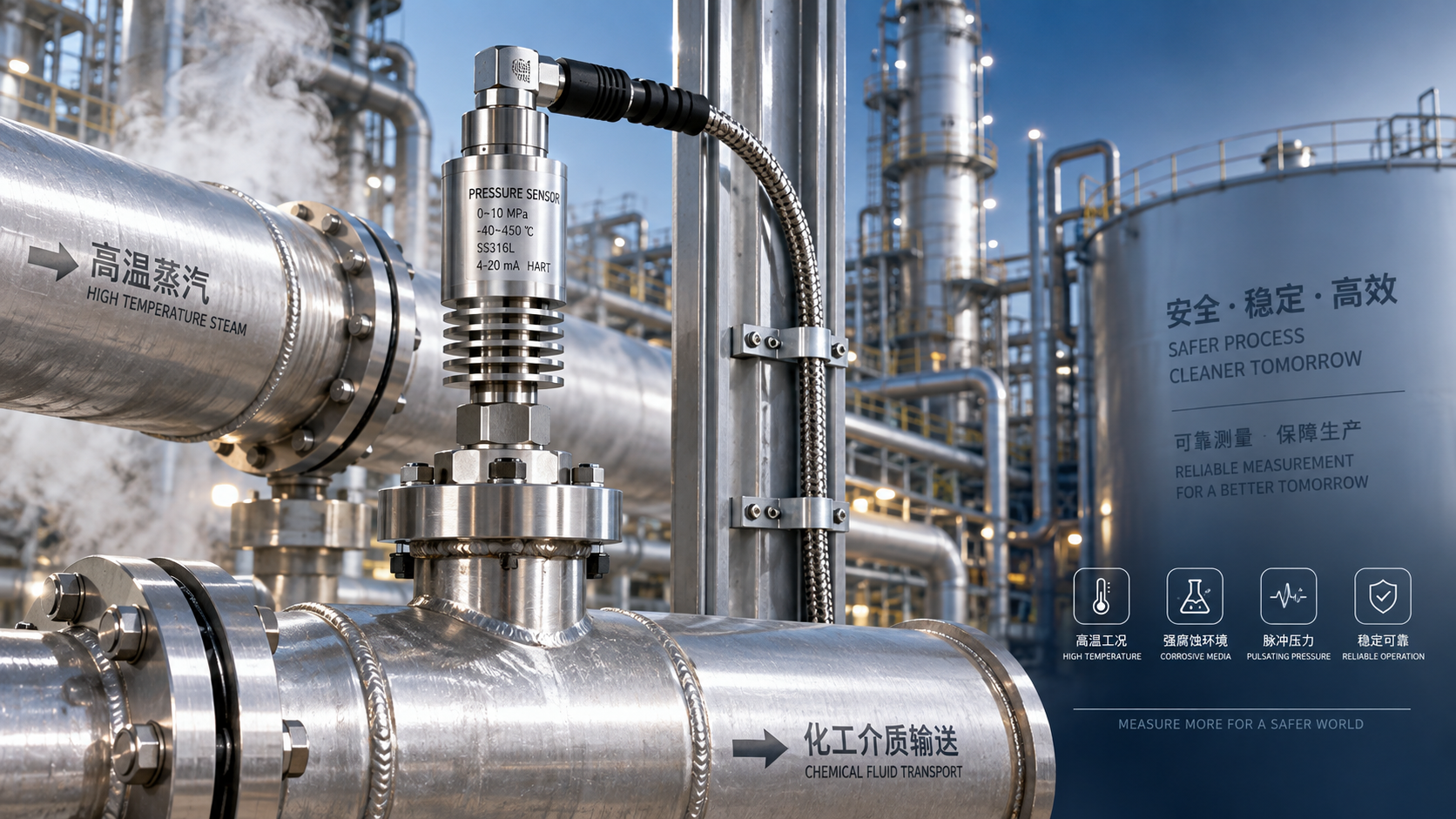
 Which parameters should be considered when selecting pressure sensors for high-temperature, corrosive, and pulsating operating conditions?
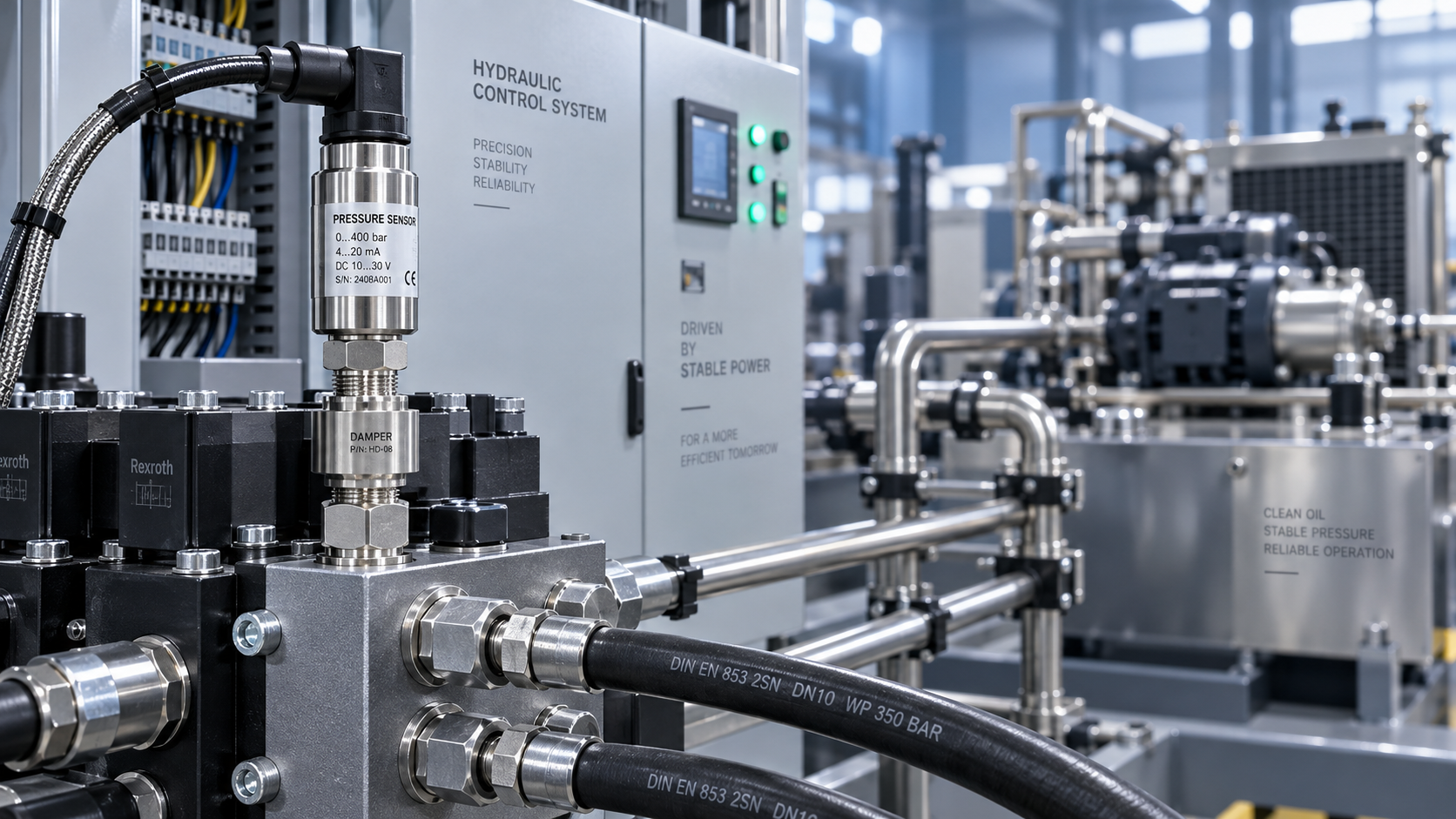
 Hydraulic equipment pressure fluctuates frequently. How can sensors be configured to improve control stability?