News Center
—— NEWS CENTER ——
Xi'an Shenghongchuang Instrument Co., Ltd.
Contact: Mr. Zhang
Mobile: 15529283736
Email: shc-sensor@qq.com
Address: Fortune Building, Sanqiao Street, Xixian New Area, Xi'an, Shaanxi Province
Operating Specifications and Maintenance Guide for Diffused Silicon Pressure Transmitters
As a key device in the field of industrial automation, the proper operation of the CS-PT300 pressure transmitter and its diffused silicon sensor directly affects measurement accuracy and equipment service life. This article provides a detailed introduction to the usage specifications of PT124B-213, P-P900 and other series products, with a focus on analyzing the download of the CS-PT300 pressure transmitter manual and key operating points, helping operators master practical techniques such as calibration methods and troubleshooting for diffused silicon liquid and gas pressure sensors.
I. Key Operating Precautions for Diffused Silicon Sensors
As precision measuring components, diffused silicon pressure sensors must follow the specifications below during installation and use:
- Medium compatibility check: Confirm that the measured medium does not chemically react with the sensor contact materials (usually 316/304 stainless steel)
- Pressure overload protection: The actual working pressure must not exceed 80% of the upper range limit, and transient pressure must be lower than 2 times full scale
- Temperature control: The medium temperature should be maintained within the range of -30~+85℃ to avoid zero drift of the sensor caused by thermal shock
Taking the domestic direct-output pressure transmitter PPM-T230E-H diffused silicon absolute pressure sensor as an example, it adopts military-grade packaging technology, with a temperature compensation range of 0~70℃, making it particularly suitable for scenarios with large temperature differences such as power station inspections.
II. Detailed Explanation of the Calibration Process for PT124B Series Pressure Transmitters
Accurate calibration is a key step to ensuring the measurement accuracy of models such as PT124B-212:
During the calibration process, standard instruments with an accuracy class 3 times higher than the device under test must be used, and the ambient temperature should remain stable at 20±5℃.
III. CS-PT300 Manual Download and Analysis of Key Parameters
The following sections should be reviewed with priority in the CS-PT300 pressure transmitter manual downloaded from the official website:
- Electrical wiring diagram and explosion-proof certification information
- Load impedance requirements for 4~20mA output signals
- Reference table for the medium temperature compensation curve
- Specific implementation standards for protection rating IP68
For applications requiring higher stability, refer to the traceability technology using laser marking adopted in the PPM-T230E-H model, whose annual stability can reach ±0.1%FS.
IV. Common Fault Diagnosis and Handling Methods
For typical faults of models such as YB-YB3011, troubleshooting can be carried out according to the following process:
- No signal output: Check the polarity of the 24VDC power supply and measure loop impedance (should be ≤500Ω)
- Display value fluctuation: Check for medium pulsation interference and add damping adjustment (rise time can be adjusted to ≤5ms)
- Zero drift: Perform temperature aging treatment and recalibrate the zero point
When encountering complex situations such as diaphragm crystallization, it is recommended to contact the manufacturer's technical support to avoid unauthorized disassembly that may damage the 316 stainless steel sealing structure.
Recommendations for Pressure Transmitter Selection and Maintenance
According to the needs of different scenarios such as hydraulic control and building automation, the following should be considered when selecting diffused silicon or ceramic piezoresistive sensors:
- Range matching: In conventional selection, the range should be 1.5 times the working pressure, and the burst pressure must be ≥3 times the range
- Output signal: For long-distance transmission, 4~20mA two-wire systems are preferred, while 0~10V output can be selected for local display
- Certification requirements: The petrochemical field must meet ATEX explosion-proof certification, and the food industry requires FDA-compliant materials
All series products manufactured by Xi'an Shenghongchuang Instrumentation Co., Ltd. are provided with a three-year warranty, and our professional technical team can provide on-site calibration services. Download the complete technical manual now to obtain detailed parameters of each model.
Mastering correct operating specifications and maintenance methods can significantly extend the service life of pressure transmitters such as JPB-JPB2300. If you need customized solutions for the CS-CS211 pressure transmitter, please feel free to contact our engineering service team.
Related Recommendations
![]() Southchip Technology Launches Its First Optical Sensor, the SC52115, for Wearable Devices
Southchip Technology Launches Its First Optical Sensor, the SC52115, for Wearable Devices How does a pressure sensor convert changes in applied force into usable electrical signals?
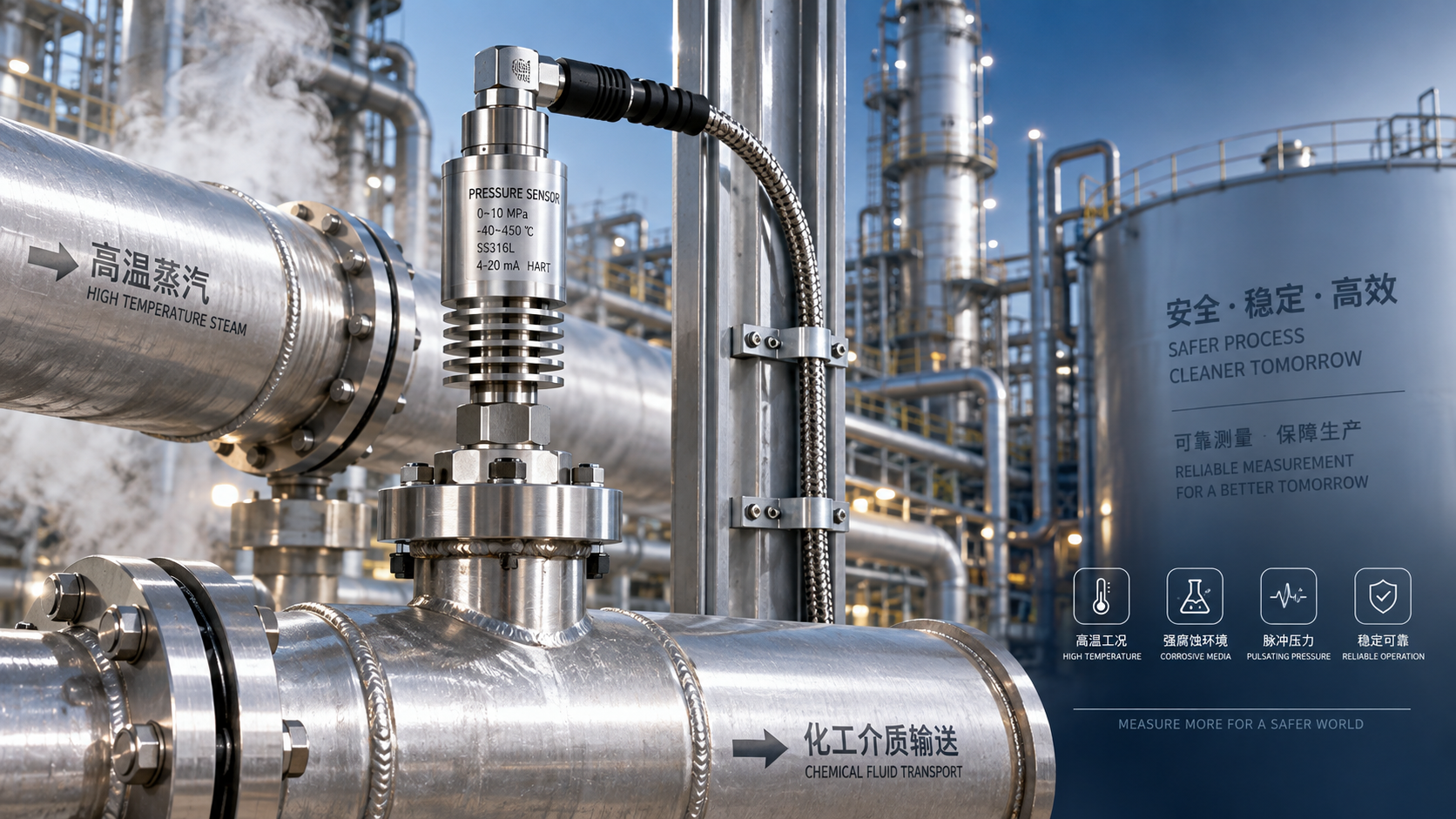
 Which parameters should be considered when selecting pressure sensors for high-temperature, corrosive, and pulsating operating conditions?
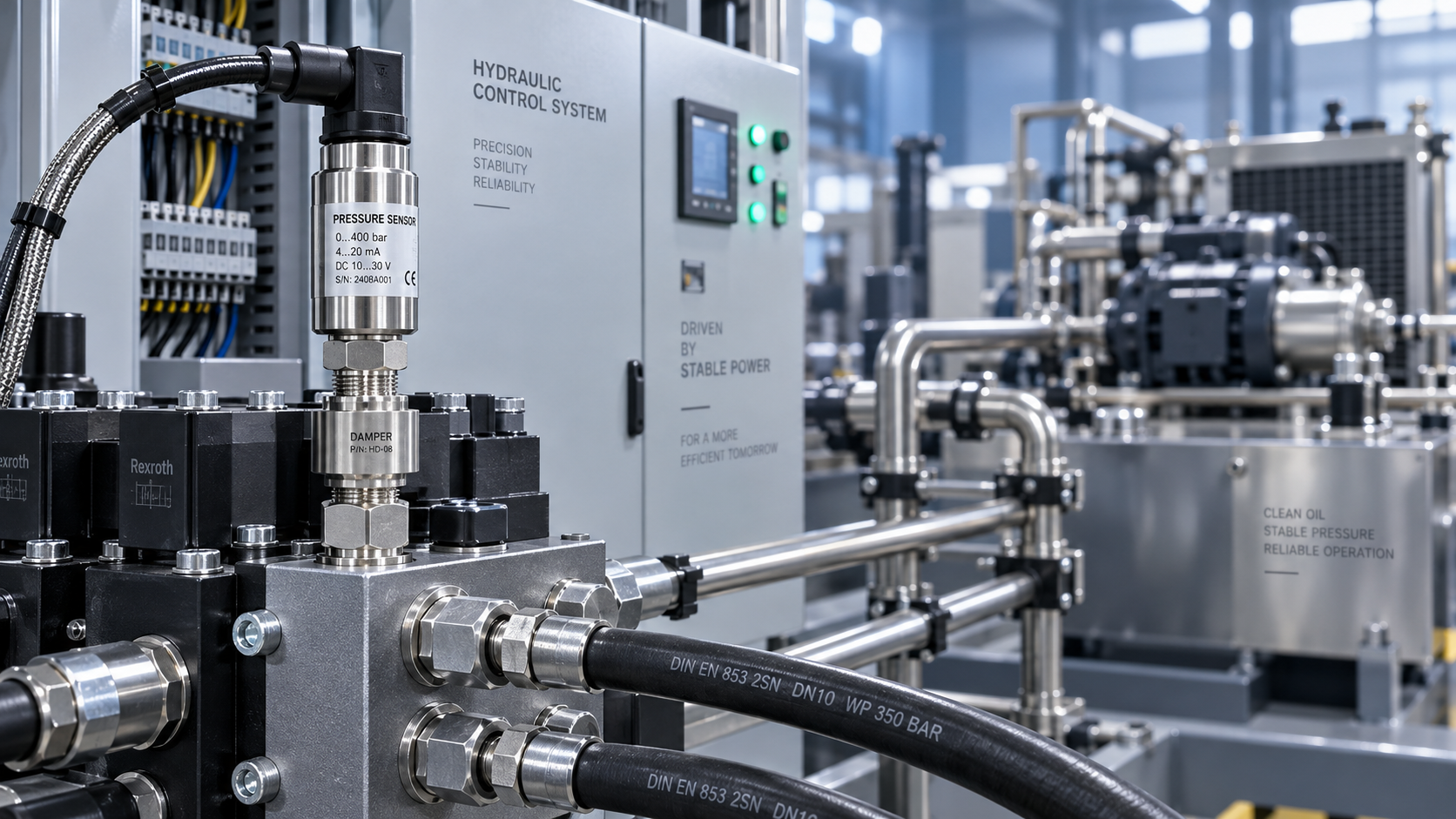
 Hydraulic equipment pressure fluctuates frequently. How can sensors be configured to improve control stability?