News Center
—— NEWS CENTER ——
Xi'an Shenghongchuang Instrument Co., Ltd.
Contact: Mr. Zhang
Mobile: 15529283736
Email: shc-sensor@qq.com
Address: Fortune Building, Sanqiao Street, Xixian New Area, Xi'an, Shaanxi Province
AP131 Pressure Transmitter Calibration Guide: Professional Engineers Share 3 Practical Tips
AP131 pressure transmitter calibration is a critical step in ensuring industrial measurement accuracy. In this article, professional engineers from Xi'an Shenghongchuang Instrumentation Co., Ltd. share 3 calibration tips for diffused silicon pressure sensors, covering general methods for transmitters in the KL316, PA1000, and other series, helping operators quickly grasp the key points.
I. Preparation Before Calibration
Before calibrating the AP131 pressure transmitter, sufficient preparation must be completed. First, ensure the working environment meets the requirements: temperature controlled at 20±5℃, and relative humidity not exceeding 60%. Second, prepare a standard pressure source whose accuracy should be at least one grade higher than that of the transmitter being calibrated. For diffused silicon liquid and gas pressure sensors, it is recommended to use a standard instrument with 0.05 grade or higher accuracy.
Check the appearance and connection parts of the transmitter:
- Confirm there is no leakage at the pressure port
- Check whether the cable connections are secure
- Ensure the power supply voltage is stable at 24VDC±5%
Special reminder: for precision instruments such as Domestic flush diaphragm pressure transmitter FST800-702 hygienic pressure sensor, the device should be powered on and preheated for at least 30 minutes before calibration to achieve optimal working condition.
II. Zero Point and Full-Scale Calibration Tips
Zero point calibration is the basic step of pressure transmitter calibration. For the AP131 model, it is recommended to follow these steps:
- Under no-pressure conditions, measure the output current, which should be 4mA (two-wire system)
- If there is any deviation, adjust it through the zero adjustment potentiometer
- After adjustment, wait 5 minutes and observe the zero point stability
Particular attention should be paid during full-scale calibration:
For models such as the KL-KL316 pressure transmitter with alarm control functions, it is also necessary to simultaneously check whether the alarm point settings are accurate during calibration.
III. Temperature Compensation and Long-Term Stability Verification
The temperature characteristics of diffused silicon sensors significantly affect measurement accuracy. Professional calibration should include temperature compensation:
- Select at least 3 temperature points within the 0-70℃ range
- Calibrate after each temperature point has stabilized for 30 minutes
- Record the temperature drift coefficient, which should be ≤±0.05%FS/℃
For long-term stability verification, it is recommended to use the accelerated aging method:
- Operate continuously for 72 hours and record data once every 8 hours
- Calculate zero drift and full-scale drift
- Annual stability should be better than ±0.2%FS
For products such as the PA-PA1000 pressure transmitter with remote transmission signals, the stability of signal transmission also needs to be verified.
IV. Post-Calibration Acceptance and Documentation Management
After calibration is completed, strict acceptance inspection must be carried out:
- Repeatability test: 5 consecutive pressurization/depressurization cycles
- Hysteresis test: forward and reverse stroke deviation not exceeding 0.1%
- Linearity check: calculated using the least squares method
It is recommended to establish complete calibration records, including:
For equipment used in special application scenarios, such as the TXY-TXY801 pressure transmitter, specific operating condition parameters must also be recorded.
V. Summary and Recommendations
Through the above 3 core tips, the calibration accuracy of the AP131 pressure transmitter can be ensured. Special reminder:
- The recommended regular calibration interval should not exceed 12 months
- In harsh environments, it should be shortened to 6 months
- Choose the original manufacturer or a certified institution for calibration
Xi'an Shenghongchuang Instrumentation Co., Ltd. provides calibration services for the full range of pressure transmitters, including various models such as DT-131 and NPT-NPT100. Our professional technical team can provide you with customized solutions.
If you would like to learn more about Domestic flush diaphragm pressure transmitter FST800-702 hygienic pressure sensor or professional support for other flow control equipment, please contact our engineering team immediately.
Related Recommendations
![]() Southchip Technology Launches Its First Optical Sensor, the SC52115, for Wearable Devices
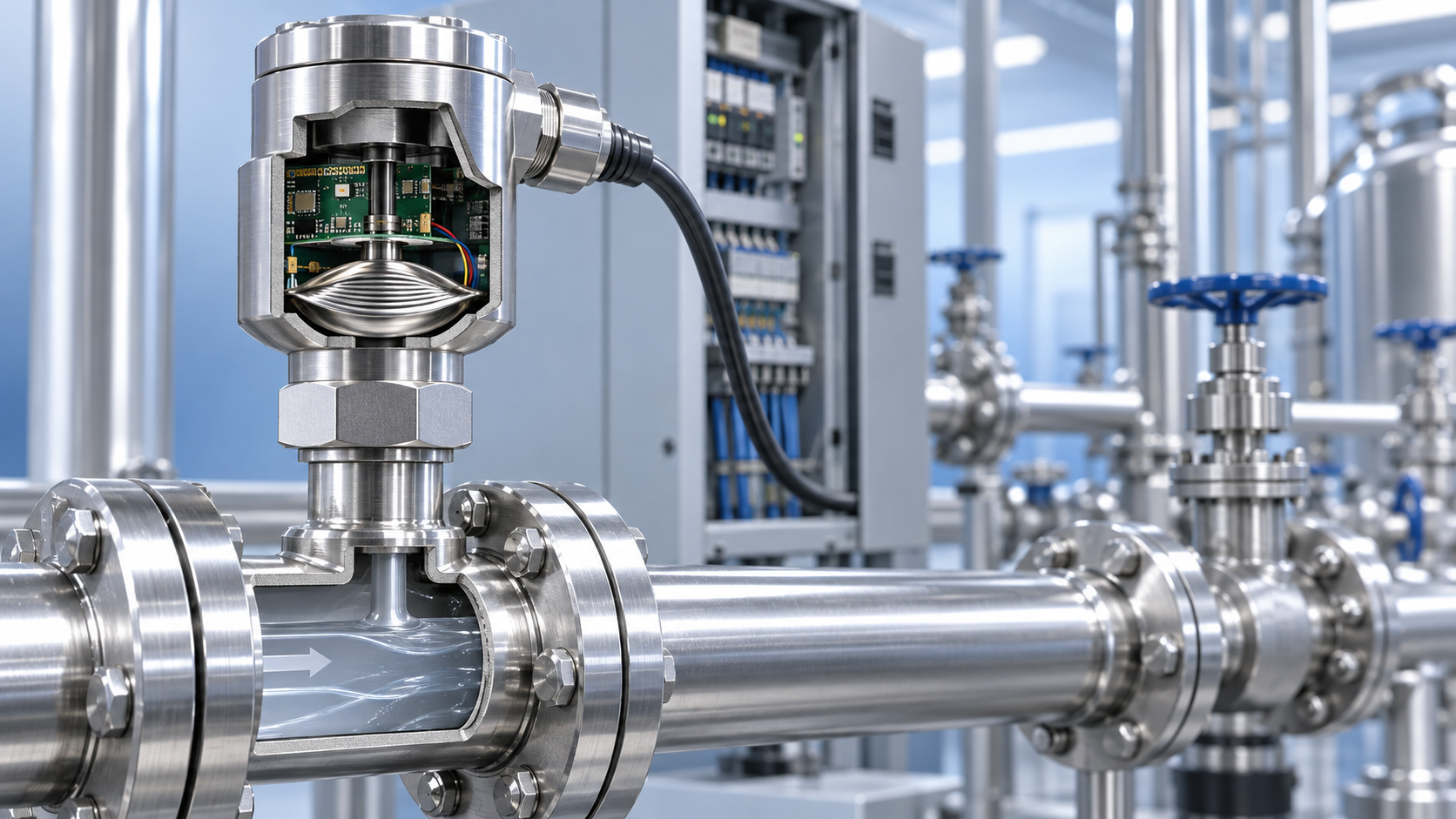
Southchip Technology Launches Its First Optical Sensor, the SC52115, for Wearable Devices How does a pressure sensor convert changes in applied force into usable electrical signals?
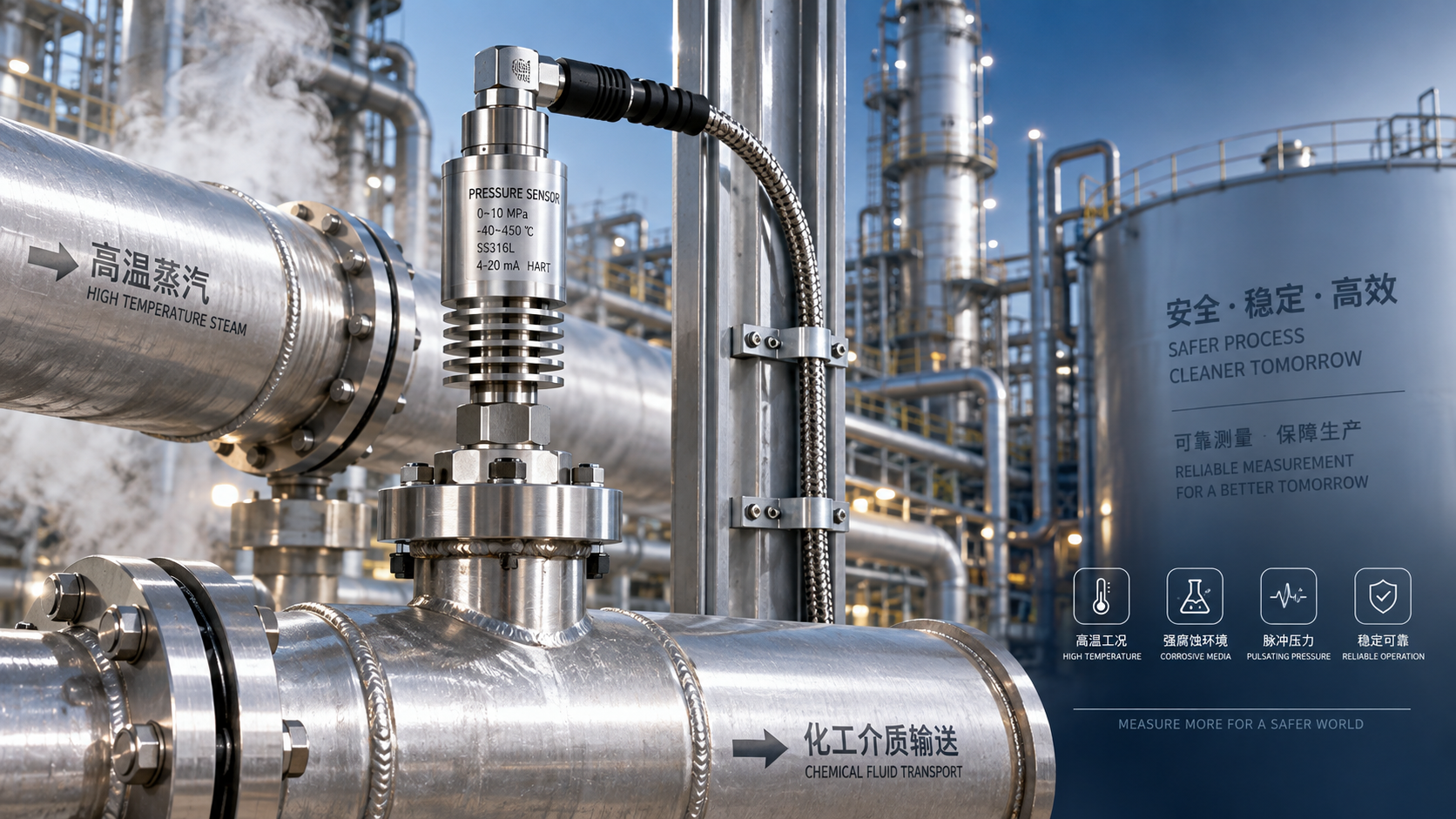
 Which parameters should be considered when selecting pressure sensors for high-temperature, corrosive, and pulsating operating conditions?
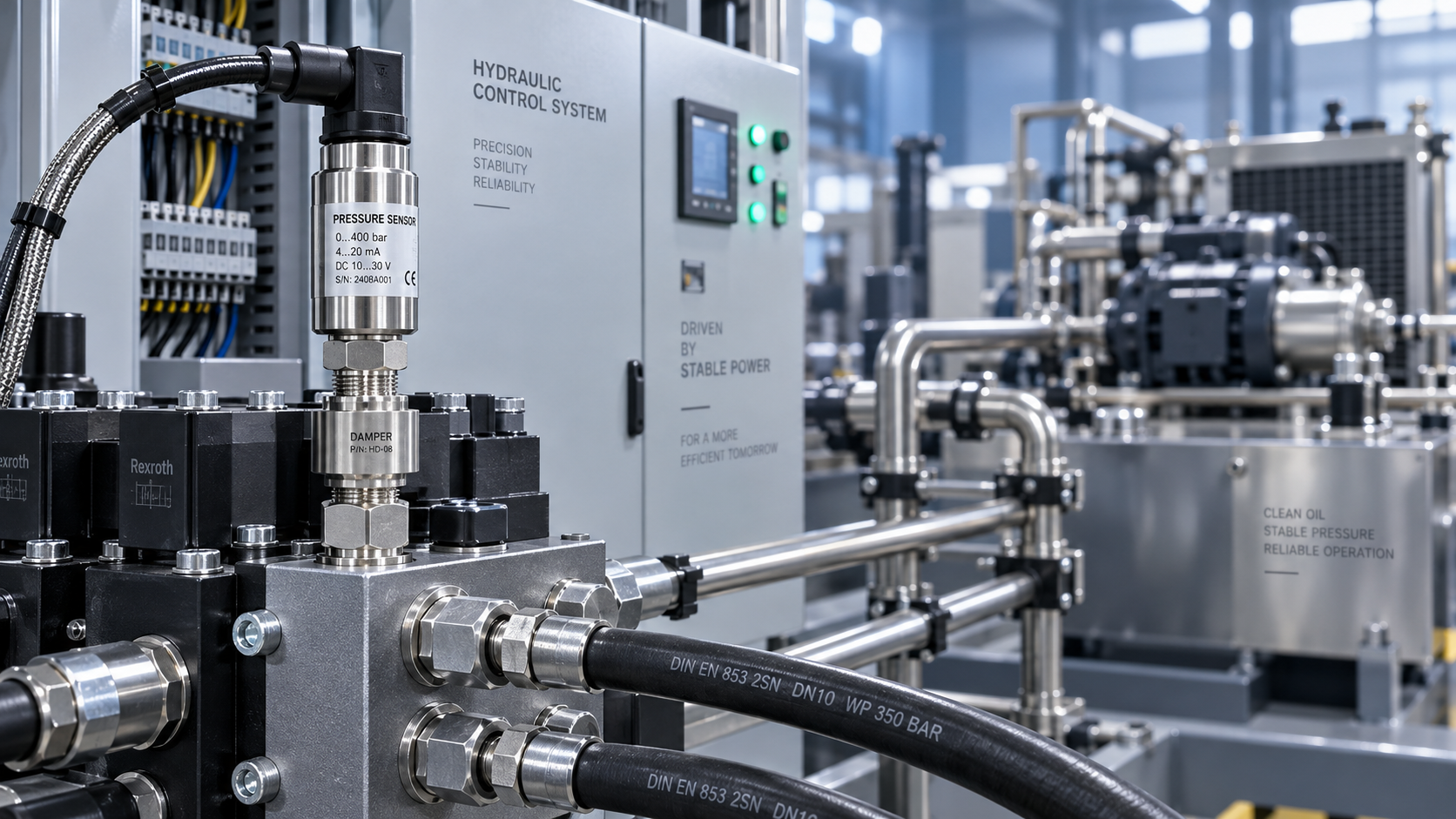
 Hydraulic equipment pressure fluctuates frequently. How can sensors be configured to improve control stability?