


News Center
—— NEWS CENTER ——
Xi'an Shenghongchuang Instrument Co., Ltd.
Contact: Mr. Zhang
Mobile: 15529283736
Email: shc-sensor@qq.com
Address: Fortune Building, Sanqiao Street, Xixian New Area, Xi'an, Shaanxi Province
Application Scope of 24V-Powered Level Sensors: From Conventional Water Storage to Complex Industrial Media
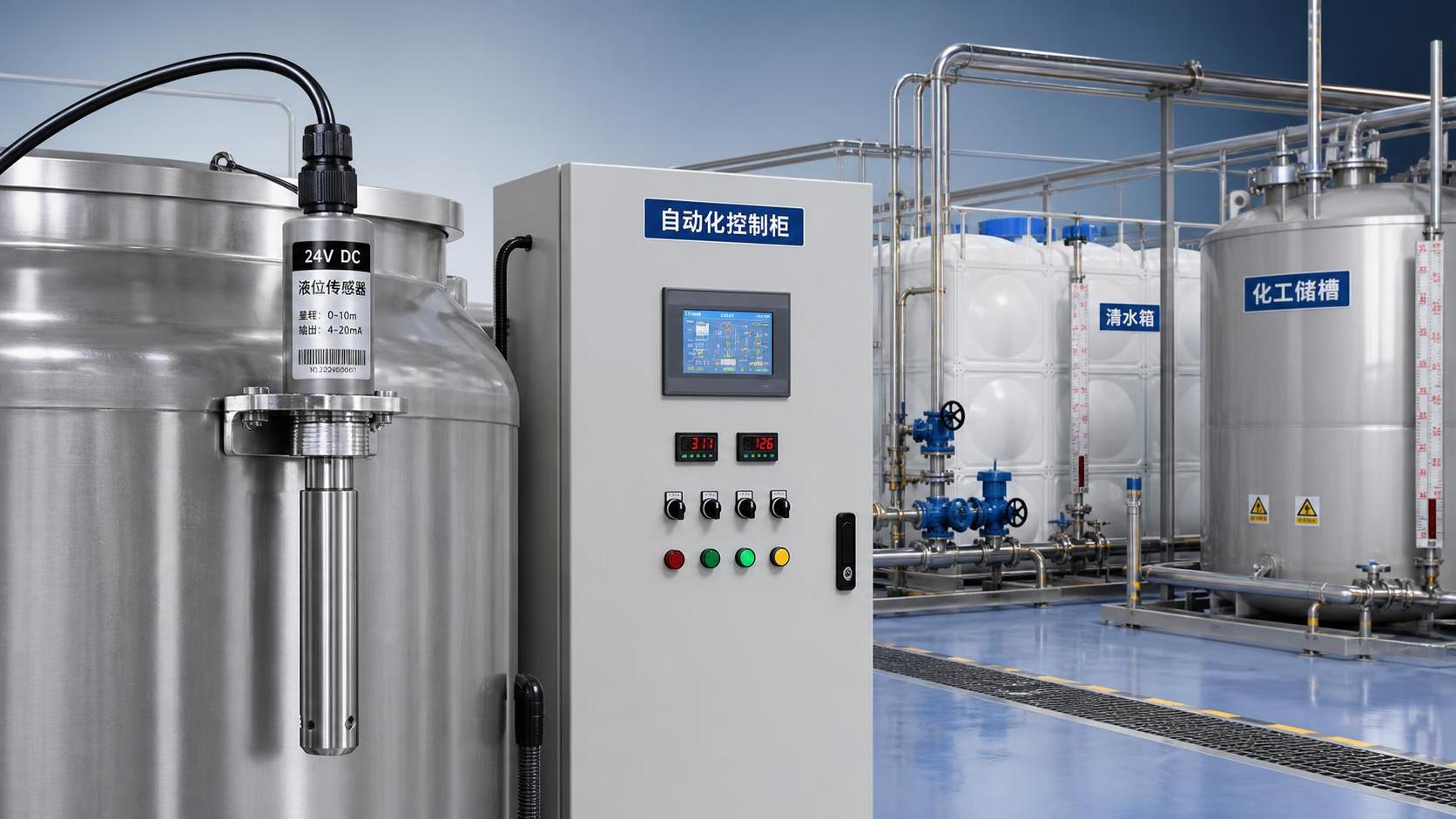
24V DC power supply is one of the most common power standards in industrial automation applications. After adopting 24V power, level sensors can be conveniently connected to PLCs, DCSs, intelligent digital display control instruments, remote I/O modules, and various automation control cabinets. For applications such as water tanks, storage tanks, reactors, wastewater pits, and silos that require continuous monitoring of level changes, selecting a level measurement solution with stable signals, a matched measuring range, and suitable materials is an important basis for level alarms, pump interlocking, valve control, and remote monitoring.
Common 24V-powered level sensors can output signals such as 4-20mA, 0-10V, and RS485. Among them, 4-20mA signals offer strong anti-interference capability and are suitable for field wiring over distances ranging from tens to hundreds of meters. RS485 communication is suitable for projects requiring centralized collection of data from multiple devices. The specific output type should be determined not only by the control system interface, but also by considering cable length, interference from frequency converters, on-site grounding conditions, and the difficulty of subsequent maintenance.
Xi'an Shenghongchuang Instrument Co., Ltd., supported by the production base of Shaanxi Qinkong Sensor Technology Co., Ltd., can provide level transmitters and supporting intelligent digital display control instruments, covering conventional industrial measurement and non-standard customization requirements. For different medium densities, temperatures, pressures, corrosiveness, and installation spaces, technical personnel generally need to first determine the level range, vessel structure, process connection, and control objectives before selecting suitable sensing principles and product configurations.
I. Application Conditions in Water Tanks, Reservoirs, and Water Conservancy Facilities
For Conventional Clean Water Conditions, Focus on Measuring Range and Installation Position
Domestic water supply tanks, fire water reservoirs, cooling water tanks, rainwater collection pools, and agricultural irrigation reservoirs typically contain clean water at ambient temperature or water with light impurities. Submersible level sensors, hydrostatic level transmitters, or externally mounted level measurement devices can be used under such conditions. The measuring range should be slightly greater than the actual maximum level. For example, where the actual water depth is 5 m, a range of 0-6 m or 0-10 m can generally be considered to avoid reading boundary risks caused by long-term full-scale operation.
In environments such as underground pools and pump station sumps, the sensor probe should not be placed directly against the bottom. Sediment, sand, gravel, and vortices generated when pumps start may affect measurement stability. Generally, the probe can be positioned approximately 100 mm to 300 mm above the bottom, with its position controlled using a counterweight, guide pipe, or mounting bracket. Where liquid level fluctuations are significant, a perforated stilling tube can be installed outside the probe to reduce the effect of instantaneous fluctuations on displayed values.
The maintenance interval for water conservancy level sensors should not be set uniformly. Clean water tanks may be inspected every 3 to 6 months; channels and reservoirs containing substantial sediment, algae, or floating matter are recommended to have their probes, vented cables, and terminals inspected every 1 to 3 months. If the system exhibits level display fluctuations, zero drift, frequent false operation of pump sets, or similar issues, the installation condition, power supply voltage, and sensor diaphragm contamination should be checked in advance.
A 24V-powered system should also account for control cabinet power supply capacity. If the normal operating current of one two-wire 4-20mA level transmitter is calculated at 20mA, the full-load current of 10 devices is approximately 200mA. In actual engineering applications, capacity should be reserved for the power supply, communication modules, and relays to prevent output voltage fluctuations caused by prolonged high-load operation of the power supply.
II. Selection Considerations for Chemical Storage Tanks and Highly Corrosive Media
Material Compatibility Has a Greater Impact on Service Life Than the Power Supply Method
In applications such as chemical raw material tanks, acid and alkali storage tanks, electroplating solution tanks, and chemical preparation tanks, the key consideration for 24V-powered level sensors is not merely whether they can be energized and output signals normally, but whether they can withstand long-term corrosion from the medium. For acidic, alkaline, saline, or organic solvent liquids, the media resistance of the diaphragm, housing, sealing rings, cable sheath, and process connection components should be verified separately. Selection should not be made directly based only on a description such as “corrosion-resistant.”
Precautions for using level sensors in strong alkali include confirming alkali concentration and actual temperature, avoiding direct contact between incompatible metal components and the medium, checking the alkali resistance of sealing materials, and preventing crystalline deposits from adhering to the probe surface. For highly corrosive media such as sodium hydroxide and potassium hydroxide, elevated temperatures often accelerate material aging. Therefore, concentration, temperature, and immersion time must be evaluated as a whole.
The service life of corrosion-resistant level sensors is closely related to the installation environment and maintenance practices. Under conditions of stable media, moderate temperatures, and correct material selection, sensors can maintain stable operation for a long period. If high temperatures, severe corrosion, frequent flushing, crystallization blockage, or mechanical impact are present, the service life will be significantly shortened. During procurement, attention should be given to long-term stability, repeatability, overload capacity, and after-sales calibration support, rather than using initial price alone as the selection criterion.
For closed pressure vessels, level measurement must also take the vapor-phase pressure inside the tank into account. Conventional hydrostatic measurement methods may be affected by vapor-phase pressure in pressurized vessels. In such cases, differential pressure measurement, flange-mounted diaphragm structures, or other suitable solutions may be used. If the vessel operating pressure reaches several hundred kPa or higher, the pressure rating of the process connection, sealing structure, and safety isolation measures should all be included in the technical confirmation scope.
III. Installation Requirements in Automated Equipment and Complex Field Environments
Vibration Resistance, Interference Resistance, and Wiring Specifications Jointly Affect Measurement Results
In machinery manufacturing, logistics warehousing, intelligent equipment, and automated production lines, level sensors may be installed on mobile equipment, vibrating silos, cleaning devices, or cooling circulation units. The primary installation requirement for vibration-resistant level sensors is reliable mechanical fixing. Mounting brackets should have sufficient rigidity to prevent repeated swinging of the sensor and cable under continuous vibration. For equipment with high vibration intensity, threaded connections, anti-loosening measures, and the stress condition at cable outlets should also be inspected.
24V power cables and signal cables should be kept as far away as possible from high-power frequency converters, motor power cables, welding equipment, and high-frequency switching power supplies. Shielded cables are recommended for 4-20mA signal lines, with the shielding layer generally grounded at one end according to system requirements to reduce ground loop interference. If the on-site cable distance exceeds 100 m, or if there are many power circuits within the same cable tray, greater attention should be paid to layered cable routing and terminal crimping quality.
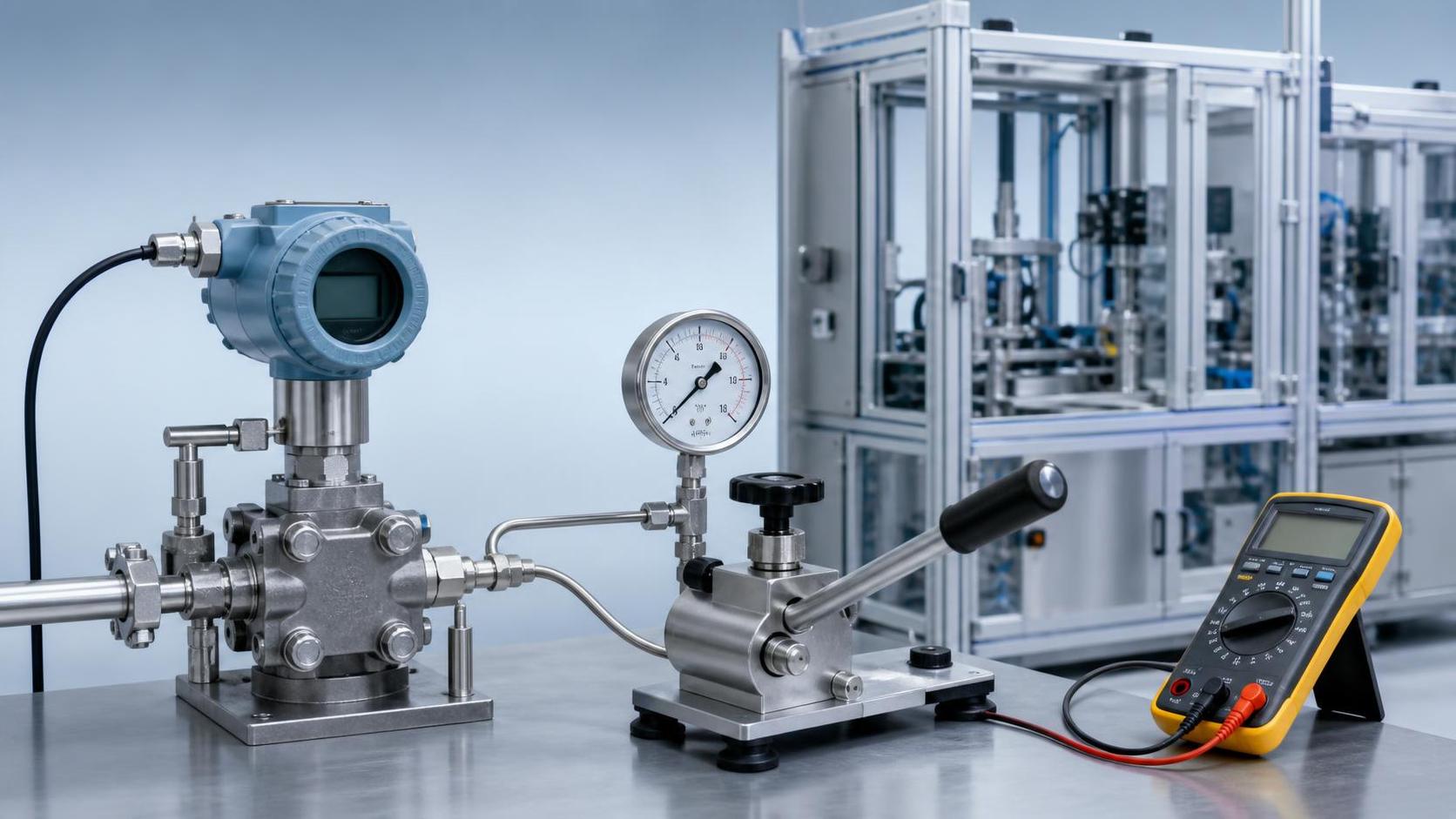
Calibration methods for high-accuracy level sensors should be based on actual measurement points. First, confirm the vessel's zero-level reference, then perform comparisons at typical points such as 25%, 50%, 75%, and 100%, recording the difference between the standard level and output signal. Taking a 4-20mA output as an example, 0% corresponds to 4mA, 50% to 12mA, and 100% to 20mA. If the deviation exceeds the allowable project range, check the range setting, installation height, medium density compensation, and control system conversion parameters.
Level control should not rely solely on a single analog signal. For water tanks or storage tanks with high overflow risk or significant dry-run risk, it is recommended to combine high-level and low-level switch alarms to provide dual protection through continuous analog monitoring and discrete alarms. In this way, even if the main measurement circuit fails, additional safety support can be provided for pump shutdown, liquid replenishment cutoff, or on-site inspection.
IV. Display Methods, Model Solutions, and Procurement Evaluation
Sensor Performance Should Match Control, Display, and Maintenance Requirements
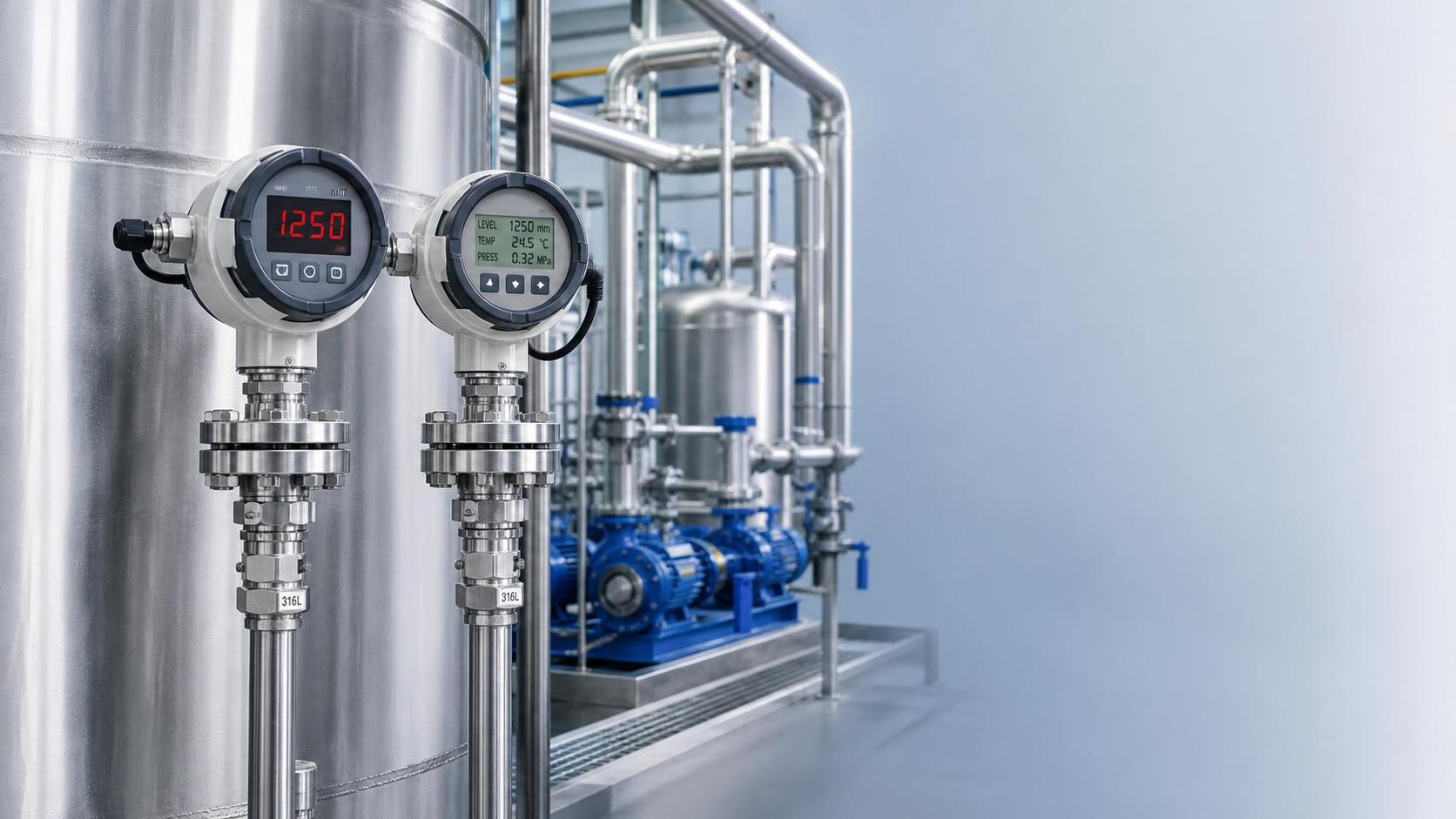
Some projects may focus on price comparisons between LED level sensors and LCD level sensors. In practice, the functions of display components and measuring elements should first be distinguished. LED digital displays typically provide higher brightness and clearer long-distance visibility, making them suitable for brightly lit control cabinets or on-site display boards. LCD displays generally provide more information and can display units, parameters, and menus. Price differences between the two are affected by display size, protection rating, communication functions, control outputs, and mounting type; overall cost should not be judged solely by display type.
For questions such as price differences between 3051 level sensors and 3351 level sensors, or selection guides for 1151 level sensors, technical personnel should first verify the pressure rating, accuracy class, diaphragm material, communication protocol, and brand configuration represented by the model designation. Different series may differ in structure, applicable pressure, stability, and available accessories. During actual inquiries, ensure that the measuring range, output, process connection, and protection requirements are consistent to avoid comparison errors caused by “similar models with different configurations.”
If hygienic level measurement equipment is used in industries such as food, pharmaceuticals, beverages, and fine chemicals, the certification standards for hygienic level sensors, wetted surface finish, clamp connections, cleaning methods, and material certification documents should also be confirmed. Hygienic requirements are not determined by appearance alone. Whether equipment is suitable for CIP cleaning, whether cleaning dead zones exist, and whether sealing components meet medium and temperature requirements will all affect subsequent production management.
Before procurement, it is recommended to compile a complete operating condition sheet, including medium name, level range, vessel height, temperature, pressure, density, corrosiveness, output signal, supply voltage, installation connection, and protection rating. The more complete the information, the more accurate the sensor selection and the lower the likelihood of rework caused by unsuitable measuring ranges, incompatible materials, or mismatched wiring methods.
The Following Information Can Be Confirmed When Submitting Selection Details
Clearly specify whether the requirement is for continuous liquid level measurement, fixed-point level alarms, or the simultaneous implementation of display, alarms, and pump-valve interlocking. Different objectives require different sensing principles, instrument configurations, and control logic.
Provide the actual minimum level, maximum level, and vessel installation dimensions, and specify whether stirring, foam, steam, vibration, sediment, or pressure fluctuations are present. Under complex operating conditions, this information is often more important than the measuring range value alone.
If 24V-powered level sensors are required for water tanks, storage tanks, chemical tanks, or automated equipment, on-site operating parameters, installation photos, and control system interface requirements can be submitted to Xi'an Shenghongchuang Instrument Co., Ltd. Technical personnel will confirm suitable level measurement and supporting instrument solutions based on medium characteristics and control requirements.
- 液位变送器
- 4-20mA液位变送器
- 水利液位传感器
- 强碱液位传感器
- 耐腐蚀液位传感器
- 抗振液位传感器
- 高准确度液位传感器
- 24V供电液位传感器
- 卫生型液位传感器
- LCD液位传感器
- LED液位传感器
- 3051液位传感器
- 3351液位传感器
- 1151液位传感器
- 数显控制仪表
- 控制仪表
- 智能数显控制仪表
- 水利液位传感器维护周期
- 强碱液位传感器使用注意事项
- 耐腐蚀液位传感器寿命多长
- 高准确度液位传感器校准方法
- 抗振液位传感器安装要求
- 24V供电液位传感器适用范围
- LED液位传感器和LCD液位传感器价格对比
- 卫生型液位传感器认证标准
- 3051液位传感器和3351液位传感器价格差异
- 1151液位传感器选型指南