News Center
—— NEWS CENTER ——
Xi'an Shenghongchuang Instrument Co., Ltd.
Contact: Mr. Zhang
Mobile: 15529283736
Email: shc-sensor@qq.com
Address: Fortune Building, Sanqiao Street, Xixian New Area, Xi'an, Shaanxi Province
Is the output signal of a 0-10V liquid level sensor stable? In water supply, acid and alkali media, and water conservancy monitoring scenarios, signal fluctuations are often related to installation, calibration, and maintenance. This article will analyze the causes and countermeasures in combination with issues such as how to maintain a water supply liquid level sensor and how to calibrate a 0-5V liquid level sensor.
For equipment purchasers, system integrators, and on-site maintenance personnel, whether the output of a 0-10V liquid level sensor is stable directly affects the accuracy of PLC acquisition, variable-frequency control, liquid level alarm, and remote monitoring. Once the signal jumps frequently within a short period of time, it may not only cause misjudgment, but also lead to false start-stop of pump units, chemical dosing imbalance, or abnormal interlocking.
In practical applications in the sensor industry, voltage-output liquid level sensors are not inherently “unstable”; rather, they are more often affected jointly by power supply quality, wiring method, range matching, medium characteristics, and the back-end acquisition system. Xi'an Shenghongchuang Instrumentation Co., Ltd. has long provided products and application support in fields such as pressure, flow, displacement, weighing, force measurement, temperature and humidity, and intelligent instruments, and has a strong engineering understanding of the key details affecting industrial field signal stability.
I. Why 0-10V liquid level sensors are prone to output fluctuations
The essence of a 0-10V liquid level sensor is to convert changes in liquid level into a continuous voltage signal. When the liquid level rises from the low point to the full range, the output should theoretically change steadily within a linear interval, for example, 0 meters corresponding to 0V and 5 meters corresponding to 10V. If the sampling end reads values fluctuating back and forth between 8.2V, 8.6V, and 8.1V, it usually indicates that there is an interference source in the system or that the measurement conditions are unstable.
The first common cause is power supply fluctuation. Many 0-10V liquid level sensors use 12V, 24V, or a wider range of DC input as the working power supply. If the on-site power supply ripple is large, or if it shares the power supply with motors, contactors, or frequency converters, noise may be superimposed on the output terminal. In pump stations, sewage lifting wells, and chemical dosing systems, this type of problem occurs relatively frequently, especially within the 100ms to 500ms time window at startup and shutdown.
The second cause is non-standard wiring and grounding. Voltage output signals are more sensitive to line voltage drop and electromagnetic coupling. If the cable length exceeds 20 meters to 30 meters, shielded cable is not used, the shield is improperly grounded at one end, or the signal cable is laid in parallel with the power cable on the same cable tray, the PLC analog terminal is likely to collect jitter values. Compared with 4-20mA, 0-10V usually has weaker anti-interference capability in long-distance transmission.
The third cause comes from the medium and installation condition. If the liquid surface continues to surge, foam, or is agitated, or if there is backflow impact or surface ripples inside the tank, what the sensor measures is the “instantaneous liquid level” rather than the “average liquid level.” In acid and alkali storage tanks, water supply pools, open channels, and gate wells, if the installation position is too close to the water inlet, the fluctuation amplitude may reach 1% to 3% of full scale.
The fourth cause is deviation in range selection. For example, if the actual liquid level variation range is only 0.8 meters, but a 0-10 meter range is selected, the system resolution is diluted; conversely, if the liquid level operates close to the upper limit of the range, slight fluctuations will also be amplified. If the three parameters of “actual operating liquid level range,” “installation depth,” and “overload margin” are ignored during the procurement stage, signal stability in the later stage is often difficult to guarantee.
Checklist of common fluctuation sources
- Unstable power supply: the 24V power supply carries too much load, and the voltage fluctuation exceeds ±5%.
- Excessive line length: the 0-10V signal transmission distance exceeds 30 meters without isolation or amplification.
- Unreasonable installation point: close to the pump outlet, liquid inlet, agitator paddle, or valve impact area.
- Mismatched acquisition module: insufficient PLC analog resolution, or the filter time constant is set too small.
- Complex medium environment: strong corrosion, crystallization, wall buildup, foam, or sediment affects the measuring end.
II. Under different application scenarios, fluctuation problems manifest differently
In water supply systems, liquid level sensors are commonly used for water tanks, pools, storage tanks, and secondary water supply equipment. In such scenarios, the medium is relatively clean, but pump startup and shutdown are frequent and pipeline backflow is obvious, making periodic fluctuations likely. If the control system samples once every 1 second, while the liquid surface has obvious ups and downs within 3 seconds to 5 seconds, it will appear on the screen as “value jumping,” which does not necessarily mean the sensor itself is damaged.
In acid and alkali medium storage tanks, the key issue is material compatibility and long-term corrosion. Some liquid level sensors have normal output initially, but after operating for 3 months to 6 months, the probe diaphragm, seals, or pressure-guiding structure may be affected by corrosion, causing zero drift and increased output noise. At this time, the fluctuation is often not random electrical interference, but a decline in stability caused by component aging.
In water conservancy monitoring scenarios, such as rivers, channels, gate wells, and groundwater wells, line distances are often longer, environmental humidity is higher, and lightning surges and grounding loop issues are more prominent. If the cable length reaches more than 50 meters and there is no signal isolation module or surge protection in between, the anti-interference weakness of the 0-10V output will be amplified, and remote transmission data fluctuations will be significantly greater than near-end test data.
Therefore, purchasers should not simply ask, “Is this liquid level sensor stable?” but should judge based on the medium, distance, installation method, and control logic. In many projects, what truly needs optimization is the system solution rather than simply replacing the sensor.
Comparison of typical scenarios and risks
Different scenarios have different emphasis on fluctuation sources. The comparison table below can help make selection and troubleshooting more targeted.
As can be seen from the above table, fluctuations in liquid level sensor output are not caused by a single fault, but are the result of the combined effect of on-site working conditions, signal transmission, and material adaptation. The more complex the working conditions of a project, the more necessary it is to give prior consideration to “environmental risks” during the selection stage.
III. Installation, calibration, and acquisition settings are the three key links for stable output
Many users simultaneously search for “how to calibrate a 0-5V liquid level sensor” and “why a 0-10V liquid level sensor jumps.” In essence, both point to one question: whether the on-site output value is consistent with the actual liquid level. Correct installation, standardized calibration, and reasonable acquisition parameter settings are the 3 core links to reduce fluctuations, and none of them can be omitted.
1. The installation position should avoid disturbance zones
The liquid level sensor should be installed as far as possible at a position where the liquid surface is relatively stable, keeping at least 300mm to 500mm away from the liquid inlet, return port, or agitation area. For deep wells or high-tank applications, structures such as stilling pipes and guide cylinders can be added to reduce the impact of instantaneous liquid surface fluctuations on the probe. If the on-site flow pattern cannot be changed, it is recommended to add average-value filtering on the control side.
2. The calibration process should distinguish between zero point and full range
The calibration methods for 0-5V and 0-10V liquid level sensors are similar, with the focus on confirming the reference points at both ends. At zero liquid level, check whether the output is close to 0V; at full range, check whether the output is close to 5V or 10V. For the middle, 25%, 50%, and 75% can be selected for linearity verification. If the midpoint error is greater than ±0.5% to ±1% of full scale, the power supply, load, and installation depth should be checked rather than only adjusting the instrument parameters.
Recommended calibration steps
- Confirm that the sensor power supply is stable. It is recommended to control the no-load power output deviation within ±2%.
- Check whether the wiring polarity, shield grounding, and PLC analog input range settings are consistent.
- Record the zero-point output at the empty tank or reference liquid level point, and observe continuously for 2 minutes to 5 minutes.
- Record the upper-limit output near full scale, and verify at least 3 intermediate test points.
- After calibration is completed, retain the operating data and observe whether there is still abnormal drift within 24 hours.
3. The filter parameters of the acquisition module cannot be ignored
At many sites, the sensor output is actually normal, but the PLC or digital display instrument shows instability. The reason is that the filter time of the analog acquisition module is set too short, or the resolution is insufficient. For slowly changing liquid levels, it is recommended to set the sampling period between 500ms and 2s, and superimpose a 3-time to 10-time moving average. If the liquid level is used for alarm interlocking, 2-level thresholds and a 5-second delay can be set to avoid false actions.
If the system must transmit over a long distance and the environment has strong interference, it may be considered to change from 0-10V to 4-20mA, or add signal conversion and isolation modules near the sensor. Voltage output is more suitable for short-distance acquisition environments with high input impedance, which is a boundary condition that must be clearly defined during selection.
IV. How to maintain water supply liquid level sensors to reduce later-stage fluctuations
The maintenance focus of water supply liquid level sensors is not just “replace when broken,” but to establish a periodic inspection mechanism. Most water supply projects operate continuously with limited on-duty personnel. If basic maintenance is not performed regularly, small problems can easily accumulate into obvious fluctuations within 1 month to 3 months, eventually affecting pump station control and liquid level linkage logic.
First, inspect the probe surface and installation accessories. If the sensor is installed at the bottom of a pool, well casing, or water tank, it should be checked regularly for sediment, algae, attachments, or signs of mechanical collision. Even in clean water conditions, long-term operation may still change the stress condition at the measuring end due to deposits, resulting in zero drift. The conventional recommendation is one routine inspection every 30 days, shortened to 15 days when water quality is poor.
Second, inspect the sealing of cables and junction boxes. Many fluctuations are not caused by the sensor core itself, but by damp intermediate connectors, oxidized terminals, or loose shielding layers. Especially in underground, outdoor, and high-humidity environments, once water enters the terminal box, analog signals are highly prone to drift. It is recommended to carry out wiring tightening and insulation inspections every 60 days to 90 days, and pay attention to whether condensation water has accumulated.
Third, verify the displayed value against the actual liquid level. Through a level ruler, manual measurement, or on-site standard point verification, it is possible to quickly determine whether cumulative errors exist. For critical water supply equipment, it is recommended to conduct zero-point and range rechecks every 6 months; if used for metering assessment or automatic control closed loops, the cycle can be shortened to 3 months.
Water supply liquid level sensor maintenance checklist
To facilitate implementation by operation and maintenance teams, a more practical maintenance item comparison table is provided below.
This type of maintenance is not complicated, but it can significantly reduce later fault diagnosis time. For purchasers, choosing a sensor supplier that can provide installation guidance, wiring recommendations, and maintenance support often has greater long-term value than only comparing unit prices.
V. During procurement and selection, how to reduce the fluctuation risk of 0-10V liquid level sensors
From project experience, a considerable part of liquid level sensor output fluctuation is actually due to “wrong selection in the early stage.” If the application scenario, output method, range, material compatibility, on-site distance, and control system interface are clarified during the procurement stage, many later problems can be reduced. Especially in B2B projects, selection is not just about buying one sensor, but buying a complete measurement chain that can operate stably.
First, it is necessary to determine whether the output method is suitable for the site. If the acquisition distance is within 10 meters and interference in the control cabinet is low, 0-10V can meet the requirements; if the distance is more than 30 meters, or there are many frequency converters and motors, 4-20mA should be given priority for better stability. Second, the range redundancy should be checked. It is generally recommended that the actual maximum liquid level account for 70% to 90% of the sensor range, which both retains a safety margin and avoids overly low resolution.
Third, attention should be paid to wetted materials and environmental protection. Ordinary clean water, weakly corrosive media, and strongly corrosive media have completely different requirements for diaphragms, housings, and seals. Outdoor well stations should also focus on waterproofing, moisture protection, surge protection, and wiring reliability. If these parameters are not confirmed in the early stage, the troubleshooting cost after fluctuations occur will usually be higher than the price of the product itself.
6 questions recommended for confirmation before procurement
- What is the actual liquid level range, 0.5 meters, 5 meters, or more than 10 meters?
- Does the medium involve acid and alkali corrosion, foam, crystallization, sediment, or high-temperature effects?
- Is the distance from the sensor to the PLC 5 meters, 20 meters, or more than 50 meters?
- Are there strong interference devices on site such as frequency converters, motors, and contactors?
- Does the control system require 0-10V, 0-5V, or 4-20mA input?
- Is it necessary for the supplier to provide installation, calibration, and maintenance recommendations?
Selection judgment reference table
The table below can serve as a quick basis for judgment during procurement or technical communication.
For projects requiring integrated matching of sensors, transmitters, and intelligent display control instruments, early communication with a supplier that has multi-category development and application experience is more helpful in fully connecting liquid level measurement, signal acquisition, and back-end control, thereby reducing repeated subsequent debugging.
VI. Common questions and handling recommendations
If the output of a 0-10V liquid level sensor is unstable, is it right to replace the sensor first?
Not necessarily. It is recommended to first troubleshoot according to the 5 steps of “power supply—wiring—installation position—acquisition module—calibration status.” In actual projects, fluctuations caused by power supply interference, damp terminals, or improper filter parameters are not uncommon. If the sensor is replaced directly without addressing the root cause, the new equipment may encounter the same problem.
How can a 0-5V liquid level sensor be calibrated more reliably?
It is recommended to carry out at least 5 checks: confirm stable power supply, verify the input range, check the zero point, check the full range, and verify midpoint linearity. If conditions permit, data trends can be recorded within 24 hours to observe whether there is temperature drift or periodic interference. If the on-site fluctuation amplitude exceeds 1% of full scale, the operating conditions and line issues should be checked first.
How often is it reasonable to maintain a water supply liquid level sensor?
Under conventional clean water conditions, visual inspection can be carried out every 30 days, wiring inspection every 60 days to 90 days, and accuracy recheck every 3 months to 6 months; if water quality is poor, underground humidity is high, or startup and shutdown are frequent, the inspection cycle can be shortened to 15 days. The maintenance frequency should be graded according to operating-condition risks rather than applying a single uniform cycle.
When should you consider not using 0-10V, but switching to other output methods?
When the transmission distance exceeds 30 meters, interference is strong, the outdoor lightning risk is high, or the control system requires higher stability, solutions such as 4-20mA that are more suitable for industrial sites can be evaluated first. There is no absolute superiority or inferiority among output methods; the key is whether they match the site boundary conditions and control objectives.
The tendency of 0-10V liquid level sensor output to fluctuate does not fundamentally lie in “voltage output must be unstable,” but in whether the power supply, wiring, installation, calibration, material, and acquisition settings are matched as a complete set. For scenarios such as water supply, acid and alkali media, and water conservancy monitoring, making proper range and output method choices in advance and establishing tiered maintenance mechanisms such as 15 days, 30 days, and 90 days is often more effective than frequently replacing equipment afterward.
Xi'an Shenghongchuang Instrumentation Co., Ltd. is deeply engaged in the development, production, and operation of sensor and instrumentation-related products, covering pressure, displacement, flow, weighing, force measurement, temperature and humidity, torque, and intelligent digital display control instruments, and can provide selection ideas closer to on-site needs for industrial liquid level measurement and supporting control. If you are evaluating the stability, maintenance solution, or system matching issues of a 0-10V liquid level sensor, please contact us immediately to obtain a customized solution and consult product details.
Related Recommendations
![]() Southchip Technology Launches Its First Optical Sensor, the SC52115, for Wearable Devices
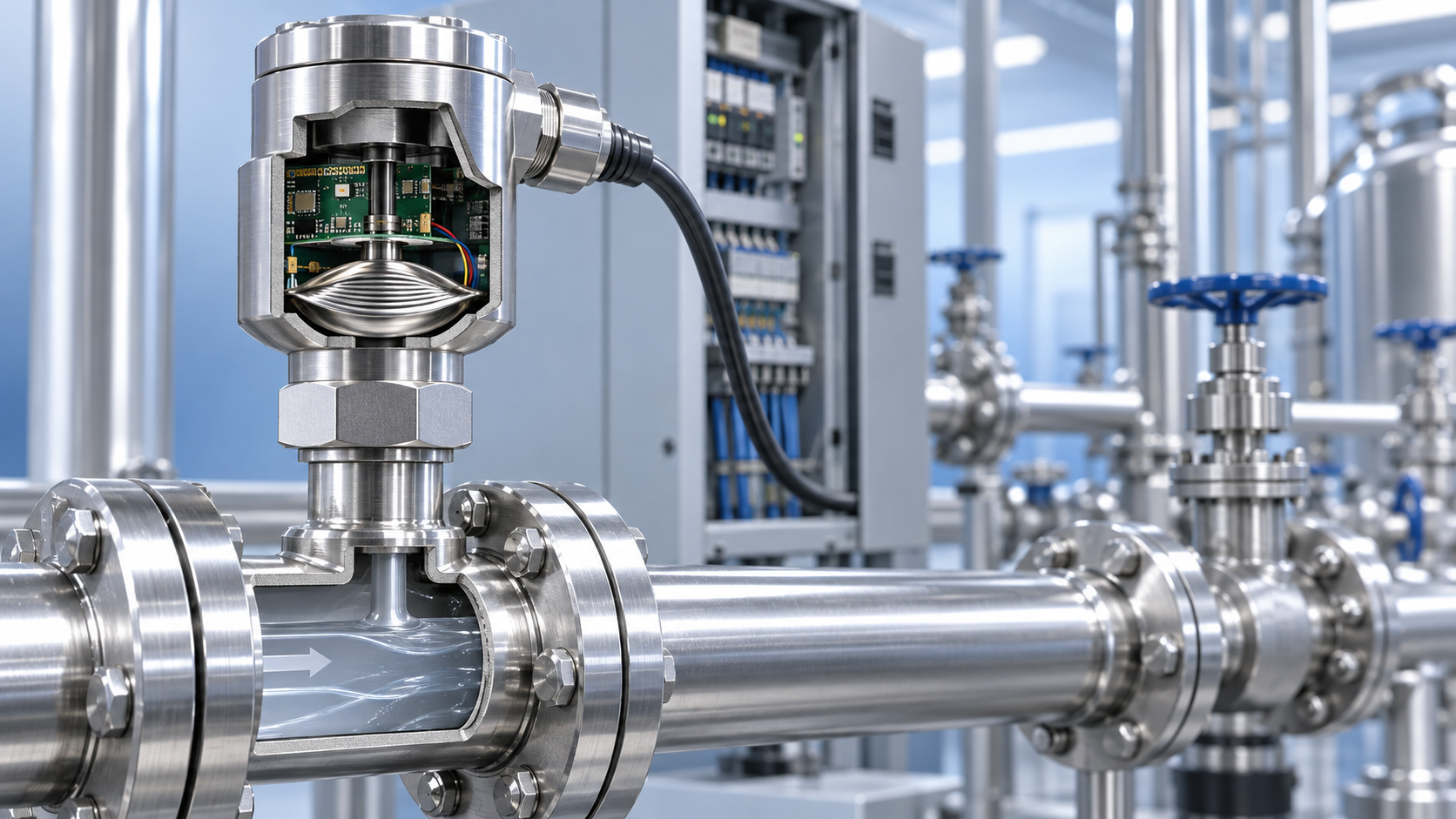
Southchip Technology Launches Its First Optical Sensor, the SC52115, for Wearable Devices How does a pressure sensor convert changes in applied force into usable electrical signals?
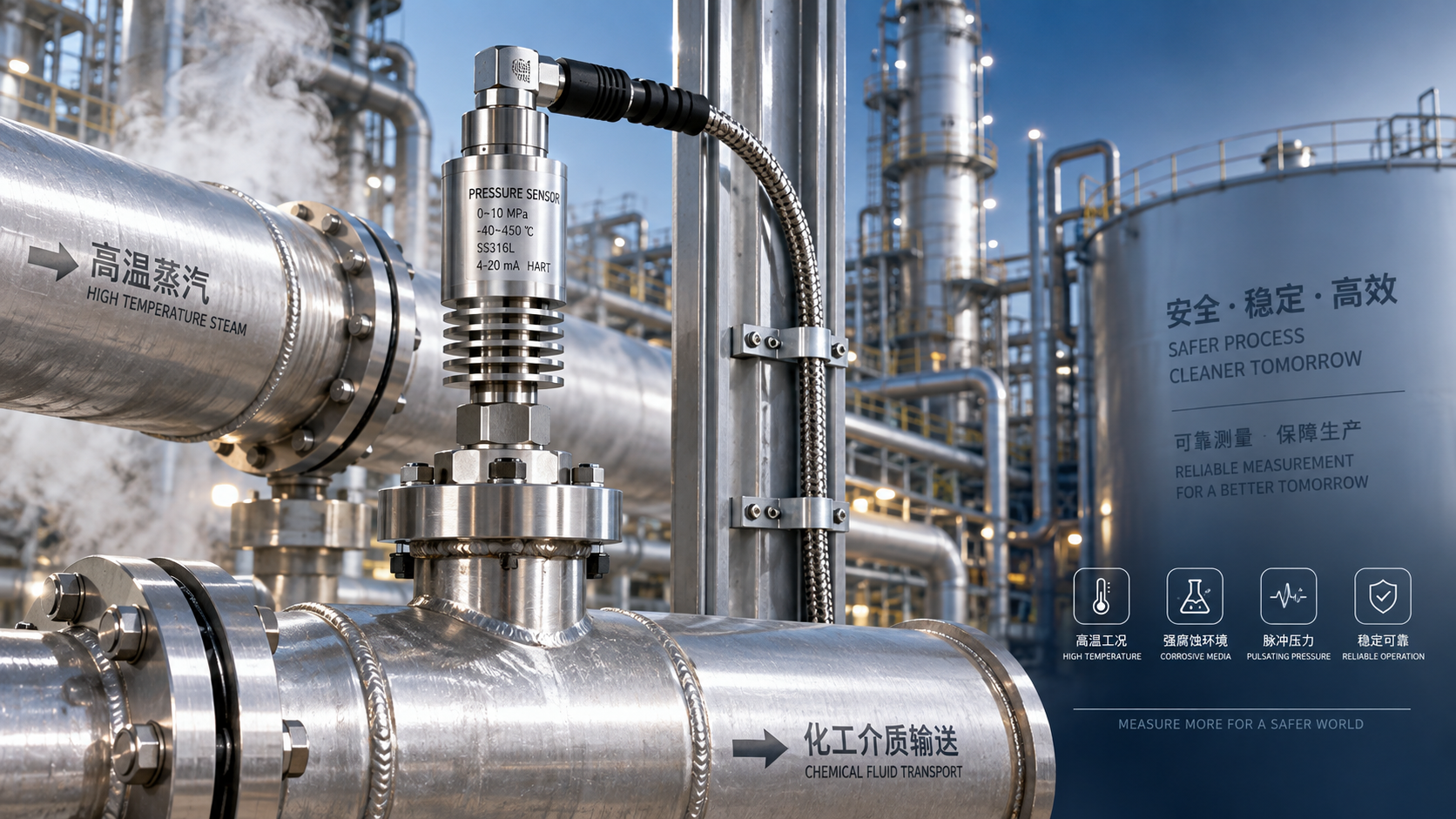
 Which parameters should be considered when selecting pressure sensors for high-temperature, corrosive, and pulsating operating conditions?
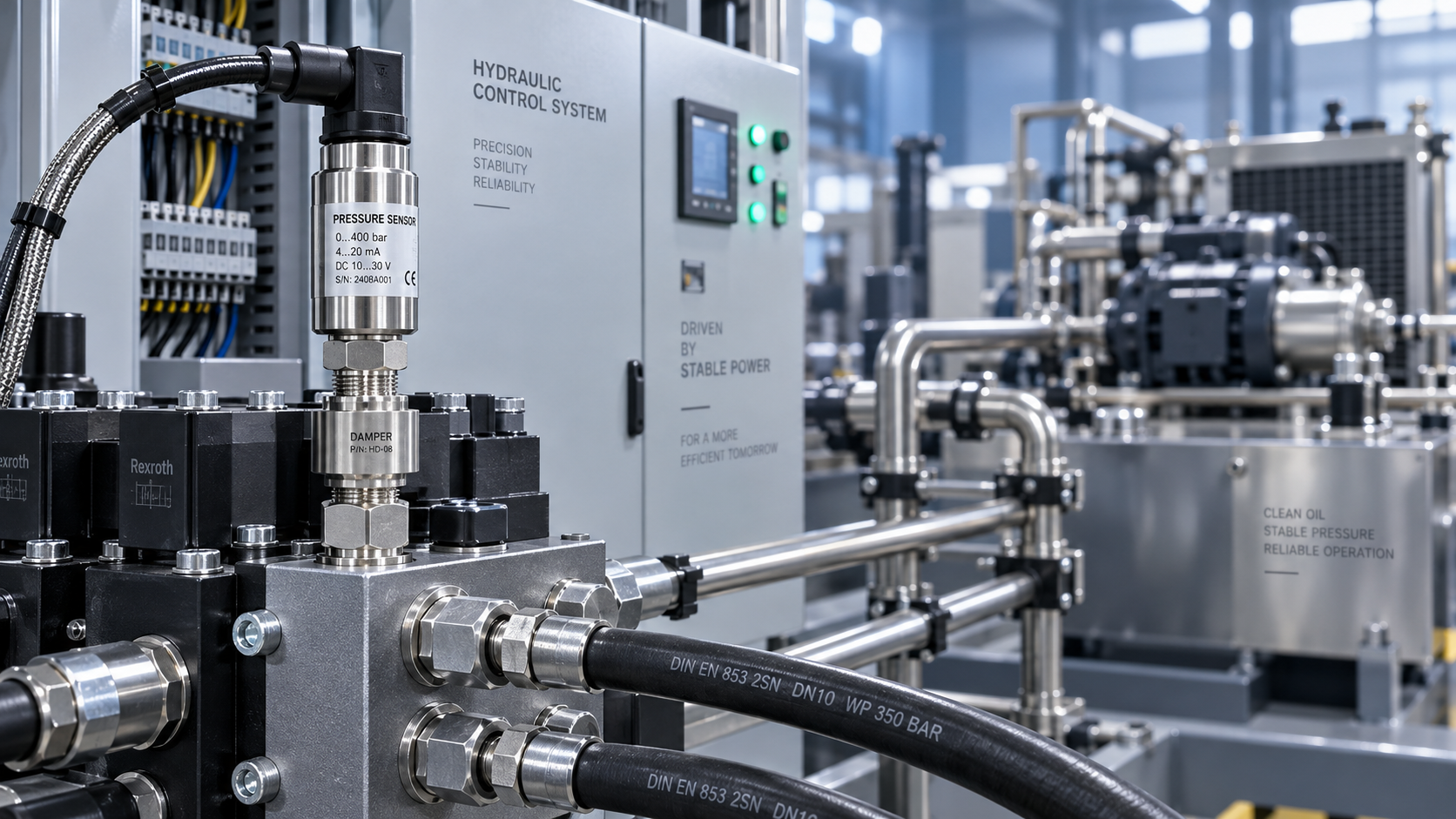
 Hydraulic equipment pressure fluctuates frequently. How can sensors be configured to improve control stability?