Product Center
—— Product Center ——
Xi'an Shenghongchuang Instrument Co., Ltd.
Contact: Mr. Zhang
Mobile: 15529283736
Email: shc-sensor@qq.com
Address: Fortune Building, Sanqiao Street, Xixian New Area, Xi'an, Shaanxi Province
Xi'an Shenghongchuang Instrumentation Co., Ltd.
Contact: Mr. Zhang
Mobile: 15529283736
Email: shc-sensor@qq.com
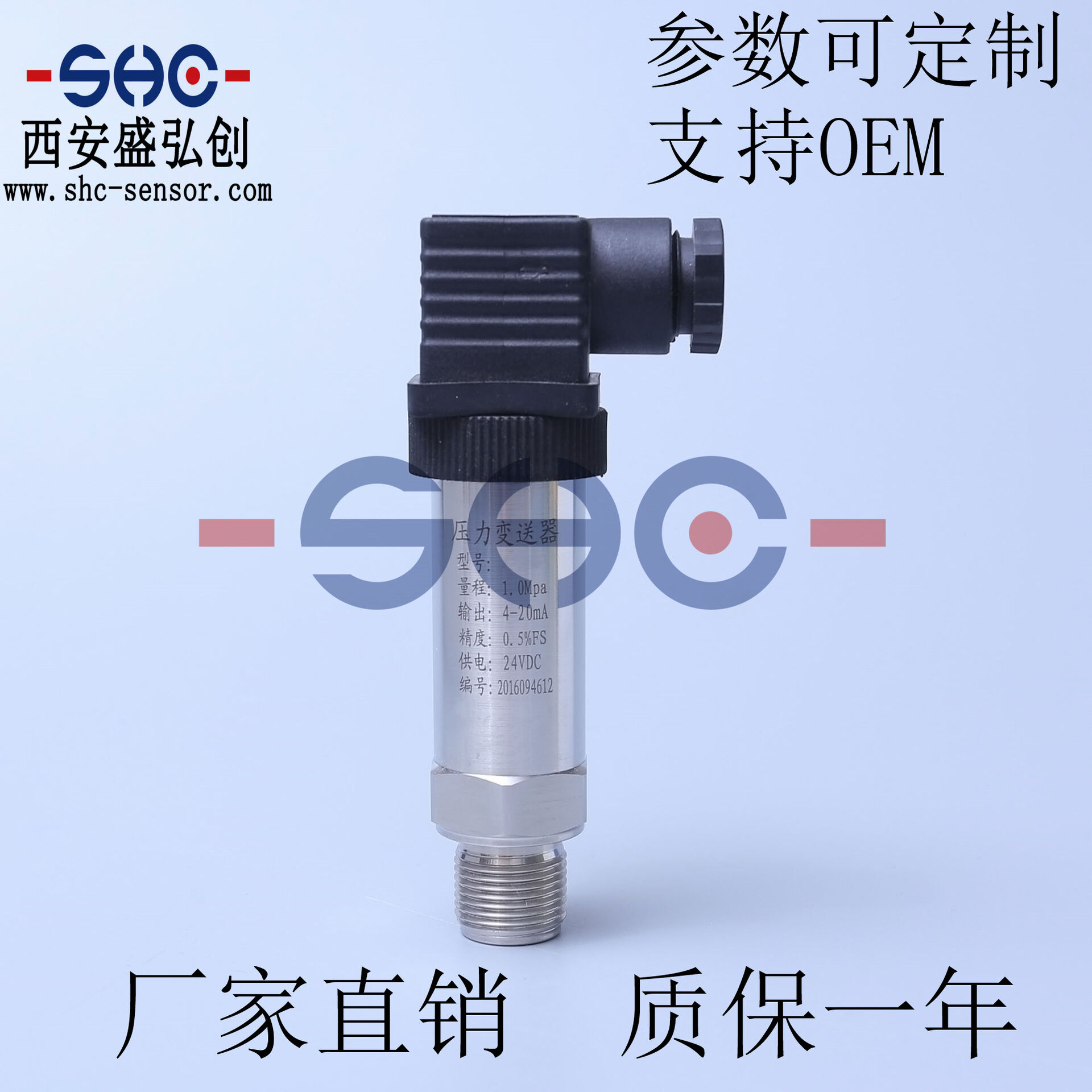
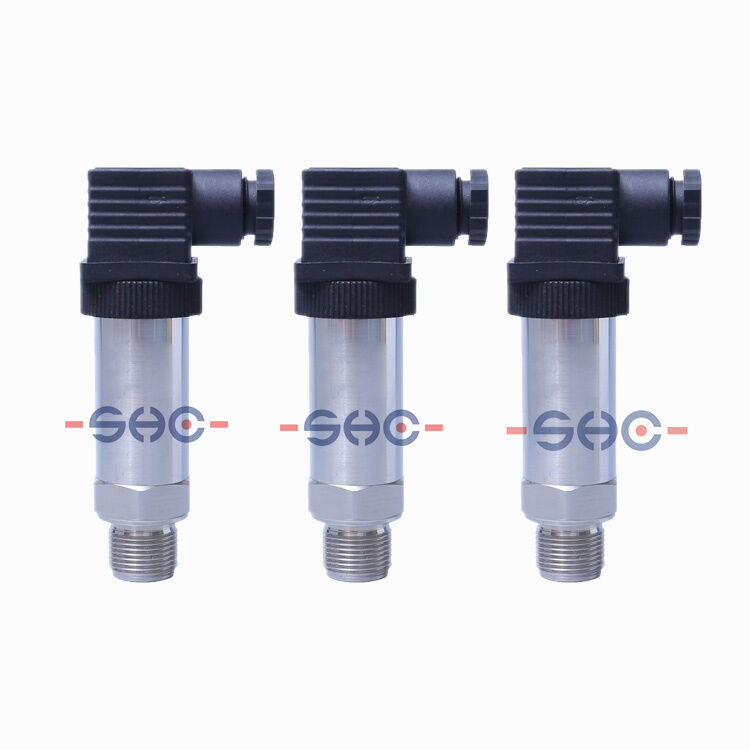
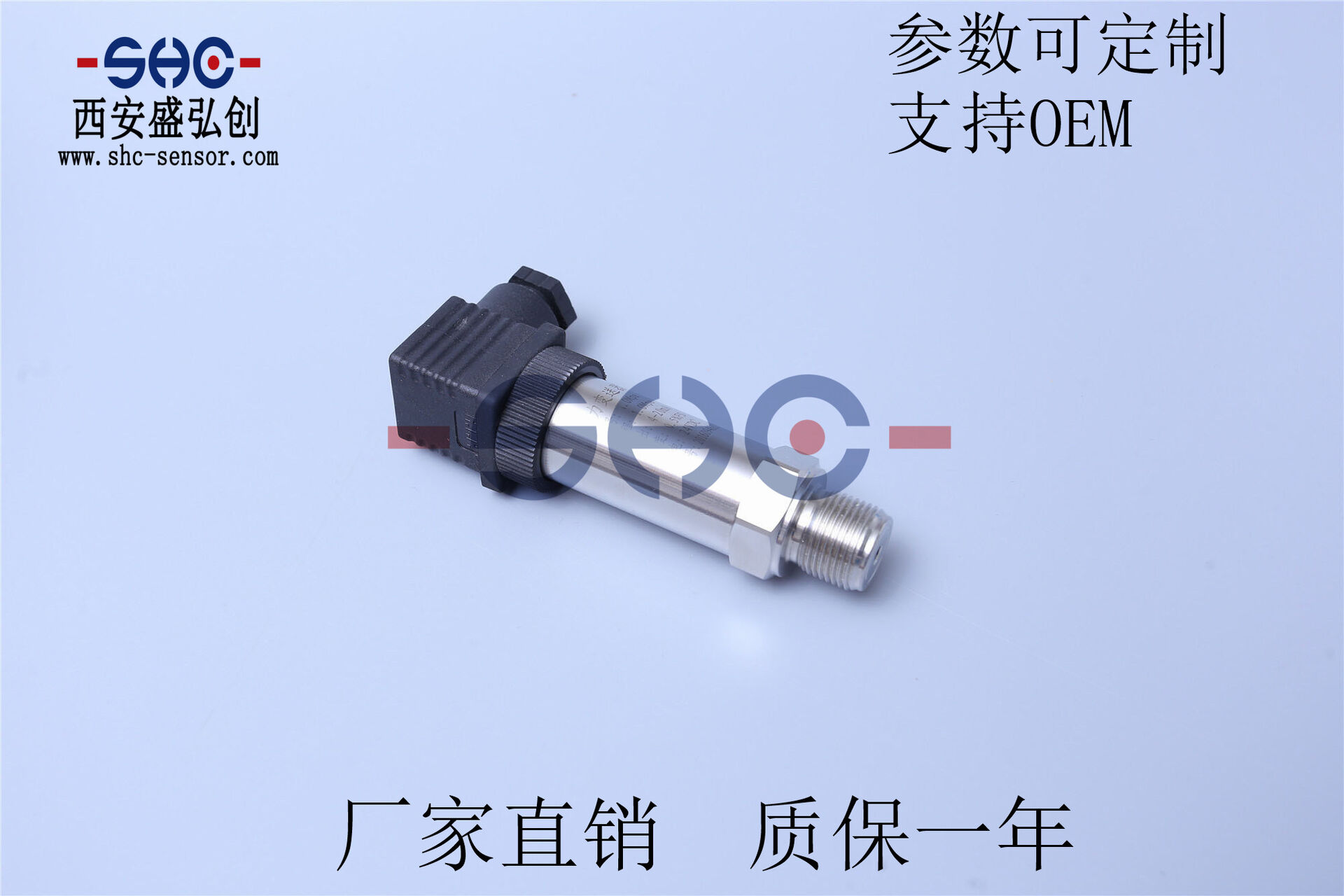
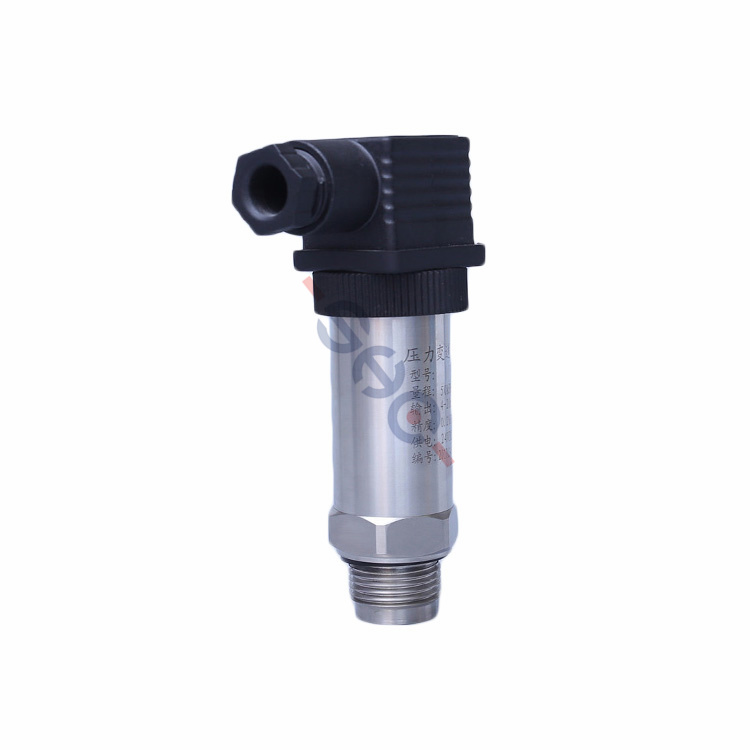
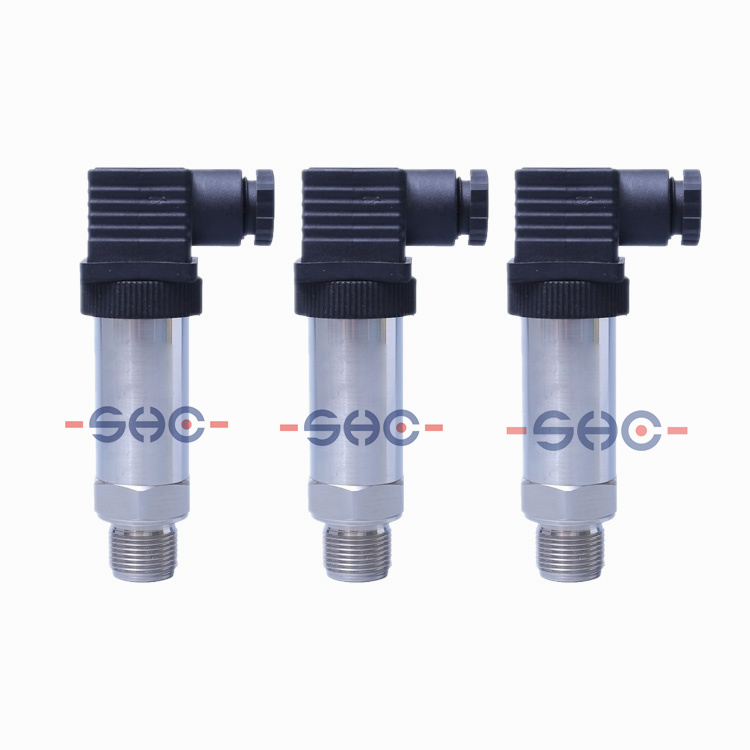
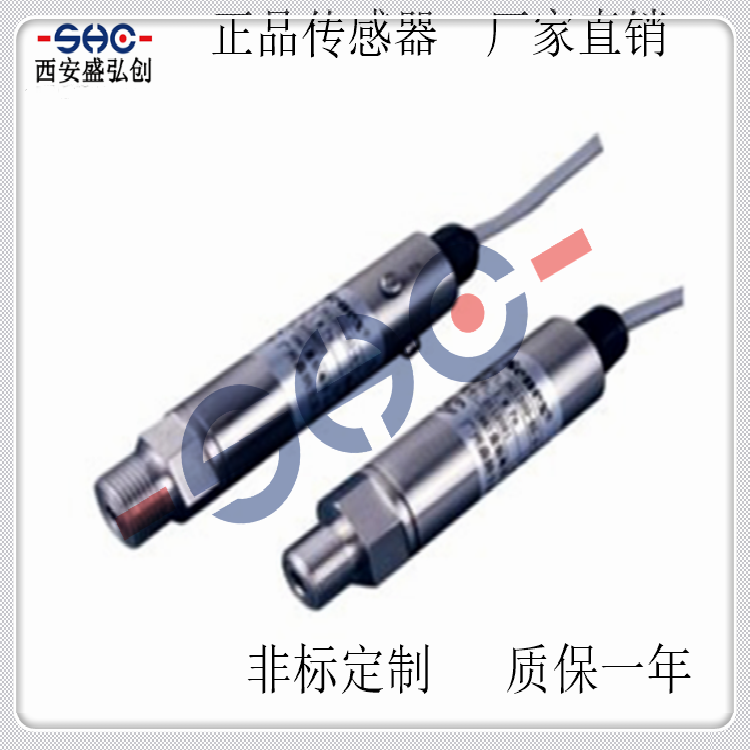
This pressure transmitter uses a high-precision, high-stability pressure sensor element from an internationally renowned company. Through a highly reliable amplification circuit and precise temperature compensation, it converts the pressure of the measured medium into standard electrical signals such as 4~20mADC、0~5VDC,0~10VDC and 1~5VDC. High-quality sensors, exquisite packaging technology, and refined assembly processes ensure the excellent quality and optimum performance of this product. This product offers various interface forms and multiple wiring methods, enabling it to meet customer needs to the greatest extent and making it suitable for supporting use in various measurement and control equipment.
Working Principle
When the pressure signal acts on the sensor, the pressure sensor converts the pressure signal into an electrical signal. After differential amplification and output amplifier amplification, it is finally converted through V/A voltage-current conversion into a 4-20mA standard current output signal that has a linear corresponding relationship with the liquid level pressure of the measured medium (liquid).
Features:
Small size, high cost performance, high stability, high sensitivity
0~-0.1MPa to 0~250MPa
Strain gauge sensor Diffused silicon sensor Ceramic piezoresistive sensor optional
Stainless steel structure
Multiple range options, convenient for user adjustment
Optional accessories with zero point/full scale adjustment
Pressure types: gauge pressure, absolute pressure, vacuum
Accuracy: Class 1.0、Class 0.5、Class 0.25、Class 0.1
Optional compact integrated LCD display and meter head with switch output
Laser marking available to ensure product traceability
Applications:
Hydraulic and pneumatic control systems
Liquid level measurement and control
Petrochemical, environmental protection, air compression
Power station operation inspection, locomotive braking systems
Turbo-generator units
Light industry, machinery, metallurgy
Building automation, constant pressure water supply
Other automatic control and testing systems
Industrial process testing and control
Laboratory pressure calibration
Technical Parameters:
Measured medium Various liquids, gases, or steam compatible with 304/316 stainless steel
Measurement range Gauge pressure 0~0.01MPa to 0~250MPa Absolute pressure 0~0.1MPa to 0~250MPa Vacuum 0~-0.1MPa
Overload pressure 2 times full scale or 300MPa(the smaller value applies)
Output signal 4~20mADC(two-wire) 0~10VDC,0~5VDC,l~5VDC,1-10VDC(three-wire)
Supply voltage 9~36VDC(two-wire),24±5VDC(three-wire)
Medium temperature -30~+85℃
Ambient temperature -20~+85℃
Storage temperature -40~+90℃
Relative humidity ≤ 95%(40℃)
Rise time ≤5 milliseconds to reach 90%FS
Accuracy Class 1.0,0.5,0.25(including comprehensive error of nonlinearity, repeatability, and hysteresis)
Zero adjustment ±8% of output span
Span adjustment ±20% of output span
Temperature drift ≤±0.05%FS/℃(temperature range -20~85℃, including the temperature effects on zero point and span)
Temperature compensation range 0~70℃
Stability Typical: ±0.1%FS/year Maximum: ±0.2%FS/year
Material in contact with medium 316 stainless steel/304 stainless steel
Housing material 304 or 316 stainless steel
Installation method Threaded installation
Pressure connection M20×1.5、M12×l、Gl/4、Gl/2 male thread, etc.
Electrical connection Four-core shielded cable (protection grade IP65) aviation plug DIN connector
Installation and Use
Before installing and using the pressure transmitter, carefully read the product catalog and instruction manual in detail. During installation, the pressure interface must not leak, and the range and wiring must be correct. The housing of pressure sensors and transmitters generally needs to be grounded. Signal cables must not be laid together with power cables, and strong electromagnetic interference around the sensor and transmitter should be avoided. Sensors and transmitters should be periodically verified in use according to industry regulations.
On-site fault inspection Most faults occurring at construction sites are caused by improper use and installation methods of pressure sensors. These can be summarized in several aspects. 1.Primary components (orifice plates, remote measurement joints, etc.) are blocked or improperly installed, and the pressure tapping point is unreasonable. 2.The pressure guiding pipe leaks or is blocked, residual gas remains in the liquid filling pipe or residual liquid remains in the gas filling pipe, and sediment exists in the process flange of the transmitter, forming a measurement dead zone. 3.Incorrect transmitter wiring, excessively high or low power supply voltage, and poor contact at the connection between the indicator head and instrument terminal. 4.Installation is not carried out strictly according to technical requirements, and the installation method and site environment do not meet technical requirements.
All the above faults of pressure sensors and transmitters will cause abnormal transmitter output or inaccurate measurement. However, through careful inspection, strict use and installation according to technical requirements, and timely effective measures, the problems can all be eliminated. For faults that cannot be handled, the transmitter should be sent to the laboratory or manufacturer for further inspection.
Installation of Additional Devices
(1)In order to ensure that the instrument is not affected by corrosion, excessive viscosity, or crystallization of the measured medium, an isolation device should be installed;
(2)In order to ensure that the instrument is not affected by sudden changes or pulsating pressure of the measured medium, a buffer should be installed. Especially during sharp pressure increase and pressure drop, pressure instruments are most likely to be damaged and scrapped, and even the Bourdon tube may rupture, causing leakage;
(3)In order to ensure that the instrument is not affected by vibration, the pressure instrument should be equipped with a vibration damping device and a fixing device;
(4)In order to ensure that the instrument is not affected by the high temperature of the measured medium, a bent tube device filled with liquid should be installed;
(5)Special dedicated instruments are strictly prohibited from other uses, and it is also strictly prohibited to carry out measurement on devices without special reliable devices, and it is even more strictly prohibited to use ordinary pressure gauges for pressure measurement of special media;
(6)For newly purchased pressure testing instruments, metrological verification must be carried out before installation and use to prevent vibration, damage, or other factors during transportation from impairing accuracy.
Routine Maintenance
1、Check the dimensions of the mounting hole
2、Keep the mounting hole clean
3、Choose an appropriate location
4、Carefully clean;
5、Keep dry:
6、Avoid low temperature interference
7、Prevent pressure overload
8The pressure transmitter should be checked once a week and inspected once a month, mainly to remove dust inside the instrument, carefully inspect electrical components, and frequently calibrate the output current value. The inside of the pressure transmitter is weak current and must be isolated from external strong current.
Solutions to Errors
1)The pressure guiding pipe should be as short as possible;
2)When measuring liquid or steam, the pressure guiding pipe should connect upward to the process pipeline, and its slope should not be less than 1/12;
3)For gas measurement, the pressure guiding pipe should connect downward to the process pipeline, and its slope should not be less than 1/12;
4)The layout of liquid pressure guiding pipelines should avoid high points in the middle, and the layout of gas pressure guiding pipes should avoid low points in the middle;
5)The same temperature should be maintained between the two pressure guiding pipes;
6)To avoid friction effects, the diameter of the pressure guiding pipe should be large enough;
7)There should be no gas in the liquid-filled pressure guiding pipe;
8)When using isolation liquid, the liquids in the pressure guiding pipes on both sides should be the same;
9)When using a cleaning agent, the cleaning agent connection should be close to the pressure tapping port of the process pipeline. The pipelines through which the cleaning agent passes should have the same length and diameter, and the cleaning agent should be prevented from passing through the transmitter.
Selection Steps
The selection of a pressure transmitter is very important. Below, based on my work experience, I will talk about the selection of pressure transmitters.
1、Environment of transmitter use.
2、Range.(For details, refer to pressure transmitter parameters-range)
3、Overload pressure.(Generally, differential pressure also requires the parameter of static pressure)
4、Accuracy.
5、Pressure medium.
6、Supply voltage.
7、Output signal.
8、Shock and vibration.
9、Pressure response.
10、Pressure interface.
11、Electrical interface.
12、Safety certification.
These are the main points. However, different transmitters may have different accessories, etc., so attention should be paid during selection.
After-sales Service
I、Quality Assurance Service
(I)Product quality implements the three guarantees
The product warranty period is calculated from the date of delivery and is one year. During the warranty period, if there are quality problems of the product itself, our company provides free repair, replacement, and return services.
1、If general parts of the product fail and can be restored to usage requirements after replacement, we are responsible for free timely repair;
2、If major parts of the product fail and cannot be repaired on time, a qualified product of the same model and specification will be replaced;
(II)Disclaimer Scope
During the warranty period, product failures caused by the following human factors and force majeure factors are not covered by free repair, replacement, and return services:
1、The usage occasion is inconsistent with the parameters in the order contract;
2、Improper use by the customer causes product failure;
3、The customer repairs and modifies the product without authorization;
4、The product appearance is seriously damaged and deformed, and the product identification is lost, making it impossible to identify the product source;
5、Product damage caused by natural disasters such as earthquake, flood, fire;
6、Human factors.
II、Lifetime Product Repair Service
For faulty products beyond the warranty period and within the disclaimer scope, our company will provide lifetime repair service for your product, only charging repair cost and product transportation cost.
Our company specializes in the production of pressure transmitters!
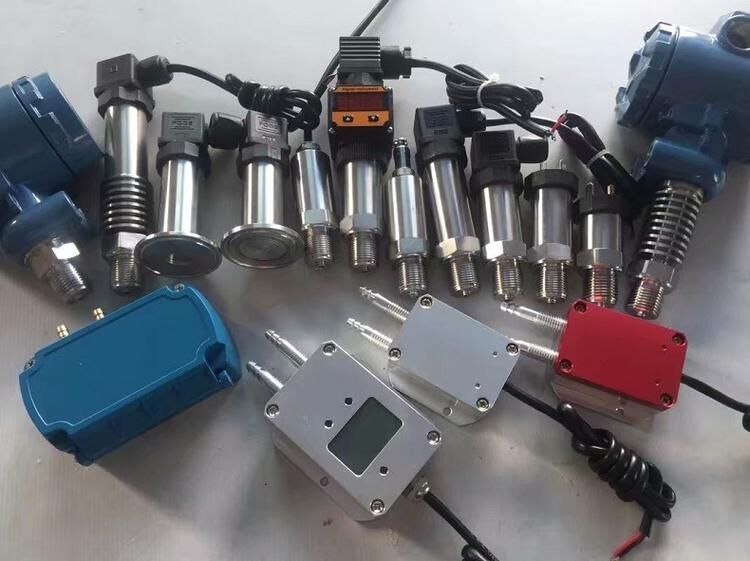
Since its establishment, Xi'an Shenghongchuang Instrument Co., Ltd. has mainly engaged in the R&D and production of pressure, level, temperature, differential pressure, digital display, weighing, and flow instruments. Main products include Swiss metallux ceramic piezoresistive sensors and self-developed ceramic capacitive pressure sensors. Diffused silicon, ceramic piezoresistive, strain gauge, metal capacitive, ceramic capacitive pressure transmitters, remote pressure transmitters, high-temperature pressure transmitters, flush diaphragm pressure transmitters, anti-corrosion pressure transmitters, integrated/split level transmitters, anti-corrosion level transmitters, lightning protection level transmitters, high-temperature pressure-guided level transmitters, straight rod level transmitters, flange level transmitters, wind pressure transmitters, metal capacitive differential pressure transmitters, diffused silicon differential pressure transmitters, pressure controllers, thermocouples/RTDs, temperature transmitters, ultrasonic level meters
Notes 1.All supplied products are accompanied by product certificates and instruction manuals, including product number, technical parameters, wiring, factory date, etc. Please carefully check them to avoid misuse. 2.Wiring should be carried out strictly in accordance with our company's instructions for use. 3.This product is a precision instrument. Random disassembly, collision, dropping, or poking the sensor with sharp tools is prohibited. 4.The transmitter can work immediately after power-on, but the output becomes stable after preheating for 30 minutes. 5.If any abnormality is found during use, turn off the power, stop using it, and inspect it, or directly contact our company's technical department. 6.During transportation and storage, restore the original packaging and store it in a cool, dry, and ventilated warehouse. 7.The quality warranty period is 12 months (damage caused by improper use such as pressure overload and incorrect wiring is not covered by the quality warranty). 8.Special products are customized products, do not participate in 7-day no-reason return, customized products have a lead time, no return and no replacement.
Related Recommendations