


News Center
—— NEWS CENTER ——
Xi'an Shenghongchuang Instrument Co., Ltd.
Contact: Mr. Zhang
Mobile: 15529283736
Email: shc-sensor@qq.com
Address: Fortune Building, Sanqiao Street, Xixian New Area, Xi'an, Shaanxi Province
How Xi'an Low-Temperature Flowmeters Ensure Stable Operation in Winter
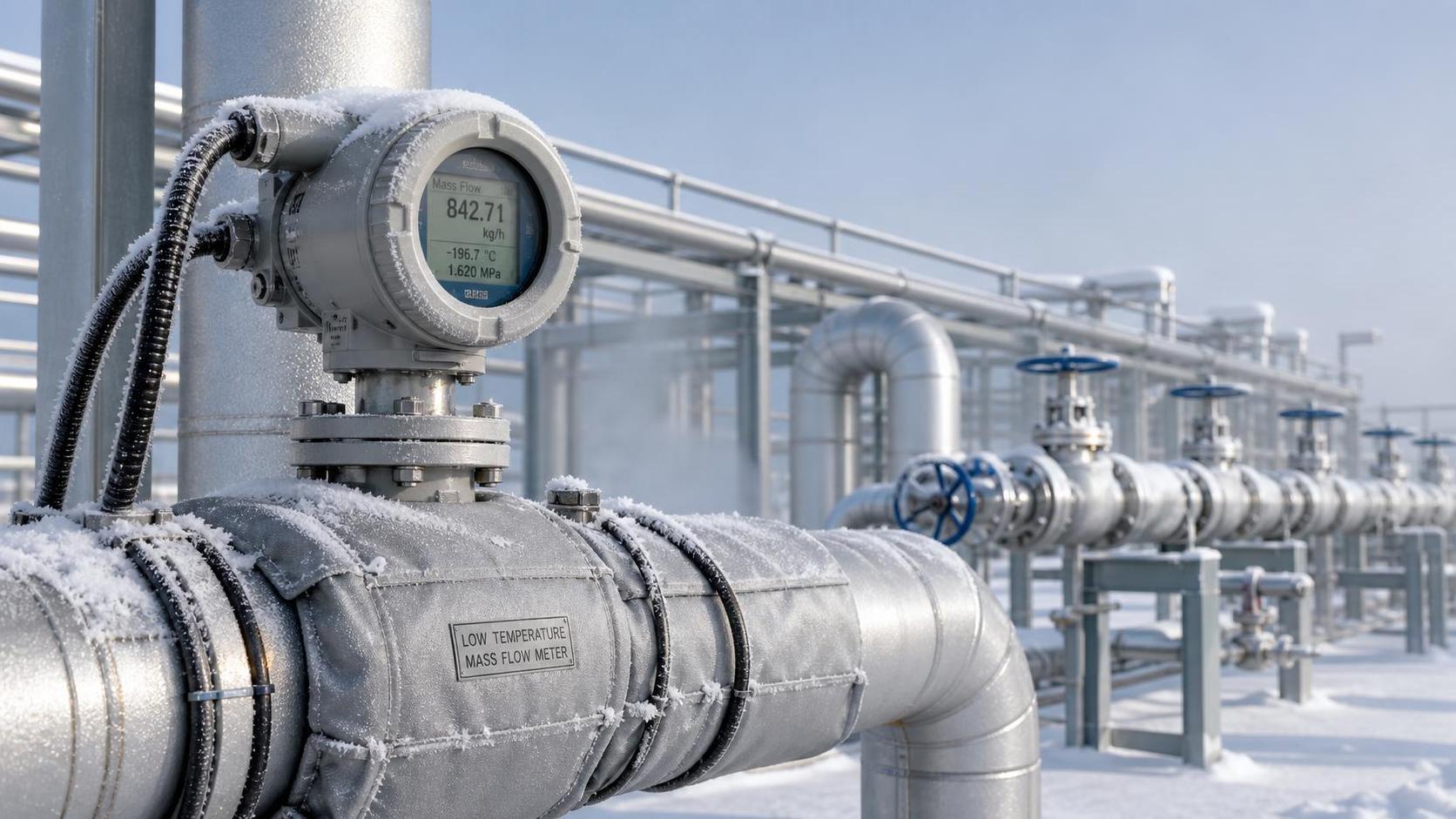
As ambient temperatures decline in winter, flow measurement in industrial sites often faces more complex operating-condition changes. For liquids, gases, steam, and media containing certain impurities, low temperatures may cause increased viscosity, condensation and crystallization, material buildup on pipe inner walls, seal contraction, and electrical signal fluctuations, thereby affecting flowmeter measurement accuracy and continuous operating capability.
Xi'an experiences relatively significant day-to-night temperature differences in winter. Flow sensors, transmitters, and associated display instruments installed outdoors should be configured systematically based on medium characteristics, installation location, and on-site protection conditions. Relying solely on a single insulation measure is insufficient to cover all risks under low-temperature conditions; a complete protection plan needs to be established covering selection, installation, heat tracing, wiring, calibration, and inspection.
Xi'an Shenghongchuang Instrumentation Co., Ltd., supported by the production and technical capabilities of its subsidiary Shaanxi Qinkong Sensor Technology Co., Ltd., can provide supporting products and application support for industrial measurement and control requirements involving pressure, level, temperature, flow, and more. For winter low-temperature flow measurement, suitable sensor structures and protection solutions should be determined based on the actual temperature range, medium flow condition, and control objectives.
On-site management personnel should complete equipment inspections before temperatures drop and increase inspection frequency for critical metering points during sustained low-temperature periods. By identifying locations prone to freezing, condensation, and drift in advance, unexpected shutdowns, metering deviations, and maintenance costs can be reduced, providing a reliable data foundation for continuous production-line operation.
I. Main Effects of Low-Temperature Environments on Flow Sensors
Changes in Medium Properties Directly Alter Measurement Conditions
After the temperature of a liquid decreases, viscosity generally increases and flow resistance rises. For lubricating oil, fuel oil, resin solutions, syrup-like media, or oily wastewater, each certain decrease in temperature may change flow velocity distribution and pressure loss, and the original measuring range and flow coefficient may no longer remain within the ideal operating range.
When certain media approach their freezing point, wax precipitation point, or crystallization temperature, deposits may form in the flowmeter measuring tube, impulse lines, and valve dead zones. If the effective flow cross-sectional area decreases, deviations may occur between the actual flow rate and the instrument display value; in severe cases, this may result in blockage, no signal, or zero-point abnormalities.
Gas measurement also requires attention to temperature and pressure changes. Under low-temperature conditions, gas density, pressure-compensation conditions, and pipeline condensation may all affect conversion results. For applications using standard volumetric flow for settlement or control, it should be confirmed that temperature and pressure input signals are consistent with the flowmeter compensation model.
Therefore, winter operation should not focus only on the minimum temperature rating of the flowmeter itself. It is also necessary to confirm the density, viscosity, conductivity, solids content, and phase changes of the medium at the minimum operating temperature. Selection parameters should include a reasonable margin to prevent equipment from operating near the lower or upper measuring-range limit for extended periods.
Sensors and Electrical Components Need Protection Against Thermal Contraction and Moisture
Low temperatures cause metal, sealing materials, and plastic components to contract to varying degrees. Flange connections, threaded interfaces, sealing gaskets, and sensor wiring chambers that originally have minor assembly deviations may experience leakage, loosening, or reduced sealing performance in winter.
Day-to-night temperature differences may also cause condensation inside junction boxes. When moisture enters terminal areas, it can easily lead to reduced insulation resistance, signal fluctuations, communication abnormalities, or corrosion. For 4-20mA, pulse, RS485, and other output methods, shielding grounding and cable sealing conditions should be inspected carefully.
For flow sensors installed in open-air areas, protective covers, insulation layers, and drip loops are recommended according to on-site protection requirements. Cable entries should face downward or use reliable sealing structures to prevent rainwater and melted snow from entering the instrument enclosure along the cables and to avoid repeated freeze-thaw cycles accelerating component aging in winter.
At locations below -10℃ or exposed to wind and snow, instrument protection, wiring protection, and pipeline freeze protection should be designed as an integrated system. For important measurement points, on-site temperature monitoring can be installed so that heat tracing can be activated promptly or manual verification arranged when temperatures approach the set threshold.
II. Principles for Selecting and Configuring Low-Temperature Flowmeters in Winter
Match the Measurement Principle to Medium Characteristics
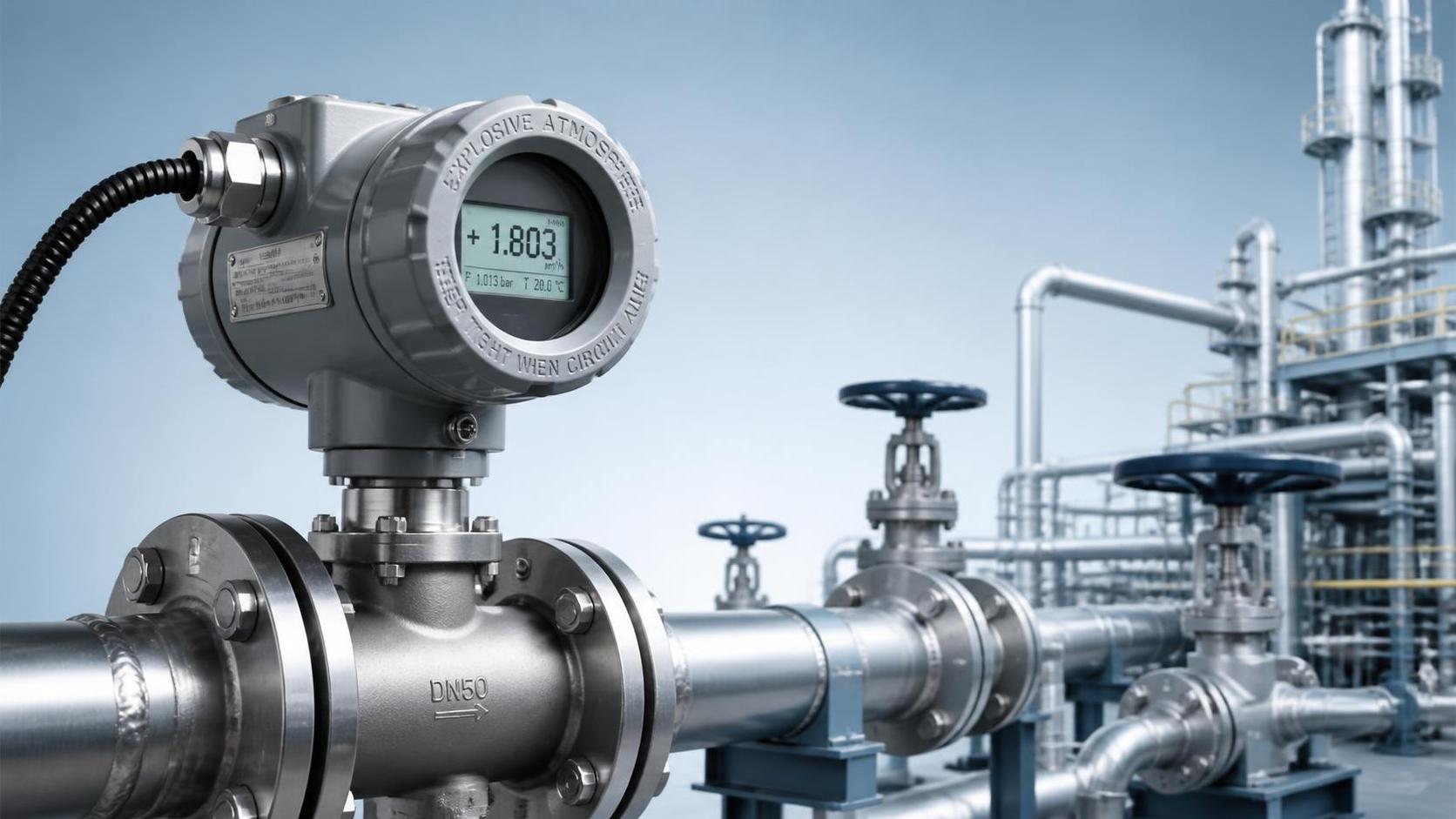
Different types of flowmeters do not have the same capability to adapt to medium conditions. Electromagnetic flowmeters are suitable for liquid media with a certain conductivity and require a full measuring tube; vortex flowmeters are suitable for various gases, steam, and low-viscosity liquids; turbine flowmeters are relatively sensitive to medium cleanliness and viscosity changes; mass flowmeters are suitable for applications requiring direct acquisition of mass flow and density information.
If the viscosity of a low-temperature medium changes significantly, priority should be given to verifying the instrument's allowable viscosity range, minimum measurable flow velocity, and pressure-loss requirements. For media prone to condensation or crystallization, consideration should be given to insulation jackets, heat-tracing conditions, removable cleaning structures, or installation solutions with good resistance to material buildup.
The minimum ambient temperature and minimum medium temperature should also be clearly defined during selection, as these two parameters must not be confused. Ambient temperature mainly affects electronic components, display modules, and cable performance, whereas medium temperature relates to the long-term reliability of sensor linings, electrodes, seals, measuring tube materials, and connection structures.
The table below can serve as an initial reference for assessing common medium measurements in winter. Specific models must still be confirmed based on pipe diameter, pressure rating, flow range, and explosion-proof requirements.
Provide Margin for Low-Temperature Conditions in Range and Materials
The normal operating flow rate of a flowmeter should preferably fall within the middle section of the instrument's effective measuring range. If winter flow decreases toward the lower limit due to increased viscosity, signal resolution and repeatability may be affected; if instantaneous flow increases due to process switching, overrange or significant pressure loss may occur.
In engineering practice, the normal operating flow should be controlled as far as possible within 30% to 80% of the rated range, with the maximum flow calculated in conjunction with start-stop operation, flushing, peak loads, and other conditions. For process points with high metering requirements, it is recommended to retain a 10% to 20% parameter margin to accommodate winter changes in medium properties.
Materials in contact with the medium should take into account low-temperature toughness, corrosion resistance, and sealing compatibility. Stainless-steel measuring tubes, suitable lining materials, low-temperature-resistant seals, and properly specified flange gaskets can reduce the risks of contraction-related leakage and chemical corrosion. Material selection must not be based solely on normal-temperature conditions.
For non-standard customized pipe diameters, interfaces, pressure ratings, or output protocols, requirements can be confirmed during the project design stage. Xi'an Shenghongchuang Instrumentation Co., Ltd. can match appropriate flow measurement and signal transmission solutions according to on-site operating conditions, reducing subsequent modification work caused by inconsistent interfaces or insufficient environmental adaptability.
III. Key Points for Implementing Installation, Insulation, and Heat Tracing
Standardized Installation Is the Prerequisite for Stable Measurement
Before installing a flow sensor, confirm that the interior of the pipeline is clean and free of welding slag, ice, fibrous impurities, and large-particle deposits. Newly built or modified pipelines should be flushed before commissioning, and filtration devices should be installed temporarily when necessary to prevent impurities from impacting sensitive components or jamming mechanical measurement structures.
Straight pipe lengths, flow direction, installation orientation, and valve positions should meet product requirements. Flow-field disturbances near elbows, pumps, control valves, or reducers are more likely to amplify measurement errors under low-flow or high-viscosity conditions. Stable flow sections should be retained as far as possible upstream and downstream of the sensor, and instruments should not be installed at the highest point of the pipeline or at locations prone to gas accumulation.
For liquid measurement, maintaining a full pipe is particularly important. If the pipeline is in a descending section, discharges directly to atmosphere, or is near a pump suction inlet, local negative pressure and bubbles may occur, causing signal fluctuations. When necessary, the flowmeter can be arranged in a lower pipeline section, or back-pressure measures can be installed downstream to maintain a stable liquid column.
For outdoor installations, supports should have sufficient strength to prevent connection loading caused by the combined effects of insulation layers, snow accumulation, and pipeline vibration. The instrument must not bear pipeline weight, and both flange ends should remain coaxial to prevent long-term mechanical stress from affecting sensor structure and sealing performance.
Insulation and Heat Tracing Should Be Controlled Based on Medium Temperature
The core objective of insulation is not simply to raise the external surface temperature, but to maintain the medium temperature within a range that allows normal flow and stable measurement. For media prone to solidification, insulation strategies should be established based on their freezing point, conveying temperature, and residence time, while valves, filters, bypasses, and flowmeter connection sections should all be included in the coverage scope.
Electric heat-tracing systems should be equipped with temperature-control devices to prevent excessively low temperatures from eliminating freeze-protection effectiveness, while also avoiding prolonged overheating that may damage cables, linings, or seals. Two thresholds can generally be set: an early-warning temperature and an interlock temperature. For example, an alert can be issued before the medium temperature approaches the process lower limit, followed by activation of heat tracing according to the set conditions.
After insulation materials are installed, operational access should remain available for junction boxes, display windows, maintenance bolts, and nameplates. Completely wrapping the instrument without considering maintenance may prevent subsequent alarm observation, parameter reading, or wiring-fault handling, thereby increasing winter maintenance difficulties.
The table below lists common protection inspection items for low-temperature sites and can serve as basic items in seasonal maintenance records.
IV. Signal Verification, Inspection, and Fault Handling
Establish an Inspection Mechanism for Critical Measurement Points in Winter
Winter inspections should not only record instantaneous flow values; medium temperature, pipeline pressure, valve opening, heat-tracing status, and control-system output should also be checked simultaneously. Correlating and comparing multiple parameters enables faster determination of whether a process flow change is genuine or whether the sensor is affected by low temperature, condensation, or electrical interference.
For critical metering points, inspections can be performed according to a schedule of daily trend review, weekly on-site inspection, and monthly functional verification. If abnormal readings occur 3 consecutive times, flow fluctuations exceed the normal process range, or output signals are frequently interrupted, the issue should be escalated promptly to prevent minor problems from developing into production-stopping failures.
Standard instruments or process balance data can be retained on site as a basis for cross-verification. For example, displayed flow values can be compared with changes in tank level, pump operating time, batch consumption, or upstream and downstream pressure changes. When deviations continue to increase, pipeline condition and temperature conditions should be checked first before determining whether recalibration is required.
Intelligent digital display control instruments can be used for centralized display, alarm output, and signal conversion. Proper configuration of high- and low-flow alarms, temperature interlocks, and communication fault prompts helps shorten the time required to detect abnormalities. Alarm thresholds should be set according to actual production fluctuations; settings that are too sensitive or too loose will both reduce management effectiveness.
Investigate Common Abnormalities in the Order of “Process, Pipeline, Instrument”
When the displayed flow suddenly decreases, first confirm whether the pump, valves, filters, and pipeline have freezing, blockage, or insufficient supply. If the actual process flow is normal but the instrument displays a low value, then check sensor power supply, output circuits, grounding, and parameter settings to avoid dismantling the instrument without proper assessment.
When signals fluctuate intermittently, focus on checking for condensation in the junction box, improper shielding-ground connection, interference from nearby variable-frequency equipment, and bubbles inside the pipeline. For electromagnetic flowmeters, it is also necessary to confirm whether the medium meets conductivity requirements, whether the pipe is full, and whether electrode surfaces are affected by scaling or deposits.
When the instrument has no output at all or communication is interrupted, first inspect the 24VDC power supply, cable integrity, terminal tightness, and waterproof sealing condition. In low-temperature environments, the wiring chamber should not be forcibly opened while energized. Handling should be performed only after confirming power isolation and safe conditions, preventing moisture ingress and secondary failures.
After fault handling is completed, the abnormality time, ambient temperature, medium condition, corrective actions, and recovery data should be recorded. Continuously accumulated operating records over one winter can provide a reliable basis for selection optimization, heat-tracing modifications, and spare-parts configuration in the following year, while also improving the preventive maintenance level of the sensor system.
V. Improve Winter Metering Reliability Through Systematic Protection
Shift from Individual Instrument Maintenance to Full-Chain Management
The stability of low-temperature flow measurement depends on the coordinated condition of flow sensors, process pipelines, insulation and heat tracing, electrical circuits, and control systems. A weakness in any one link may prevent an otherwise accurate instrument from performing normally. Therefore, winter protection should be incorporated into a unified equipment-management and process-management plan.
It is recommended to complete inspections of critical measurement points 30 days before winter each year, focusing on the minimum temperature adaptation range, insulation integrity, heat-tracing circuits, sealing condition, and historical fault records. For flowmeters that have been in continuous service for a long period, verification or maintenance can be scheduled based on operating data to avoid concentrating equipment issues during severe cold periods.
Xi'an Shenghongchuang Instrumentation Co., Ltd. and Shaanxi Qinkong Sensor Technology Co., Ltd. can provide supporting products such as flowmeters, temperature sensors, pressure transmitters, level transmitters, and intelligent digital display control instruments for industrial automation sites, as well as selection consultation, technical support, and non-standard customization services based on actual operating conditions.
If you need to develop a winter low-temperature flowmeter selection, insulation and heat-tracing, or fault-investigation plan for projects in Xi'an and surrounding areas, you may compile parameters such as the medium name, minimum temperature, pipe diameter, pressure, flow range, and installation location. Professional technical personnel can then provide targeted matching to complete winter operation protection preparations as early as possible.
Related Recommendations