


News Center
—— NEWS CENTER ——
Xi'an Shenghongchuang Instrument Co., Ltd.
Contact: Mr. Zhang
Mobile: 15529283736
Email: shc-sensor@qq.com
Address: Fortune Building, Sanqiao Street, Xixian New Area, Xi'an, Shaanxi Province
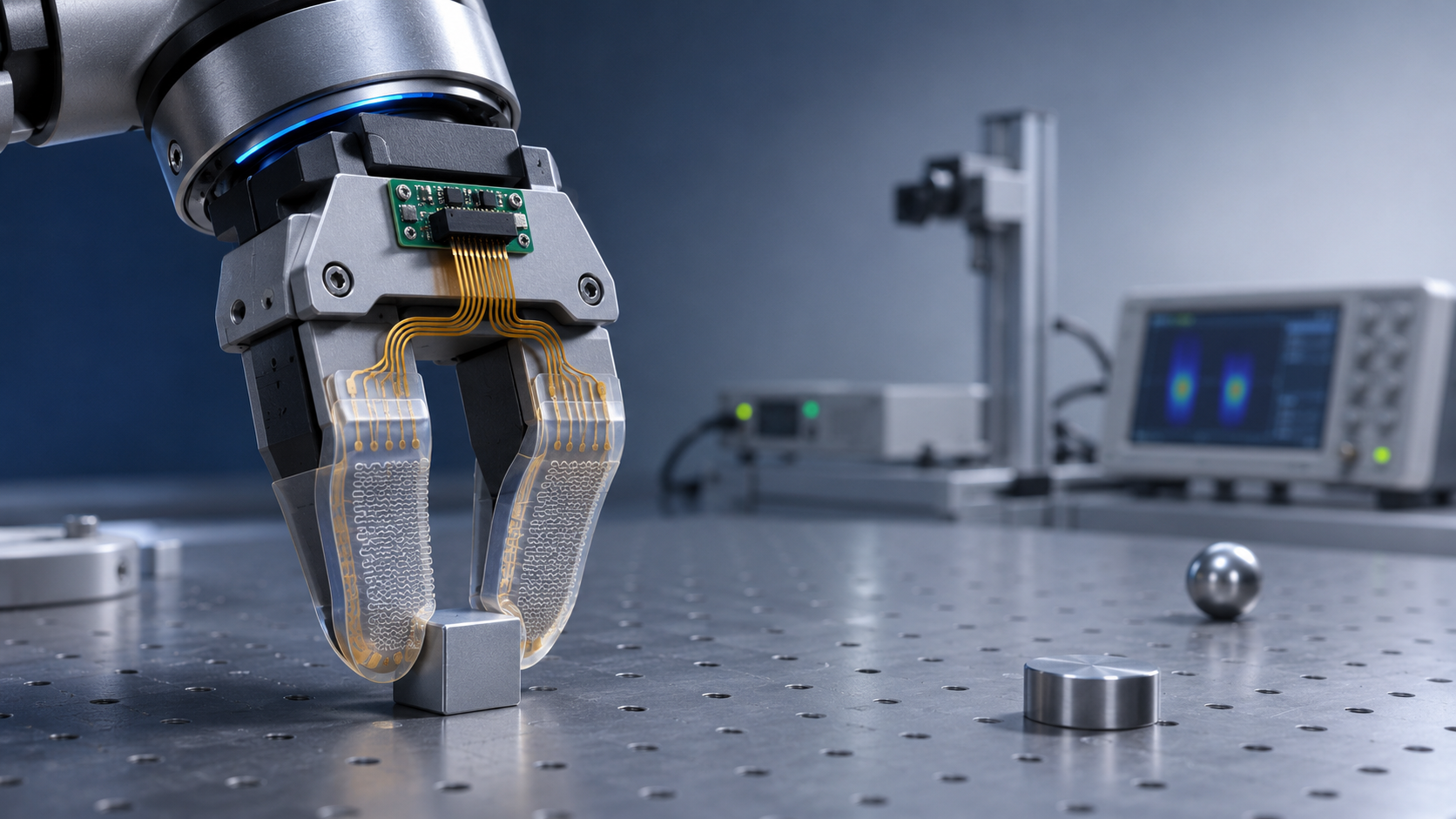
A report by National Business Daily on November 26, 2026, said that the development of physical AI is driving growth in the flexible tactile sensor segment associated with electronic skin, and that early signs of market consolidation and price competition have emerged. The Gaogong Industry Research Institute forecasts that by 2030, demand for flexible tactile sensors in the global humanoid robotics sector will reach RMB 27.4 billion.
Alongside rising demand expectations, the report also notes that some manufacturers are growing faster overseas than in China, and that competition in the sector is shifting from a focus on hardware alone to comprehensive solutions. For this segment, the questions worth watching include not only the size of its potential market, but also whether demand will gradually materialize and how suppliers will provide products and services that meet application requirements amid price pressure.
The RMB 27.4 Billion Forecast Points to Demand Potential, but Its Realization Remains to Be Seen
The RMB 27.4 billion figure cited by the Gaogong Industry Research Institute is a forecast of demand for flexible tactile sensors in the global humanoid robotics sector by 2030, not a market size already achieved. The figure offers a reference for assessing long-term demand, but it should not be equated directly with current procurement spending, nor does it imply that all manufacturers will experience the same growth rate.
Whether the forecast is gradually borne out depends both on the development of applications related to humanoid robots and on whether flexible tactile sensors can be incorporated into specific products at a suitable cost and performance level. Even if application demand grows, suppliers may differ in the orders they secure and the price pressure they face.
The forecast is limited to the humanoid robotics sector. When reviewing the related data, it is important to distinguish it from other potential applications for flexible tactile sensors and avoid interpreting a forecast for one sector as the market size of the entire segment.
Market Consolidation and Price Competition Emerge Side by Side
The report notes early signs of market consolidation and price competition in the flexible tactile sensor segment. This suggests that as customers compare products and solutions, suppliers may compete not only on their ability to provide hardware, but also on pricing, delivery, and adaptability.
The effects of price competition vary across business activities. For buyers, changes in pricing may affect supplier selection and overall procurement costs; for sensor manufacturers, price pressure affects the balance between product investment and commercial returns. If customers also raise their expectations for adaptability and delivery, simply lowering hardware prices may not be enough to build sustained competitiveness.
It is important to note that “early signs” describes signals of competition; it does not mean that the market structure has already become fixed. The report provides no market share figures or details on the extent of price changes, so it is not yet possible to determine the degree of market concentration or how widely price competition will persist.
From Hardware Competition to Comprehensive Solutions
The shift toward comprehensive solutions described in the report can be understood as a broadening of customers’ evaluation criteria: in addition to individual hardware products, they may consider whether a product works with a specific application and whether the associated support meets their needs. Hardware remains fundamental, but how it is used within a customer’s solution may also influence purchasing decisions.
This shift is linked to price competition. If products are compared solely as individual hardware items, price may become a more prominent selection criterion. If customers also consider adaptability, delivery, and ongoing support, differences between suppliers need to be assessed against the full set of requirements. However, whether comprehensive solutions can deliver higher returns still depends on which capabilities customers are willing to pay for and how much it costs suppliers to provide them.
Participants at different stages of the value chain may also have different priorities. Sensor manufacturers need to address the fit between their products and application requirements, while robotics-related customers need to weigh sensor performance, procurement costs, and integration work. The speed at which market forecasts translate into actual demand will depend in part on whether stable supply-and-demand relationships can be established between the two.
What Do Differences in Overseas Growth Rates Signal?
The report notes that some manufacturers are growing faster overseas than in China. This indicates that, at least for these manufacturers, business growth is not progressing at the same pace across different markets. However, this does not mean that all manufacturers are following the same trend, nor can a comparison of growth rates alone establish that their overseas businesses are already larger than their domestic ones.
Differences in growth rates may affect how manufacturers allocate market investment and delivery support. For industry observers, more informative questions than a single growth rate include whether growth can be sustained, whether the related demand turns into stable orders, and how product and comprehensive solution requirements differ across markets. These developments need to be monitored against subsequent public reports and company disclosures.
At present, the key signals from this segment are that humanoid robots offer clear potential for demand, while competition among suppliers is beginning to extend to pricing and solution capabilities. Long-term market size remains a forecast, while the extent of market consolidation and price competition will become clearer as the sector develops.
Related Recommendations
 Physical AI is driving demand for electronic skin, intensifying competition in the flexible sensor market
 Projects Proposed for Funding under Shenzhen’s Smart Sensor Support Program
 2026 Trends in China's Industrial Sensor Industry: Accelerating Localization
 Two Departments Announce Key Projects for Metrology to Support the Development of New-Quality Productive Forces in 2026