


News Center
—— NEWS CENTER ——
Xi'an Shenghongchuang Instrument Co., Ltd.
Contact: Mr. Zhang
Mobile: 15529283736
Email: shc-sensor@qq.com
Address: Fortune Building, Sanqiao Street, Xixian New Area, Xi'an, Shaanxi Province
The Characteristics of Natural Gas Make Explosion Protection Essential
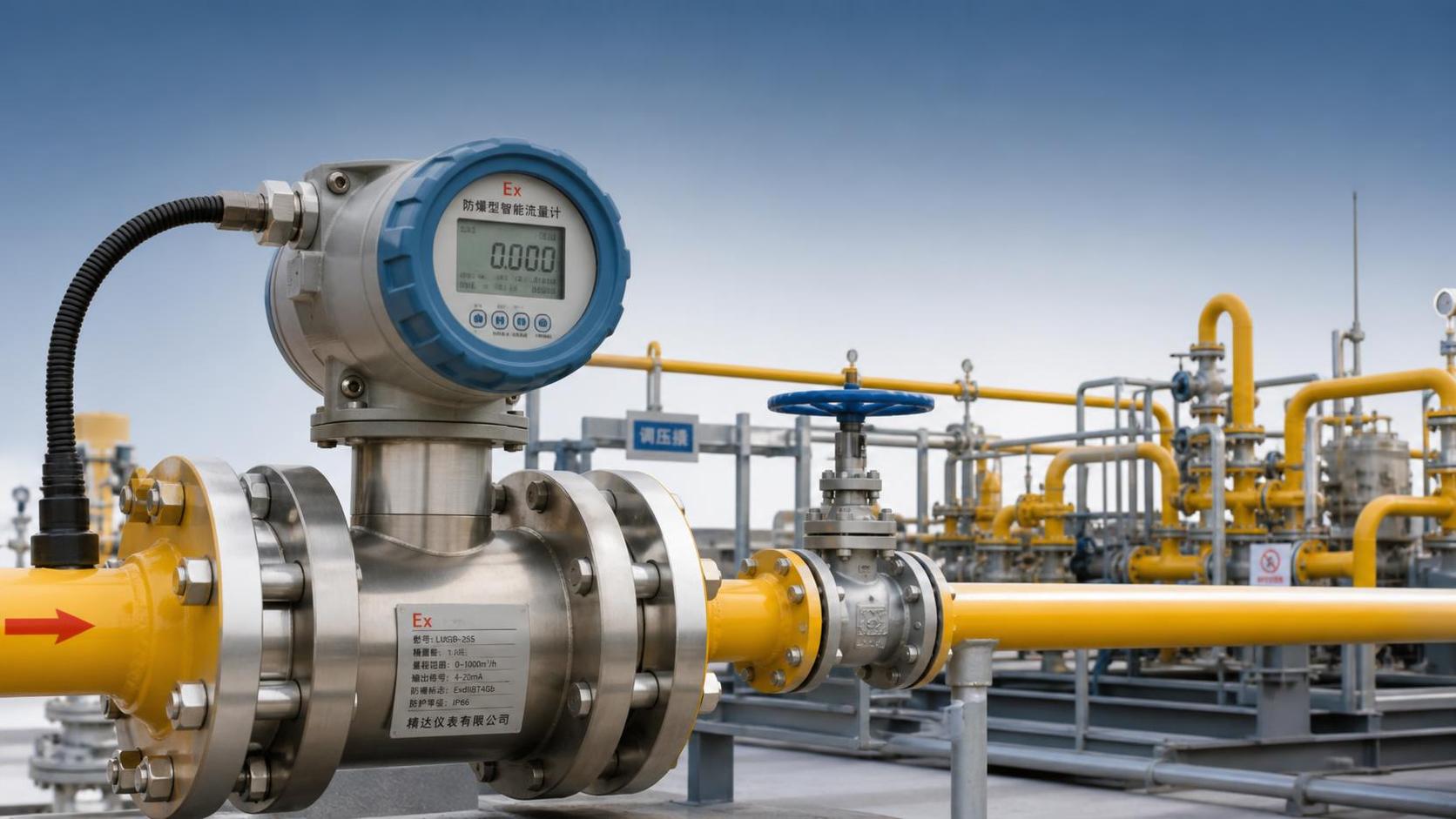
Natural gas flowmeters are not ordinary pipeline metering devices. In city gas pressure regulating stations, industrial combustion gas supply systems, boiler rooms, chemical energy installations, and gas transmission and distribution networks, once natural gas leaks and mixes with air to reach a certain concentration range, electrical sparks, high-temperature equipment surfaces, or electrostatic discharge may create an explosion and fire hazard. Therefore, the explosion-proof requirements for Xi'an natural gas flowmeters are essentially aimed at systematic control of ignition sources at metering sites.
The main component of natural gas is usually methane, which can easily accumulate in enclosed or poorly ventilated areas after a leak. Although flowmeters perform flow data acquisition, signal conversion, and data transmission, they may contain sensing elements, circuit boards, wiring terminals, display modules, and power supply units. If equipment design, selection, installation, or maintenance does not meet explosion-proof requirements, even a very small abnormal arc may become a hazard source.
From the perspective of on-site management, explosion protection does not only concern whether the instrument enclosure is robust; it also involves circuit energy limitation, sealing structures, wiring specifications, grounding continuity, installation area classification, and subsequent inspections. For natural gas systems requiring long-term continuous metering, only by considering flow measurement accuracy, equipment stability, and explosion safety simultaneously can reliable operating data, personnel safety, and production continuity be ensured.
Risk Chain Following a Natural Gas Leak
Natural gas pipelines, flanges, valves, instrument pressure taps, and connection points may leak due to aging seals, mechanical vibration, pressure fluctuations, or construction damage. Flowmeters are generally installed at key pipeline nodes. Once flammable gas is present nearby, the instrument itself and its associated junction box must provide protection suitable for the hazardous environment.
Under actual operating conditions, risks are often not caused by a single factor but result from the simultaneous occurrence of “leakage, accumulation, ignition source, and oxygen conditions.” For example, transient sparks caused by loose equipment wiring, sealing failure of non-explosion-proof cable entries, and static electricity caused by poor grounding of the instrument enclosure may all amplify on-site hazards.
Therefore, when selecting Xi'an natural gas flowmeters, it is not sufficient to compare only price, diameter, or display functions. It is also necessary to verify whether the explosion-proof type, applicable area, ambient temperature range, power supply method, output signal, and supporting accessories meet project requirements. At sites with explosive gas atmospheres, equipment shall be configured in accordance with design documents and relevant specifications.
Explosion-Proof Performance Directly Affects Metering System Reliability
Natural gas trade settlement, energy consumption statistics, equipment combustion control, and production scheduling all rely on stable flow data. If a flowmeter frequently shuts down due to environmental ingress, electrical faults, sensor drift, or signal interference, it will not only affect metering continuity but may also cause gas consumption accounting deviations, abnormal combustion ratios, and false equipment interlock actions.
Natural gas flowmeters with appropriate explosion-proof designs generally apply targeted controls to enclosure sealing, circuit isolation, terminal connections, and internal temperature rise. For common on-site requirements, the instrument protection rating may be selected from suitable options such as IP65 or IP66 according to dust, humidity, washdown, and outdoor conditions. For outdoor installation, the effects of rainwater, condensation, ultraviolet radiation, and day-night temperature differences must also be considered comprehensively.
In flowmeter applications, stable sensor output is equally important. Signals such as pressure, temperature, differential pressure, and flow often need to jointly participate in natural gas operating-condition compensation. Excessive fluctuations in input signals or interference on communication lines can easily affect standard-condition flow calculation results. Reliable explosion-proof structures and standardized wiring can reduce the impact of moisture ingress, poor contact, and electromagnetic interference on data quality.
Explosion Protection and Accuracy Are Not Independent Indicators
Some users may easily interpret “explosion-proof” as simply adding a metal enclosure during selection. However, instruments genuinely suitable for natural gas applications need to maintain a balance between safety structures and measurement performance. Insufficient enclosure sealing may allow moisture and dust to enter, affecting sensor and circuit operation; improper sealing methods may also increase maintenance and servicing difficulty.
For natural gas flowmeters based on different principles, such as differential pressure, vortex, thermal, and ultrasonic types, the key points of explosion-proof configuration are not exactly the same. Differential pressure measurement requires attention to pressure impulse piping and transmitter installation; vortex flowmeters require attention to sensor probes and signal processing units; thermal flowmeters require focused evaluation of the applicability of sensing elements under actual gas composition, flow velocity range, and temperature conditions.
For example, when pipeline pressure is 0.4MPa, medium temperature is 60℃, and the flow fluctuation range is large, a reasonable margin should be reserved for the instrument range and pressure rating. If the system requires high metering stability, straight pipe section conditions, installation direction, valve position, and pulsation interference should also be assessed comprehensively to avoid selection based solely on the theoretical measuring range.
Common Explosion-Proof Considerations
Different Natural Gas Operating Conditions Require Different Explosion-Proof Flowmeter Solutions
Xi'an natural gas flowmeters have a wide range of applications. Scenarios such as civil gas transmission and distribution, industrial furnaces, boiler combustion, food processing, metallurgy and building materials, and chemical energy have different requirements for flow range, pressure rating, pipe diameter, gas cleanliness, and explosion protection. Only by first clarifying operating conditions can issues such as “selecting a small range for a large diameter” or “using conventional instruments in hazardous areas” be avoided.
For pipelines with relatively clean gas and noticeable flow variations, vortex, thermal, or ultrasonic solutions may be considered according to actual process conditions. For applications requiring temperature and pressure compensation, process control, or trade metering, pressure transmitters, temperature sensors, intelligent digital display control instruments, or flow totalizing units should be configured comprehensively. Every electrical device in the system should be coordinated with the on-site safety classification.
Especially in aging gas system renovation projects, existing pipelines may have insufficient straight pipe sections, valves positioned too close, excessive impurities in the pipe, or limited instrument installation space. In such cases, sensor installation location, bypass configuration, filtration measures, and cable routing need to be determined according to site survey results rather than mechanically installing equipment solely according to standard drawings.
Basic Parameters to Confirm Before Selection
Natural gas flowmeter selection should first clarify the medium name and gas composition, and confirm whether condensate, oil contamination, moisture, dust, or corrosive components are present. Different medium conditions affect sensor sensitivity, structural materials, and long-term stability. Particularly for natural gas containing impurities or high moisture levels, filtration, drainage, and insulation measures should be properly configured.
It is also necessary to provide the pipeline diameter, operating pressure, maximum pressure, minimum temperature, maximum temperature, normal flow rate, minimum flow rate, and maximum flow rate. Taking different pipe diameters such as DN50, DN100, and DN200 as examples, the instrument diameter does not necessarily have to exactly match the process pipeline. It should be reasonably determined based on meeting pressure loss, flow velocity, and turndown ratio requirements.
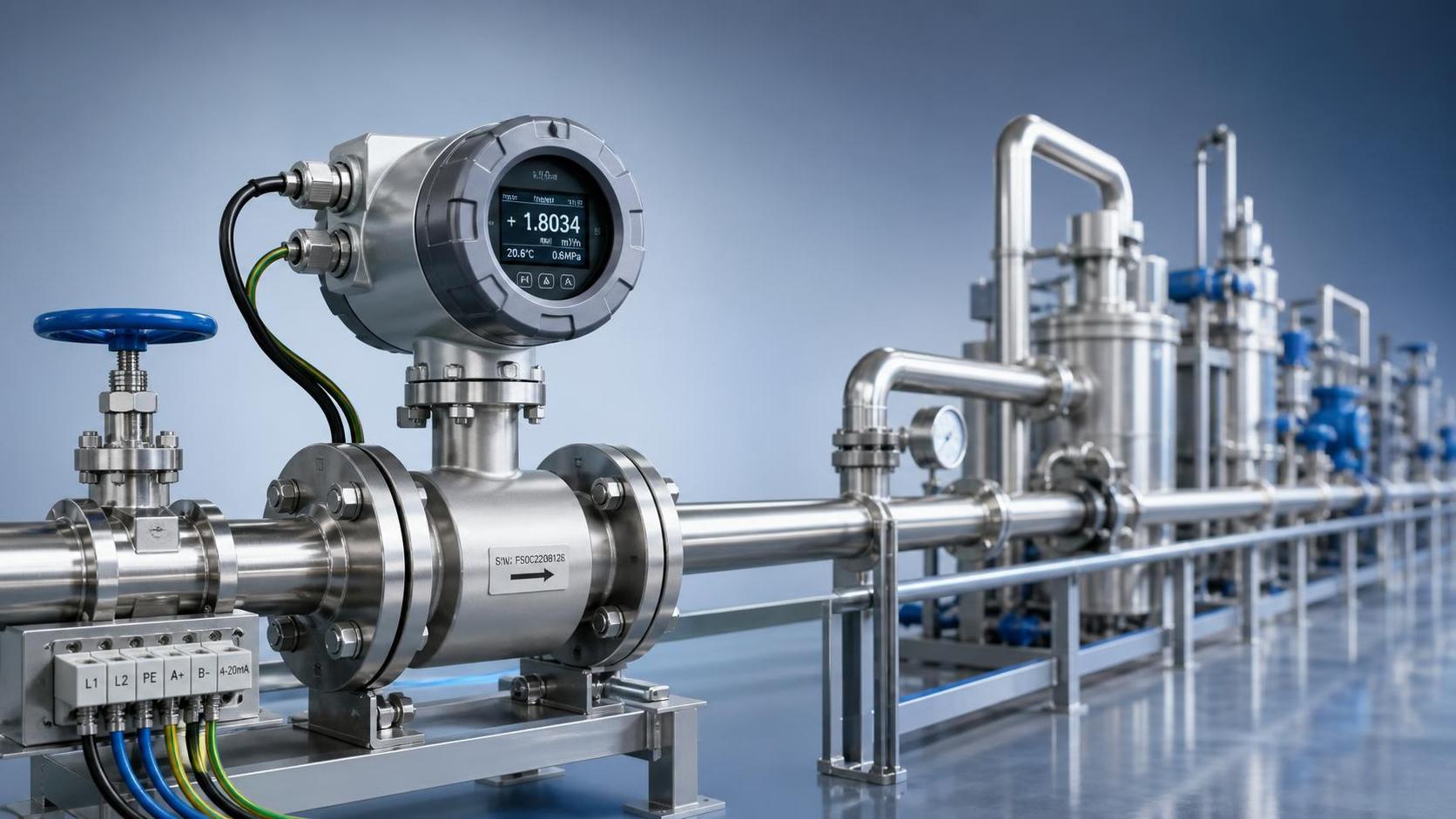
Finally, it should be confirmed whether the site is classified as an explosion-proof area, what type of signal output is required, whether it will be connected to a PLC or DCS system, and whether the power supply condition is 24VDC, 220VAC, or battery power. Interface types such as 4-20mA, RS485, and pulse output should be compatible with the control system to avoid unstable communication or unrecognized signals after equipment installation.
Standardized Installation and Continuous Maintenance Are Key to Explosion-Proof Management
Explosion-proof flowmeters do not require no further attention after installation is completed. During operation, natural gas systems are affected by factors such as vibration, temperature differences, pressure shocks, medium impurities, and human operation. Instrument junction boxes, cable seals, grounding terminals, and mounting brackets may all become loose or age over time. Regular inspection can identify potential issues in a timely manner and reduce the risk of unexpected shutdowns.
During installation, strong vibration sources, high-temperature radiation areas, and locations prone to water accumulation should be avoided as much as possible, while ensuring that the required straight pipe sections are provided upstream and downstream of the instrument. For locations affected by pulsating flow, elbows, reducers, pressure regulating valves, or fans, the flow field should be improved by optimizing the installation point or adding flow conditioning measures to ensure that the sensor obtains relatively stable measurement conditions.
During electrical construction, cable specifications, shield layer treatment, conduit sealing, and grounding methods shall all meet on-site requirements. After an explosion-proof junction box is opened, serviced, and restored, check whether the sealing surfaces, fasteners, and cable entry devices have been restored to a reliable condition. Any unconfirmed modification, unauthorized wiring, or replacement with incompatible components may compromise the original explosion-proof performance.
Establish an Executable Inspection Mechanism
It is recommended to formulate daily inspection, monthly inspection, and annual verification plans based on on-site operating intensity. Daily checks can observe whether flow readings fluctuate abnormally, whether the instrument enclosure is damaged, and whether wiring locations are damp; monthly checks can inspect mounting brackets, grounding connections, cable jackets, and seals; annual checks can verify zero point, range, and signal output in accordance with process requirements.
For continuous production applications, flowmeter operating status can be connected to the automation system for trend analysis in combination with pressure, temperature, valve opening, and totalized flow. When instantaneous flow deviates significantly from historical patterns, the 4-20mA signal is abnormal, or communication interruptions occur frequently, sensors, power supplies, cables, and process conditions should be investigated promptly instead of addressing the issue solely by restarting the equipment.
Relying on the production and technical capabilities of Shaanxi Qinkong Sensor Technology Co., Ltd., Xi'an Shenghongchuang Instrumentation Co., Ltd. can provide product selection and technical services for natural gas flow measurement, explosion-proof suitability, temperature and pressure compensation, signal transmission, and on-site installation conditions. Before project procurement, pipe diameter, pressure, temperature, flow range, medium condition, explosion-proof area, and output requirements can be submitted for targeted configuration confirmation by technical personnel.
Supporting Long-Term Natural Gas System Operation Through Safe Metering
Emphasizing explosion-proof requirements for natural gas flowmeters is not only fundamental to safeguarding personnel and equipment, but also an important condition for ensuring continuous, stable, and traceable metering data. For gas transmission, distribution, and industrial gas consumption systems, an explosion-proof flowmeter suitable for on-site conditions can help managers promptly understand changes in gas consumption and provide a reliable basis for energy consumption analysis, production scheduling, and equipment maintenance.
In actual procurement, the focus should be on whether the product is suitable for the medium operating conditions, installation area, and control system, rather than using price alone as the decision criterion. Measurement accuracy, repeatability, pressure rating, materials, protection capability, output method, supporting sensors, and after-sales technical support should all be included in the overall assessment.
When configuring Xi'an natural gas flowmeters, suitable flowmeter, pressure transmitter, temperature sensor, and intelligent digital display control instrument solutions can be selected based on on-site process parameters. Confirming explosion-proof rating, diameter and measuring range, signal interfaces, and installation conditions in advance will establish a more stable and safer operating foundation for the natural gas metering system.
Related Recommendations
 Why do Xi'an natural gas flowmeters emphasize explosion-proof requirements?
 How to Determine Whether the Material of a Shaanxi Food Flowmeter Meets Standards?
 Is a higher accuracy Xi'an high-precision flowmeter always worth choosing?
 How to calibrate measurement results of a Shaanxi handheld flowmeter?