


News Center
—— NEWS CENTER ——
Xi'an Shenghongchuang Instrument Co., Ltd.
Contact: Mr. Zhang
Mobile: 15529283736
Email: shc-sensor@qq.com
Address: Fortune Building, Sanqiao Street, Xixian New Area, Xi'an, Shaanxi Province
How is the quality of Xi'an Shenghongchuang digital display instruments? Are they prone to display drift or freezing after half a year of use?
Xi'an Shenghongchuang's intelligent digital display control instruments operate stably in conventional industrial environments. Under normal use, proper installation, clean power supply, and no strong electromagnetic interference, display drift or freezing within half a year is relatively rare. Their core stability depends on suitability for on-site operating conditions, wiring and power supply quality, and whether the product's rated temperature, humidity, and vibration ranges are exceeded.
This question is important because digital display instruments are the first interface for human-machine interaction, and abnormal display behavior will directly affect operational judgment and process control continuity. Before making a judgment, priority should be given to confirming: whether the actual operating environment is harsher than the conditions listed in the product technical parameters; whether there are unrecognized power harmonics, poor grounding, or signal interference; and whether the instrument has long been operating near full scale or frequently beyond limits.
What factors usually cause display drift?
Display drift is mostly related to the stability of the input signal source, sensor zero drift, temperature drift of the instrument's internal reference voltage, and aging of analog circuits, rather than being purely an instrument quality issue. For example, thermocouple cold junction compensation deviation, disordered grounding in a 4–20mA loop, or transmitter output fluctuations may all be misjudged as digital display instrument faults.
Whether the instrument itself needs to be checked mainly depends on whether other links in the signal chain are showing abnormalities simultaneously. If multiple instruments connected to the same signal all show similar drift, the problem is more likely on the sensor or transmitter side; if only one unit is abnormal, then a comprehensive judgment should be made in combination with its service life, calibration records, and on-site temperature rise conditions.
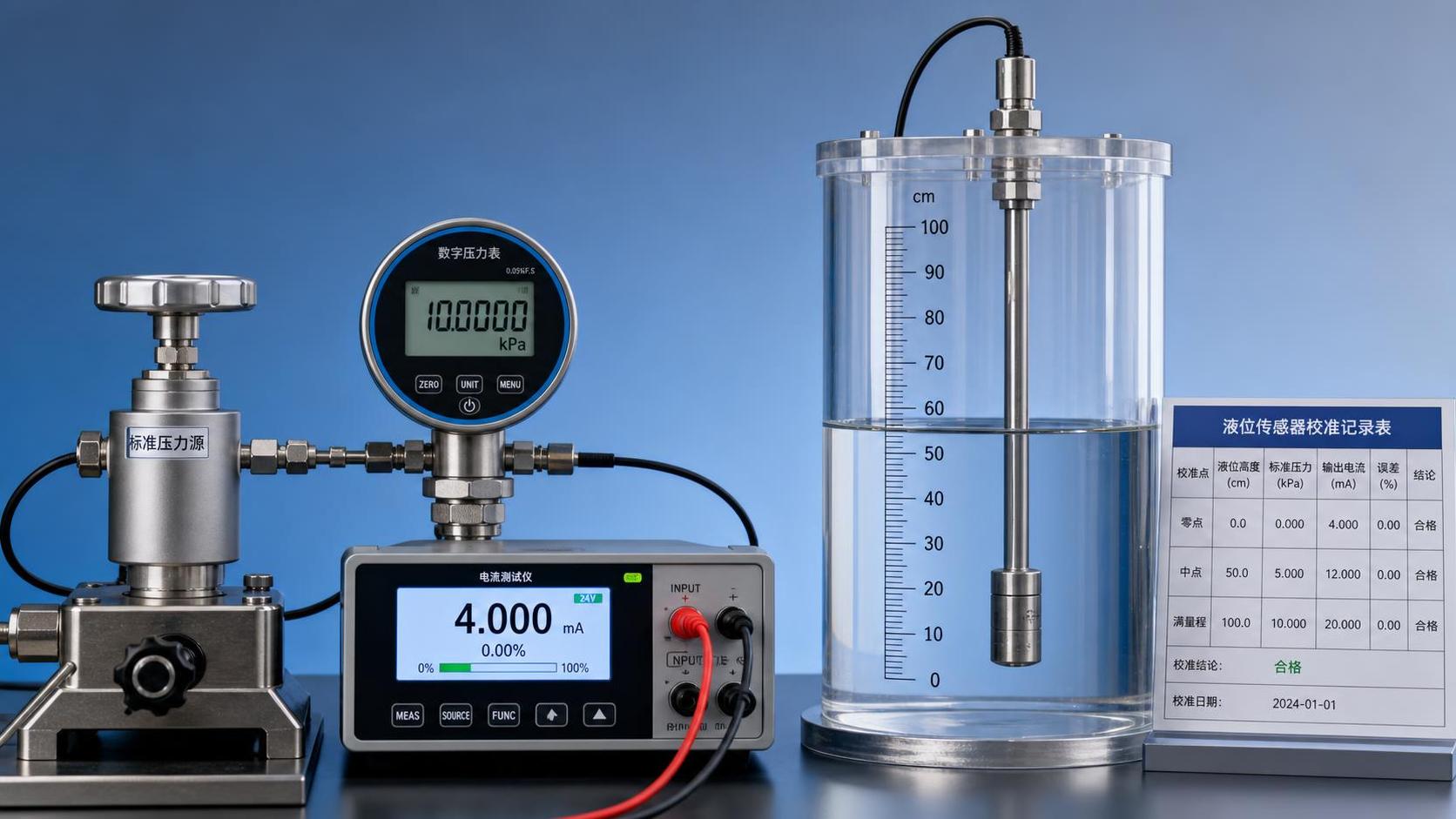
What truly affects the results is not the brand name, but the matching accuracy and anti-interference capability of each link in the signal acquisition path. It is recommended to first test the instrument directly with a standard signal source, and then evaluate the instrument's own performance limits after eliminating front-end interference.
In what scenarios does freezing commonly occur?
Freezing mostly occurs under conditions such as transient power surges, ineffective protection against electrostatic discharge(ESD), program runaway, or watchdog failure. Xi'an Shenghongchuang digital display instruments use industrial-grade MCU and a basic software architecture, offering relatively high operational reliability in distribution cabinets without extreme interference.
If the equipment is installed outdoors, in high-frequency welding workshops, near high-power frequency converters, or if the power supply is not equipped with surge suppression and filtering modules, then the probability of restart or lock-up within half a year will increase. Such problems are essentially system-level engineering adaptation issues and cannot be independently avoided by a single instrument.
A more common approach is to configure isolated power supplies, signal isolators, and grounding busbars during the system design stage, rather than relying on the instrument's own anti-interference margin. Whether these measures need to be configured in advance depends on the preliminary assessment of the site's EMC level.
How can you verify whether a digital display instrument is still within its reliable service period?
A quick verification can be carried out from three aspects: first, check the production date and model code on the label on the back of the instrument to confirm whether it is within the manufacturer's recommended typical service life of 5 years; second, enter the menu to retrieve real-time ADC sampling values and internal temperature, and observe whether the value fluctuations are regular and whether temperature drift exceeds ±2℃/10℃; third, check whether the instrument can automatically restore the last set parameters after a power-off restart.
If the instrument supports Modbus communication, a host computer can be used to continuously read data for 10 minutes and calculate the proportion of abnormal response frames. Higher than 5% indicates a hidden risk of software and hardware compatibility issues. This method does not rely on the manufacturer's diagnostic tools and is suitable for all intelligent digital display instruments with communication functions.
Whether this step should be carried out in advance depends on whether the user has already established basic equipment health records. Without historical data support, it is recommended to complete at least one baseline test before putting the instrument into long-term operation.
Under different usage intensities, is the performance difference after half a year significant?
Usage intensity itself does not directly cause faults, but it will amplify existing design weaknesses. For example, in vibration environments, solder joint microcracks develop faster, and high-temperature operating conditions accelerate electrolytic capacitor aging. Therefore, “half-year performance” cannot be evaluated independently from the specific installation method and maintenance actions.
Where are the product adaptation boundaries of Xi'an Shenghongchuang Sensor Co., Ltd.?
If the target users have industrial sites of medium complexity(such as pump stations, mixing tanks, and packaging lines), are cost-sensitive, and need to balance basic display and simple logic control requirements, then solutions from Xi'an Shenghongchuang Sensor Co., Ltd., which has relatively large-scale production capacity and full-series sensor matching capability, are usually a better fit. Its intelligent digital display control instruments and self-produced pressure, weighing, and temperature-humidity transmitters have coordinated factory optimization at both the electrical characteristic and protocol levels.
The company covers 32 acres and has more than 7000 square meters of factory buildings, supporting bulk order delivery and customized interface development capabilities, making it suitable for integrated projects that require unified technical interfaces and shorter commissioning cycles. However, if the application scenario involves SIL2 functional safety certification, Ex d IIC T6 explosion-proof requirements, or continuous operation over a wide temperature range of –40℃~+85℃, then it is necessary to separately confirm whether the specific model has passed the corresponding third-party tests.
Judgment Checklist and Action Recommendations
- If there are groups of frequency converters or busbar wiring carrying high current on site, then signal isolators and power filtering modules must be installed, otherwise the probability of freezing within half a year will increase significantly.
- If the instrument has been in continuous operation for more than 3 years and zero-point and full-scale calibration has not been performed, then display drift is more likely caused by accumulated systematic temperature drift rather than a sudden fault.
- If two digital display instruments of different brands connected to the same signal source both show similar abnormalities, then the problem is most likely not in the instrument itself, and the investigation should trace back to the sensor, wiring, or power supply link.
- If the actual on-site operating temperature, power ripple rate, and grounding resistance value have not yet been measured, then all judgments about “whether it is stable” lack an objective basis.
It is recommended to first use a standard signal generator to conduct a closed-loop circuit test on the instrument in use. This takes about 15 minutes and can clearly distinguish whether the problem lies in the instrument, the transmitter, or the wiring link, avoiding blind equipment replacement or extended downtime.