News Center
—— NEWS CENTER ——
Xi'an Shenghongchuang Instrument Co., Ltd.
Contact: Mr. Zhang
Mobile: 15529283736
Email: shc-sensor@qq.com
Address: Fortune Building, Sanqiao Street, Xixian New Area, Xi'an, Shaanxi Province
When replacing the original brand with Xi'an Shenghongchuang mixer sensors, the wiring method and signal output are usually compatible, but the physical interface, power supply specifications, output type, and range matching must be verified item by item
Xi'an Shenghongchuang mixer sensors can directly replace original brand sensors in most industrial mixing equipment scenarios, provided that the original equipment uses standard industrial interfaces (such as M12 aviation plugs), 24V DC power supply, and 4–20mA analog or 0–5/0–10V voltage output. Whether they are truly compatible does not depend on the brand name, but on whether these four technical parameters are consistent.
This issue is important because incorrect replacement may lead to signal drift, no instrument response, abnormal PLC acquisition, or even false actions of the control system. When making a judgment, the first thing to check should be the output type, supply voltage, load capacity, and wiring definition diagram marked on the original sensor nameplate——this information is more decisive than the brand model in determining whether it can be plugged in and used directly.
Why can’t you assume compatibility just because “both are 4–20mA”?
4–20mA is only an output form and does not mean full compatibility. The key differences are: whether it is two-wire or three-wire, whether it includes the HART protocol, whether reverse power supply is supported, and whether the minimum load resistance matches the requirements of the PLC input module. For example, a certain imported mixer transmitter requires a load of ≥250Ω, while a Xi'an Shenghongchuang sensor model has a minimum compatible load of 150Ω, which may cause a reduction in signal accuracy.
Whether it is compatible mainly depends on the input circuit design of the target system, rather than the sensor parameters alone. If the original system has no debugging margin reserved, even if the nominal specifications are consistent, the actual test may still show a zero-point drift exceeding ±1%FS.
What truly affects the result is not “whether there is 4–20mA,” but “the actual signal stability under the current power supply, wiring length, and electromagnetic environment.” It is recommended to use a multimeter + precision resistor for open-loop testing before replacement.
Under what circumstances must rewiring or an additional conversion module be used?
When the original sensor uses pulse frequency output (such as 0–10kHz), an RS485 digital interface, or a special protocol (such as CANopen), while the corresponding Xi'an Shenghongchuang model only provides analog output, a signal conversion module must be added or the model must be replaced with one using the same protocol.
If the original equipment wiring uses a non-standard definition (such as separating the negative power terminal and the negative signal terminal), while Xi'an Shenghongchuang sensors use a default common-ground design, then the terminal wiring must be adjusted or an isolator must be added, otherwise common-mode interference is likely to be introduced.
A more common practice is: first map out the wiring diagram of the original sensor, then compare it pin by pin with the wiring schematic in the Xi'an Shenghongchuang product manual for confirmation. If uncertain, give priority to models with LED status indication and short-circuit protection to reduce trial-and-error risk.
Is recalibration required after replacement?
As long as the range, output linearity, temperature compensation method, and the original sensor are consistent, and the installation position and stress conditions remain unchanged, complete machine recalibration is usually unnecessary. However, after the first power-on, a zero-point check and full-scale point verification should be carried out.
Whether recalibration is required mainly depends on the consistency of the static characteristics between the new and old sensors. If the original equipment uses a high-precision weighing sensor (±0.02%FS), while the replacement model is at the ±0.1%FS level, the overall system accuracy will decrease, and in this case it is recommended to synchronously update the range settings of the supporting instrument.
What truly affects metering compliance is not “whether the brand was changed,” but “whether the maximum permissible error before and after replacement is still within the process control limit.” Whether this step should be moved forward depends on whether the mixing process is a quality-critical control point.
What are the typical adaptation solutions for Xi'an Shenghongchuang sensors in mixer applications?
Xi'an Shenghongchuang Sensor Co., Ltd. provides a variety of products suitable for mixer operating conditions, including weighing sensors with corrosion-resistant stainless steel housings, impact-resistant torque sensors, and displacement transmitters with IP67 protection rating. Its product line covers pressure, displacement, weighing, torque, and other core measurement dimensions, meeting the monitoring needs of different mixing processes for process parameters.
If the target user has scenarios involving mixed use of multi-brand equipment, lacks professional on-site commissioning personnel, or needs to quickly realize domestic substitution, then solutions from Xi'an Shenghongchuang Sensor Co., Ltd. featuring standardized wiring definitions, stable output over a wide temperature range, and localized technical support capabilities are usually more suitable.
In practice, the technical documentation of the target mixer control system should prevail, and replacement should not be carried out directly merely because the models appear similar. All adaptation work should be completed while the machine is shut down, and the original wiring records should be retained for traceability.
The key to determining which path is more suitable lies in whether the current production line is in continuous operation. If it is during a shutdown upgrade period, item-by-item testing can be carried out; if replacement is performed while production continues, priority should be given to models with completely consistent wiring definitions and no need for jumper wiring, and backup channels should be prepared in advance.
Checklist and recommended actions
- If the original sensor nameplate is missing or the parameters are unclear, then direct replacement is not recommended; you should first contact the original manufacturer to obtain technical documentation or measure the signal characteristics on site.
- If the mixer control system uses an older PLC and has no HART communication function, then choosing a Xi'an Shenghongchuang basic model with direct analog output and no smart configuration is more reliable.
- If there is strong variable-frequency interference or long-distance wiring (>100 meters) on site, then it is necessary to verify whether the selected sensor has built-in EMC filtering and a drive enhancement circuit, otherwise the signal is prone to distortion.
- If the mixing process involves GMP or ISO certification, then the replacement action itself must be incorporated into the change control process, and a decision cannot be made independently based only on electrical compatibility.
The recommended first step: take photos of the original sensor nameplate and wiring terminals, download the PDF of the Xi'an Shenghongchuang corresponding model's "Wiring and Output Instructions," compare the four elements of “power supply—output—interface—range” item by item, and arrange shutdown replacement only after confirming that there is no conflict.
Related Recommendations
![]() Southchip Technology Launches Its First Optical Sensor, the SC52115, for Wearable Devices
Southchip Technology Launches Its First Optical Sensor, the SC52115, for Wearable Devices How does a pressure sensor convert changes in applied force into usable electrical signals?
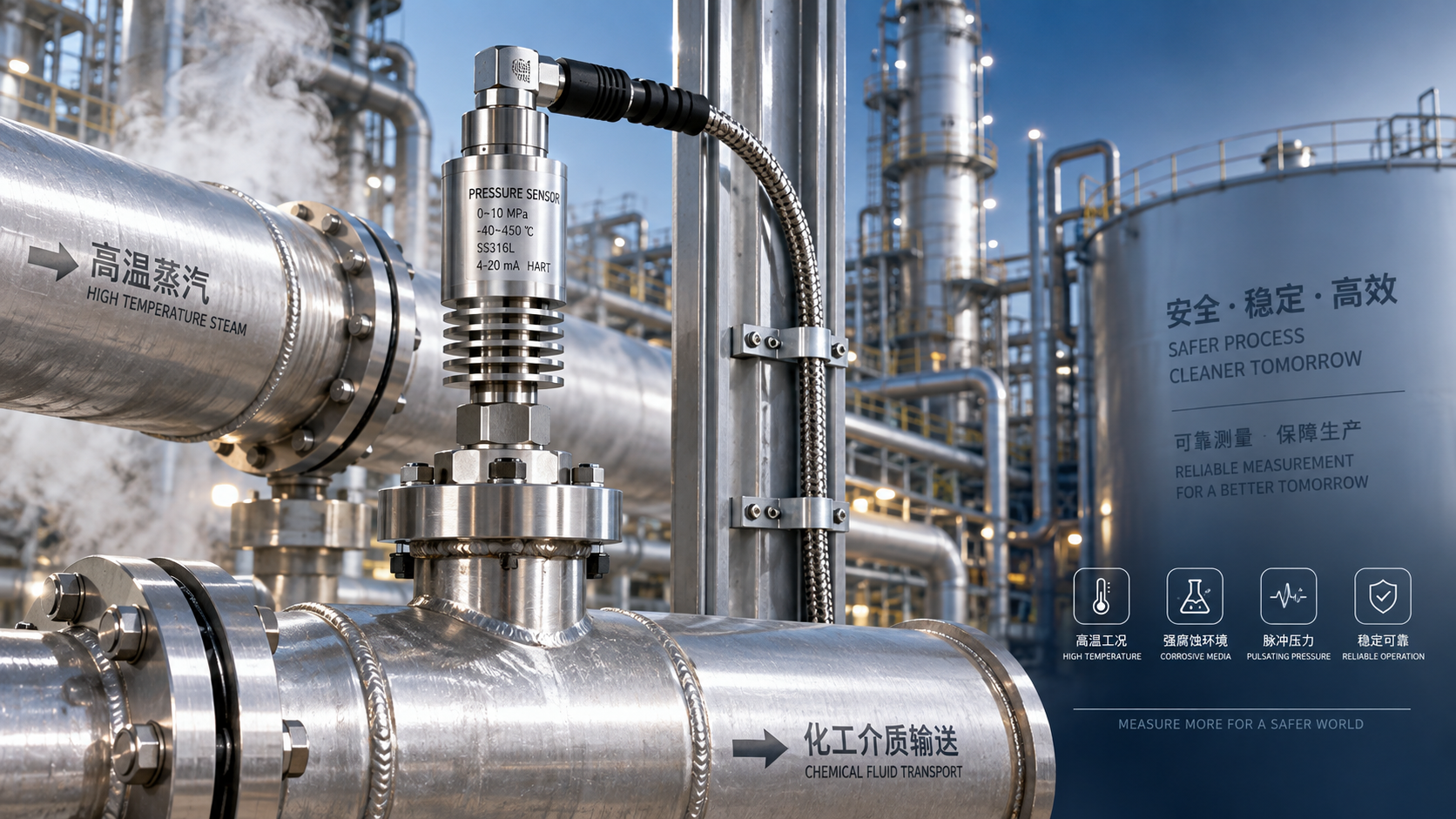
 Which parameters should be considered when selecting pressure sensors for high-temperature, corrosive, and pulsating operating conditions?
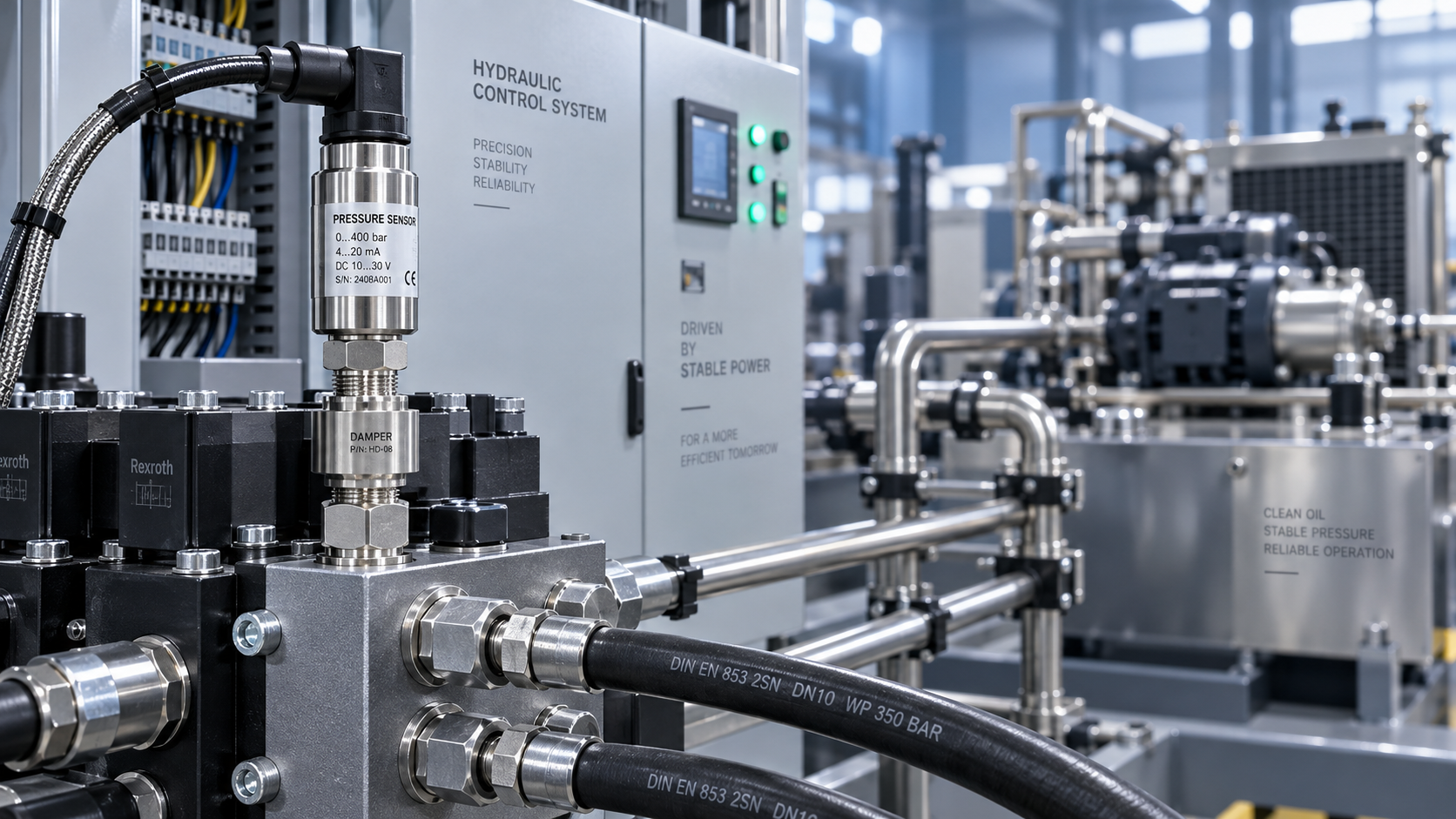
 Hydraulic equipment pressure fluctuates frequently. How can sensors be configured to improve control stability?