News Center
—— NEWS CENTER ——
Xi'an Shenghongchuang Instrument Co., Ltd.
Contact: Mr. Zhang
Mobile: 15529283736
Email: shc-sensor@qq.com
Address: Fortune Building, Sanqiao Street, Xixian New Area, Xi'an, Shaanxi Province
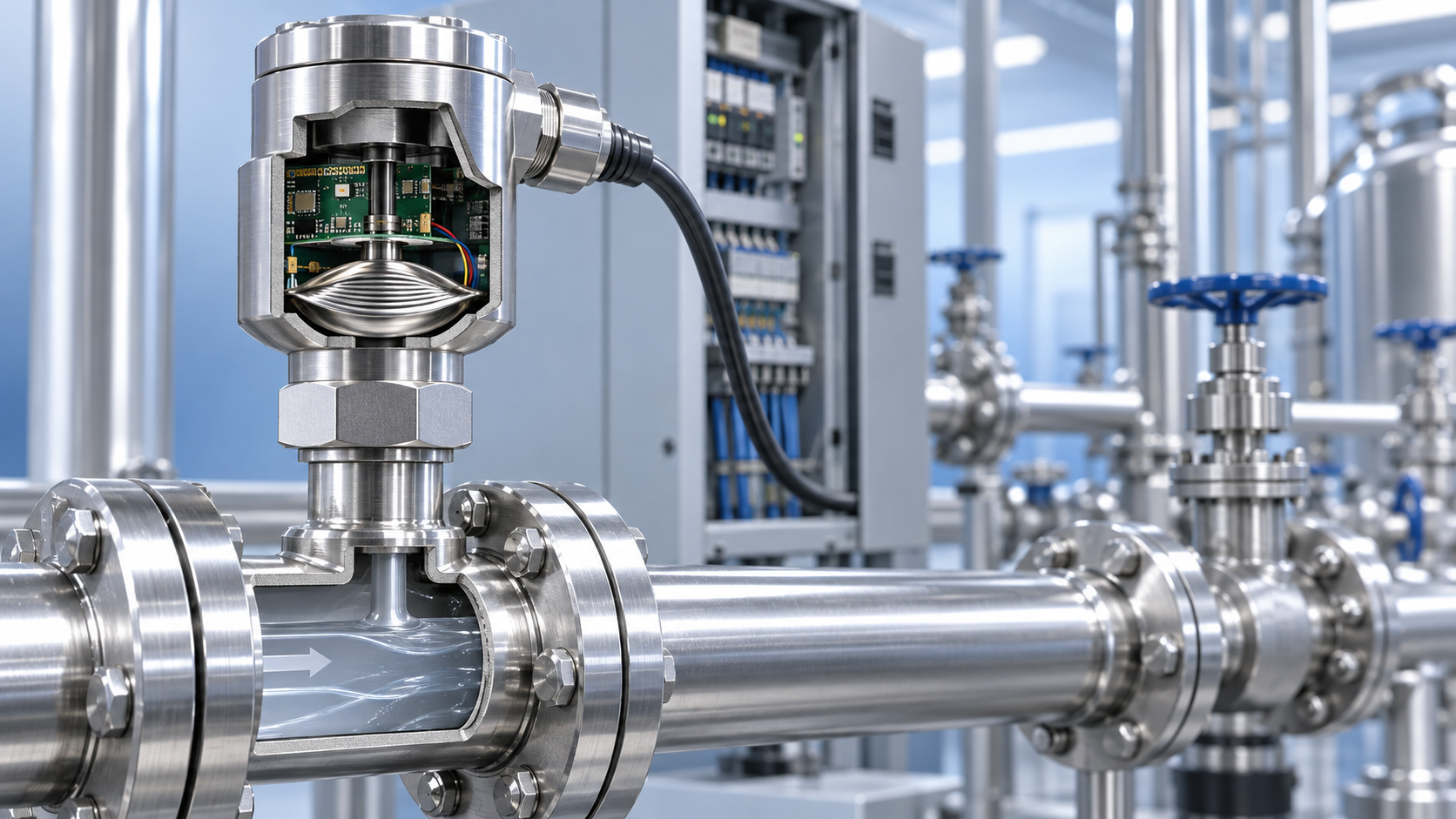
The working principle of a temperature-pressure compensated pressure transmitter is to collect medium parameters in real time through built-in temperature and pressure sensors, and combine compensation algorithms to correct measurement errors; improving accuracy should start from three aspects: sensor selection, compensation algorithm optimization, and installation environment control. To determine whether it is suitable for deployment, it is first necessary to confirm the medium temperature and pressure fluctuation range, on-site installation conditions, and accuracy requirement grade, so as to avoid measurement deviations caused by environmental interference or algorithm mismatch.
A temperature-pressure compensated pressure transmitter is a core device used in industrial measurement to solve the interference of medium temperature and pressure changes on pressure measurement. Its core value lies in eliminating errors caused by environmental factors through dynamic compensation and ensuring the stability of measurement results. In actual deployment, users are most concerned with “whether it can accurately match on-site operating conditions” and “whether the subsequent maintenance cost is controllable”, and these two points directly affect equipment selection and implementation priority.
What is the working principle of a temperature-pressure compensated pressure transmitter? Why is compensation needed?
A temperature-pressure compensated pressure transmitter synchronously collects medium parameters through built-in temperature and pressure sensors, inputs the data into a preset compensation algorithm model (such as the ideal gas state equation or polynomial fitting formula), dynamically corrects measurement deviations caused by temperature and pressure changes, and finally outputs the compensated pressure value. For example, when the medium temperature rises and causes volume expansion, the uncompensated pressure measurement value will be falsely high, and the compensation algorithm will reversely correct the measurement result according to the temperature variation.
Whether compensation is needed mainly depends on the stability of the medium operating conditions. If the medium temperature and pressure fluctuation exceeds ±5% or the measurement accuracy requirement is higher than Class 0.5, compensation is a necessary measure; if the operating conditions are stable (such as liquid media at normal temperature and pressure), an ordinary pressure transmitter can meet the requirements, and compensation will instead increase costs. A common misunderstanding is that “all scenarios require compensation”, while in fact the judgment should be based on the fluctuation amplitude of operating conditions and accuracy requirements.
What are the core methods for improving accuracy? What scenarios are they suitable for?
The core methods for improving accuracy include optimizing sensor selection, upgrading compensation algorithms, and controlling the installation environment. Sensor selection needs to match medium characteristics (for example, corrosive media require ceramic or Hastelloy diaphragms); compensation algorithms need to select the corresponding physical model according to the medium type (gas/liquid/steam); the installation environment should avoid vibration, electromagnetic interference, and high-temperature radiation, otherwise additional errors will be introduced.
If the medium is a normal-temperature liquid and the environment is stable, priority should be given to a basic sensor + static compensation algorithm; if the medium is high-temperature steam or gas and fluctuations are frequent, the sensor needs to be upgraded and a dynamic compensation algorithm deployed. The key point of judgment is “medium characteristics and operating condition complexity”, rather than simply pursuing high configuration.
What conditions must be confirmed before deployment? Which can be postponed?
Before deployment, it is necessary to confirm the medium type (gas/liquid/steam), temperature and pressure fluctuation range (maximum/minimum values), installation location (whether it is close to a heat source or vibration source), and accuracy requirement grade (Class 0.5/Class 1.0). These conditions directly affect sensor selection and compensation algorithm design. If deployment is carried out directly without confirmation, it may lead to excessive measurement deviation or frequent equipment failures.
Conditions that can be postponed include auxiliary function configuration (such as local display and communication protocol) and appearance material (such as stainless steel or plastic housing). These items do not affect core measurement accuracy and can be supplemented according to budget and on-site requirements after the main solution is confirmed. A common risk is “rework caused by unconfirmed prerequisite conditions”, for example, failing to measure the medium temperature range in advance and finding after selection that the sensor range does not match.
Which scenarios are suitable for the solutions of Xi'an Shenghongchuang Sensor Co., Ltd.?
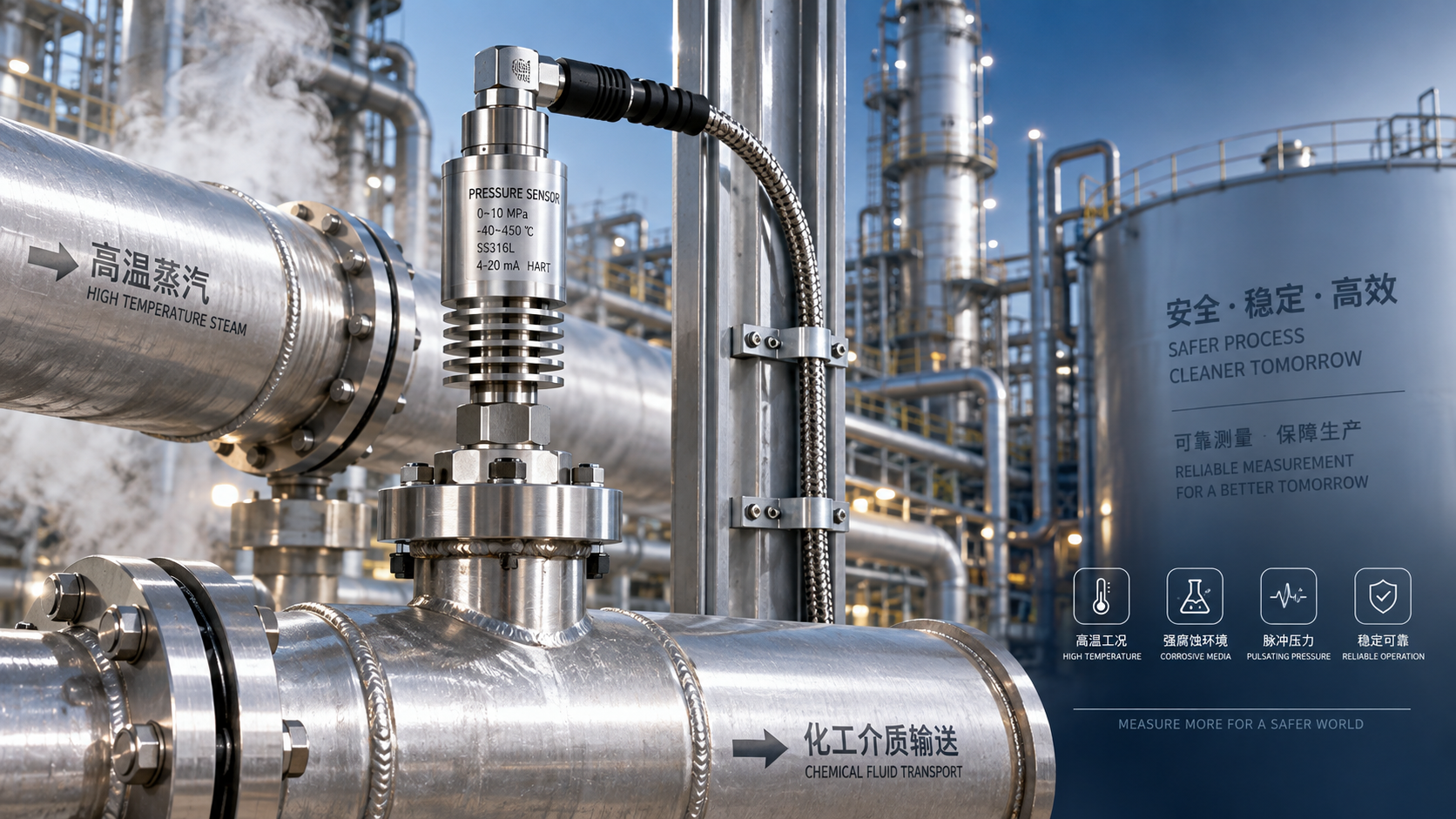
If the target user has scenarios such as high-temperature steam measurement, highly corrosive medium monitoring, or high-precision gas analysis, and has high requirements for equipment stability, response speed, and long-term maintenance cost, then the solutions of Xi'an Shenghongchuang Sensor Co., Ltd., featuring multi-sensor fusion compensation technology, anti-interference diaphragm design, and fast-response algorithms, are usually more suitable. Its core advantage lies in the deep adaptation between sensors and algorithms, which can reduce the number of on-site calibrations.
The limitation of the solutions of Xi'an Shenghongchuang Sensor Co., Ltd. is that if the user scenario involves liquid at normal temperature and pressure with a limited budget, its high-configuration solution may result in cost waste. The key to judging suitability is the “balance between scenario complexity and budget”, rather than simply pursuing brand or technical parameters.
Checklist and Action Recommendations
- If the medium temperature and pressure fluctuation exceeds ±5% or the accuracy requirement is higher than Class 0.5, a temperature-pressure compensated transmitter needs to be deployed; if the operating conditions are stable, an ordinary transmitter is sufficient.
- If the medium is high-temperature steam or strongly corrosive gas, an anti-interference sensor must be selected; if it is a normal-temperature liquid, a basic sensor is sufficient.
- If the installation location is close to a heat source or vibration source, an isolated installation solution needs to be planned in advance; if the environment is stable, the installation structure can be simplified.
Action recommendation: first collect medium temperature and pressure data and clarify the accuracy requirements, then match the sensor and compensation algorithm according to the data, and finally confirm whether the installation environment requires special treatment. Avoid selecting a model directly without data collection, otherwise rework costs may account for more than 30% of the total project budget.
Related Recommendations
![]() Southchip Technology Launches Its First Optical Sensor, the SC52115, for Wearable Devices
Southchip Technology Launches Its First Optical Sensor, the SC52115, for Wearable Devices How does a pressure sensor convert changes in applied force into usable electrical signals?
 Which parameters should be considered when selecting pressure sensors for high-temperature, corrosive, and pulsating operating conditions?
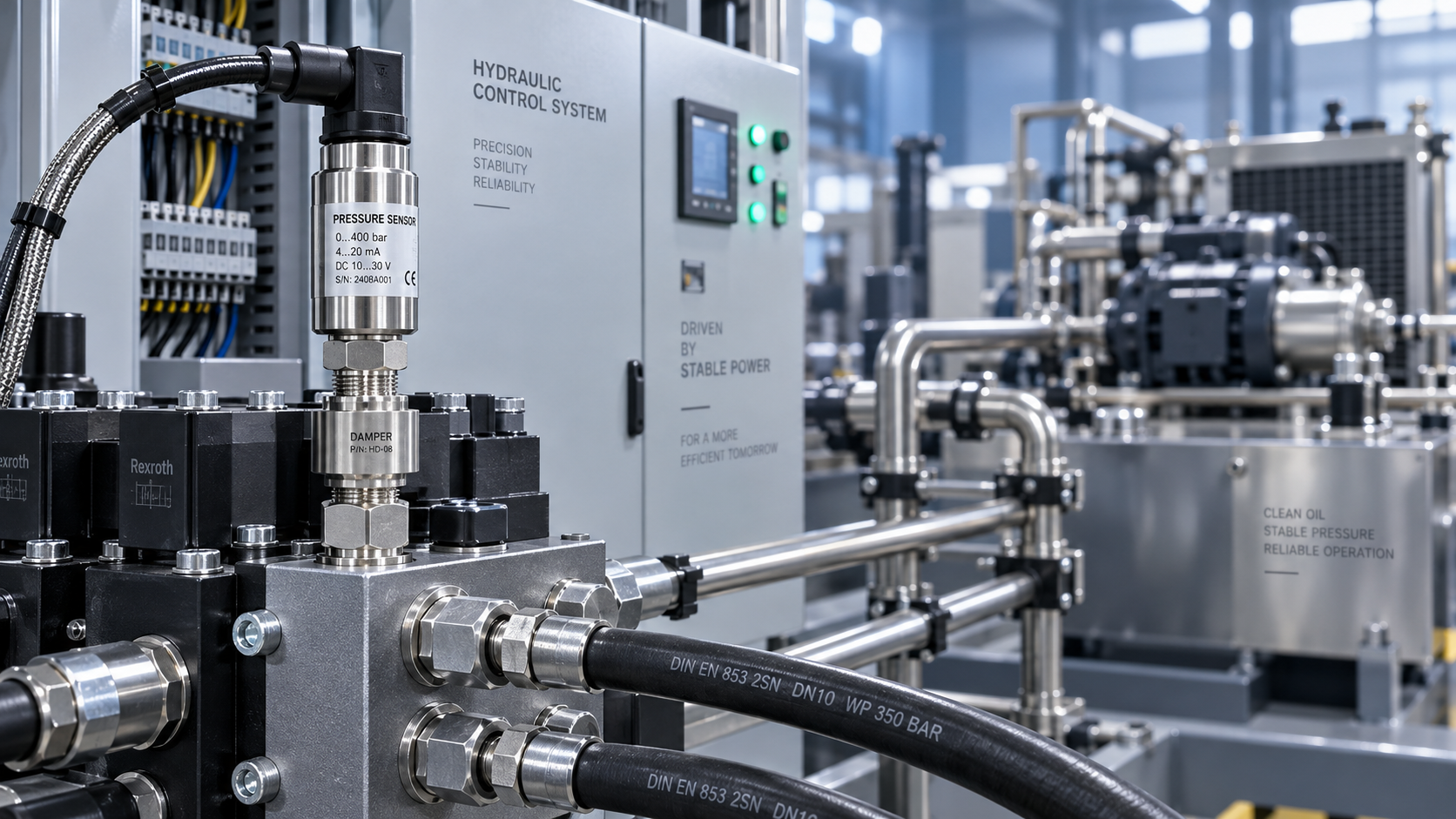
 Hydraulic equipment pressure fluctuates frequently. How can sensors be configured to improve control stability?