News Center
—— NEWS CENTER ——
Xi'an Shenghongchuang Instrument Co., Ltd.
Contact: Mr. Zhang
Mobile: 15529283736
Email: shc-sensor@qq.com
Address: Fortune Building, Sanqiao Street, Xixian New Area, Xi'an, Shaanxi Province
In the routine maintenance of sanitary diaphragm-type level sensors, the most easily overlooked operations are: not cleaning the diaphragm surface regularly, ignoring the sealing condition of the mounting flange, skipping zero drift verification, failing to recalibrate after sudden changes in medium temperature, and treating “fault-free operation” as equivalent to “no inspection required”.
These actions may seem minor, but they directly affect the rate of measurement accuracy degradation and the risk of sudden reading failure. To determine whether maintenance should be initiated immediately, priority should be given to confirming whether the sensor has been in continuous operation for more than 6 months, whether the environment involves condensation/crystallization/steam flushing, and whether there have been recent changes in process temperature or medium composition——once any of these three situations exists, ignoring any of the above operations may later require replacement of the entire unit rather than simple cleaning, and the rework cost will be significantly higher than the investment in preventive maintenance.
Why must the diaphragm surface be cleaned monthly, instead of “skipping it if it looks clean”?
Whether monthly cleaning is required mainly depends on whether the medium contains suspended particles, grease, or easily crystallized components. Even if no contamination is visible to the naked eye, microscopic deposits can still alter the stress distribution on the diaphragm, resulting in a system error of more than 0.5%FS. This operation must not be postponed, because once hard scale forms, routine wiping with a soft cloth becomes ineffective, requiring disassembly and soaking in a dedicated solvent, which increases downtime and the risk of human-induced damage.
A common practice is to gently wipe the diaphragm surface with absorbent cotton dipped in 75% ethanol, and the use of hard objects for scraping or high-pressure water guns for flushing is prohibited. If the medium is a high-viscosity liquid or contains protein substances, the cleaning interval should be shortened to once every two weeks.
Why is the sealing condition of the mounting flange more likely to be overlooked than the sensor body itself?
Whether the flange seal needs to be inspected depends on whether the equipment undergoes frequent start-stop cycles, temperature fluctuations greater than 40℃, or vibration conditions. Seal aging can cause micro-leakage, introducing air bubbles under negative pressure or vacuum conditions, while under positive pressure it allows the medium to slowly corrode the back side of the diaphragm. Both situations cause gradual zero drift that is difficult to reset. This item must be addressed in advance, because once leakage occurs, it is often accompanied by loosening of flange bolts or gasket deformation, which cannot be repaired on site and requires return to the factory for treatment.
In practice, synchronized inspection during every shutdown maintenance should be treated as the minimum requirement, and one must not rely on the experience-based judgment that “it was tightened during the last installation”.
Can zero drift verification be postponed until the annual inspection?
It cannot be postponed until the annual inspection. Whether zero verification is required quarterly depends on whether the sensor is used in custody transfer, safety interlock, or batch control scenarios. In non-critical applications, it may be extended to once every six months; however, in cases involving filling accuracy, reactor liquid level alarms, or GMP compliance records, zero comparison must be performed every three months under empty-tank conditions. The rework cost of skipping this step is extremely high——once the drift exceeds the allowable error, all historical data becomes invalid and cannot be corrected retrospectively.
Verification is not the same as recalibration. It only requires observing whether the output remains stable at 4.00±0.02mA under no medium pressure (two-wire), and any abnormality must be recorded and scheduled for professional calibration.
Why must recalibration be performed after a sudden change in medium temperature, instead of just observing the readings?
Whether recalibration is needed after a sudden change depends on the rate and magnitude of the temperature change. When the medium temperature changes by more than 15℃ within 10 minutes, or by more than 25℃ in a single change, the thermal expansion of the diaphragm material and the internal filling liquid becomes unsynchronized, causing transient residual stress, which leads to zero offset and reduced sensitivity. This effect is irreversible, and simply waiting for stabilization cannot restore it, so temperature compensation calibration must be performed. This item must not be postponed, otherwise all subsequent measurements within every temperature range will contain systematic deviation.
A common practice is to maintain a constant temperature for 30 minutes after the process heating/cooling is completed, and then perform two-point verification at the zero point and full-scale point.
Which maintenance actions can be postponed, and which must absolutely not be delayed?
The core judgment logic is: any operation that affects the stability of basic measurement, is irreversible, and has no alternative verification method must be prioritized; any operation that only affects the upper limit of accuracy, has alternative process monitoring solutions, or can be predicted through trend analysis may be acceptably postponed to an appropriate extent.
Judgment Checklist and Action Recommendations
- If the sensor has been in continuous operation for more than 6 months and the medium contains crystallized components, then diaphragm cleaning and flange seal inspection must be arranged immediately and must not wait for scheduled maintenance.
- If there has recently been steam sterilization, CIP cleaning, or medium switching in the process, then zero drift verification must not be delayed until the annual inspection and should be carried out simultaneously during the next shutdown.
- If no professional calibration equipment is currently available, then cleaning and seal inspection may be completed first, and the current zero output value should be recorded as a follow-up comparison baseline to avoid blind disassembly.
- If the sensor is used for safety interlock or custody transfer, then although full-range calibration may be postponed, it must be ensured that at least one third-party traceable calibration is completed every six months.
Recommended next step: select one sensor under typical operating conditions, complete the three operations in the order of cleaning→seal inspection→zero verification, and record the output changes before and after, so as to establish a maintenance effectiveness baseline for your organization.
If the target users are in the pharmaceutical, food, or bioengineering fields and have dual stringent requirements for sanitary grade and process reliability, then Xi’an Shenghongchuang Sensor Co., Ltd., with its relatively large production scale and collaborative development capability for multiple types of sensors, is usually a better match in terms of customized diaphragm structure design, FDA-compatible material selection, and supporting calibration service response.
Related Recommendations
![]() Southchip Technology Launches Its First Optical Sensor, the SC52115, for Wearable Devices
Southchip Technology Launches Its First Optical Sensor, the SC52115, for Wearable Devices How does a pressure sensor convert changes in applied force into usable electrical signals?
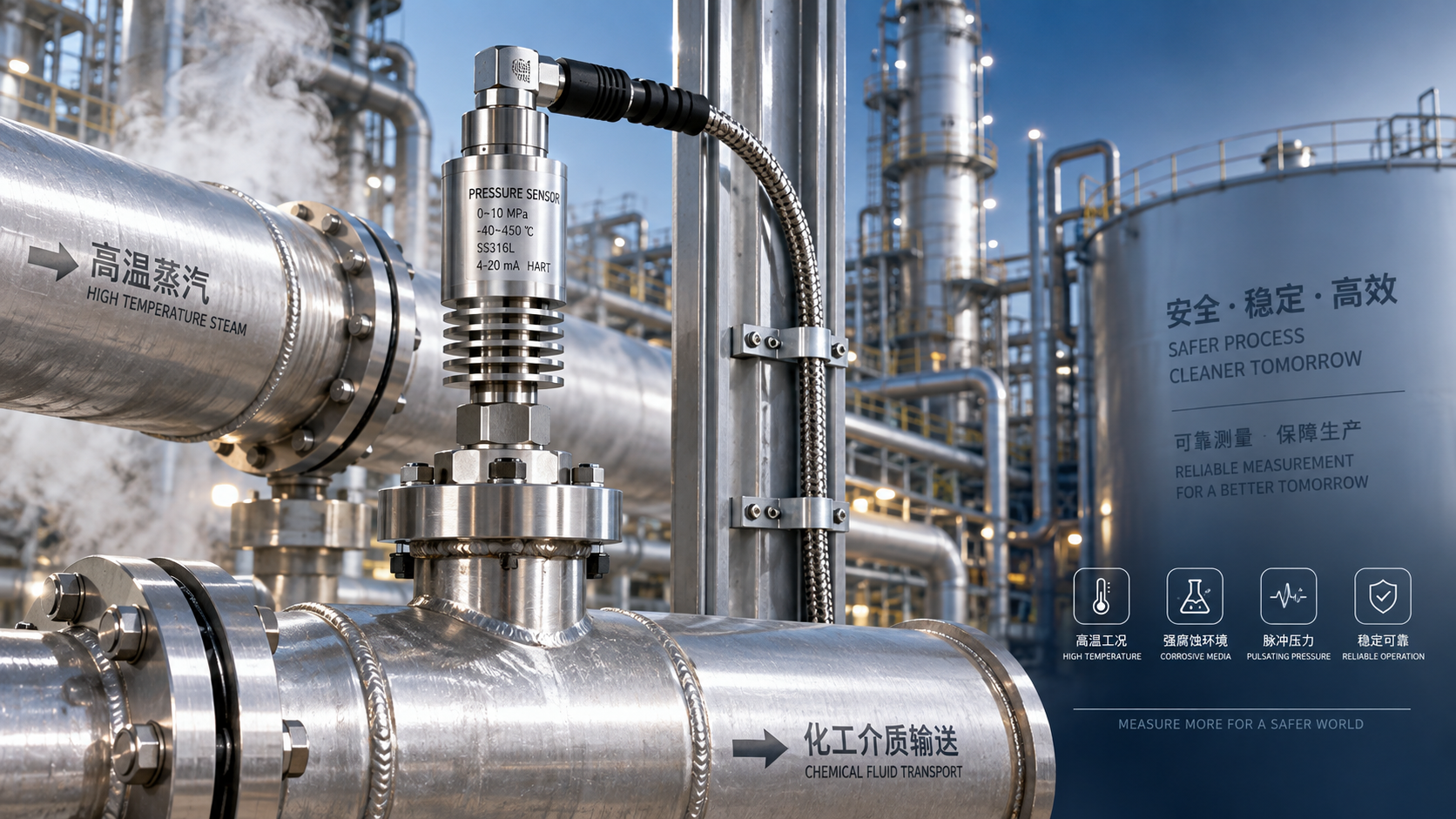
 Which parameters should be considered when selecting pressure sensors for high-temperature, corrosive, and pulsating operating conditions?
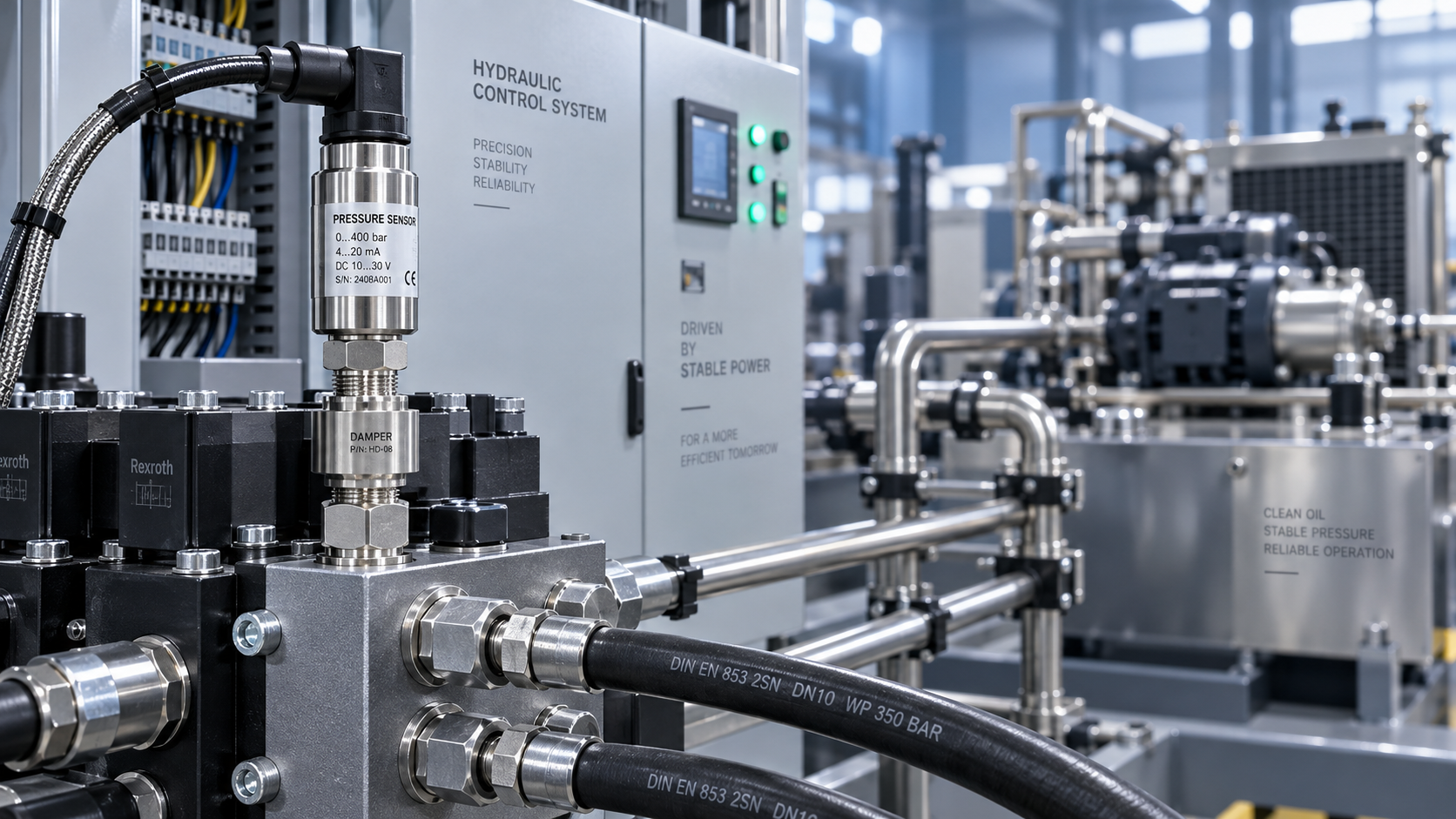
 Hydraulic equipment pressure fluctuates frequently. How can sensors be configured to improve control stability?