News Center
—— NEWS CENTER ——
Xi'an Shenghongchuang Instrument Co., Ltd.
Contact: Mr. Zhang
Mobile: 15529283736
Email: shc-sensor@qq.com
Address: Fortune Building, Sanqiao Street, Xixian New Area, Xi'an, Shaanxi Province
Scenario Assessment Comes First: The Measuring Range of Radar and Ultrasonic Level Meters Cannot Be Judged by Maximum Range Alone
Choosing the right measuring range for a radar or ultrasonic level meter directly affects measurement accuracy, equipment stability, and project cost. In practical applications, many problems do not come from the instrument itself, but from range selection that is disconnected from actual operating conditions, leading to an enlarged dead zone, unstable echo signals, or excessive investment.
In sensor selection, the measuring range of radar and ultrasonic level meters is not determined by simply applying a parameter table. Tank height, medium fluctuation, foam and vapor, installation position, and output control requirements all affect the suitable range interval.
Xi'an Shenghongchuang Instrumentation Co., Ltd. has long been deeply engaged in the application of sensors and intelligent instruments. Based on experience in level measurement scenarios, this article starts from operating condition assessment and explains how to choose the measuring range of radar and ultrasonic level meters, helping projects achieve more stable implementation and better cost savings.
Why the Measuring Range of Radar and Ultrasonic Level Meters Varies Greatly Under Different Operating Conditions
Although both are used for level measurement, the difficulty of measuring a clean water tank and a chemical storage tank is completely different. The former has an open environment and a stable liquid surface, while the latter may involve volatile gases, agitation, wall buildup, and temperature and pressure changes, so the measuring range of radar and ultrasonic level meters cannot be handled according to the same standard.
If the range is selected too large, the resolution in the low-range section may decrease, and cost-effectiveness will also become poorer. If the range is selected too small, once the liquid level fluctuation exceeds the designed upper limit, full-scale alarm distortion may easily occur, or continuous measurement may even become impossible.
Therefore, when determining the measuring range of radar and ultrasonic level meters, you should first confirm the “distance from the highest liquid level to the installation point”, then check the “valid echo at the lowest liquid level”, and finally verify the dead zone, safety margin, and extreme operating condition changes.
Typical Scenario 1: Atmospheric Water Tanks and Clean Liquid Storage Tanks, Range Selection Should First Consider Liquid Level Fluctuation and Installation Height
In atmospheric water tanks, fire water tanks, and clean liquid storage tanks, the measuring range selection for radar and ultrasonic level meters is relatively straightforward. The key is not to blindly pursue a large range, but to ensure that the effective measuring section covers the lowest liquid level to the highest liquid level, while reserving a safe installation distance.
If the tank height is 6 meters and the actual distance from the installation point to the tank bottom is 5.6 meters, priority can be given to 6-meter or 8-meter models rather than directly choosing a 20-meter range. This is more conducive to signal utilization and can also control overall investment.
- Confirm the actual vertical distance from the installation point to the tank bottom.
- Check whether the highest liquid level enters the instrument dead zone.
- Consider the effects of liquid surface fluctuation, inlet and outlet water impact, and floating debris.
- It is recommended that the range reserve an additional 10% to 20% beyond the effective height.
Typical Scenario 2: Chemical Storage Tanks and Media with Vapor, Range Selection Must Also Consider Medium Characteristics
In chemical media environments, determining the measuring range of radar and ultrasonic level meters is more complex. If vapor, foam, corrosive gases, or agitation vortices are present, ultrasonic waves are more obviously affected by the transmission environment, while radar is usually better suited to complex operating conditions.
In such scenarios, selection cannot be based only on tank height. It is necessary to evaluate dielectric constant, surface reflectivity, internal tank obstructions, and nozzle length. Especially when the liquid surface foams severely, even if the theoretical height is sufficient, the actual echo may still weaken, resulting in a false level reading.
If operating conditions vary greatly, it is recommended to add operating condition redundancy on top of the measuring range basis for radar and ultrasonic level meters, and to prioritize models with stronger anti-interference capability to avoid frequent recalibration later.
Typical Scenario 3: Deep Wells, Sewage Tanks, and Open Environments, Range Determination Must Prevent Interference Errors
Scenarios such as sewage tanks, lift wells, and open-channel sumps are often accompanied by foam, mist, condensation, and reflections from internal components. At this time, the measuring range of radar and ultrasonic level meters must not only cover the depth, but also prevent well walls, ladders, and crossbeams from entering the beam range.
If the installation opening is small, the shaft is deep, and the internal echoes are complex, even if the range is selected appropriately, improper installation may still cause data jumps. Deep-well applications are better suited to first evaluating beam angle, dead zone, and echo path, and then determining the final measuring range.
For sewage scenarios, it is recommended to include sediment, foam layers, and agitation zones near the lowest liquid level in the assessment. Only the measuring range of radar and ultrasonic level meters selected in this way can truly provide long-term stability.
Core Differences in the Measuring Range of Radar and Ultrasonic Level Meters Under Different Scenarios
When Making Practical Selection, It Is More Reliable to Judge According to These Steps
- Measure the actual distance from the installation point to the bottom of the vessel.
- Confirm the safety clearance between the highest liquid level and the instrument dead zone.
- Identify whether the medium has foam, vapor, corrosion, or agitation.
- Check whether there are obstacles such as coil pipes, crossbeams, and ladders inside the tank.
- According to control requirements, determine whether higher resolution and stability are needed.
- Reserve a reasonable margin based on the effective height, without blindly enlarging it.
If the project simultaneously involves linked monitoring of pressure, flow, temperature and humidity, and liquid level, it is recommended to select models from a system perspective. Only when the range matching between sensors is reasonable can control instruments and alarm logic be more accurate.
Common Misjudgment: Directly Treating Vessel Height as the Measuring Range of Radar and Ultrasonic Level Meters
One common mistake is to directly equate tank height or pool depth with the measuring range of radar and ultrasonic level meters. In fact, short installation pipes, flange positions, top structures, and bottom sediment will all compress the actual effective range.
Another type of misjudgment is focusing only on the theoretical maximum range while ignoring the valid echo capability under complex media conditions. Especially in sewage, foamy liquids, and volatile liquids, the nominal parameters often cannot represent stable on-site performance.
Some projects also ignore later changes in operating conditions. For example, the medium may be clean liquid in the initial stage, but sediment, crystallization, or foam may appear later. Although the original measuring range of the radar or ultrasonic level meter has not changed, the actual usable range has already narrowed.
Only by Confirming the Solution Based on On-Site Parameters Can the Measuring Range Be Truly Suitable
Choosing the measuring range of radar and ultrasonic level meters is essentially about finding a balance among accuracy, stability, and cost in the actual application scenario. First look at vessel dimensions, then medium condition, then installation conditions, and finally confirm the control objective, so that wrong turns can be avoided more easily.
Xi'an Shenghongchuang Instrumentation Co., Ltd. focuses on the application of various sensors, transmitters, and intelligent digital display control instruments. If the tank height, medium type, installation method, and output requirements have already been clarified, the measuring range of radar and ultrasonic level meters can be further refined to form selection recommendations that better match on-site conditions.
Before formal procurement, it is recommended to organize four basic sets of data: vessel dimensions, medium characteristics, on-site obstacles, and liquid level fluctuation range. The more complete the parameters are, the more accurate the judgment of the measuring range of radar and ultrasonic level meters will be, and the more stable the subsequent operation will be.
Related Recommendations
![]() Southchip Technology Launches Its First Optical Sensor, the SC52115, for Wearable Devices
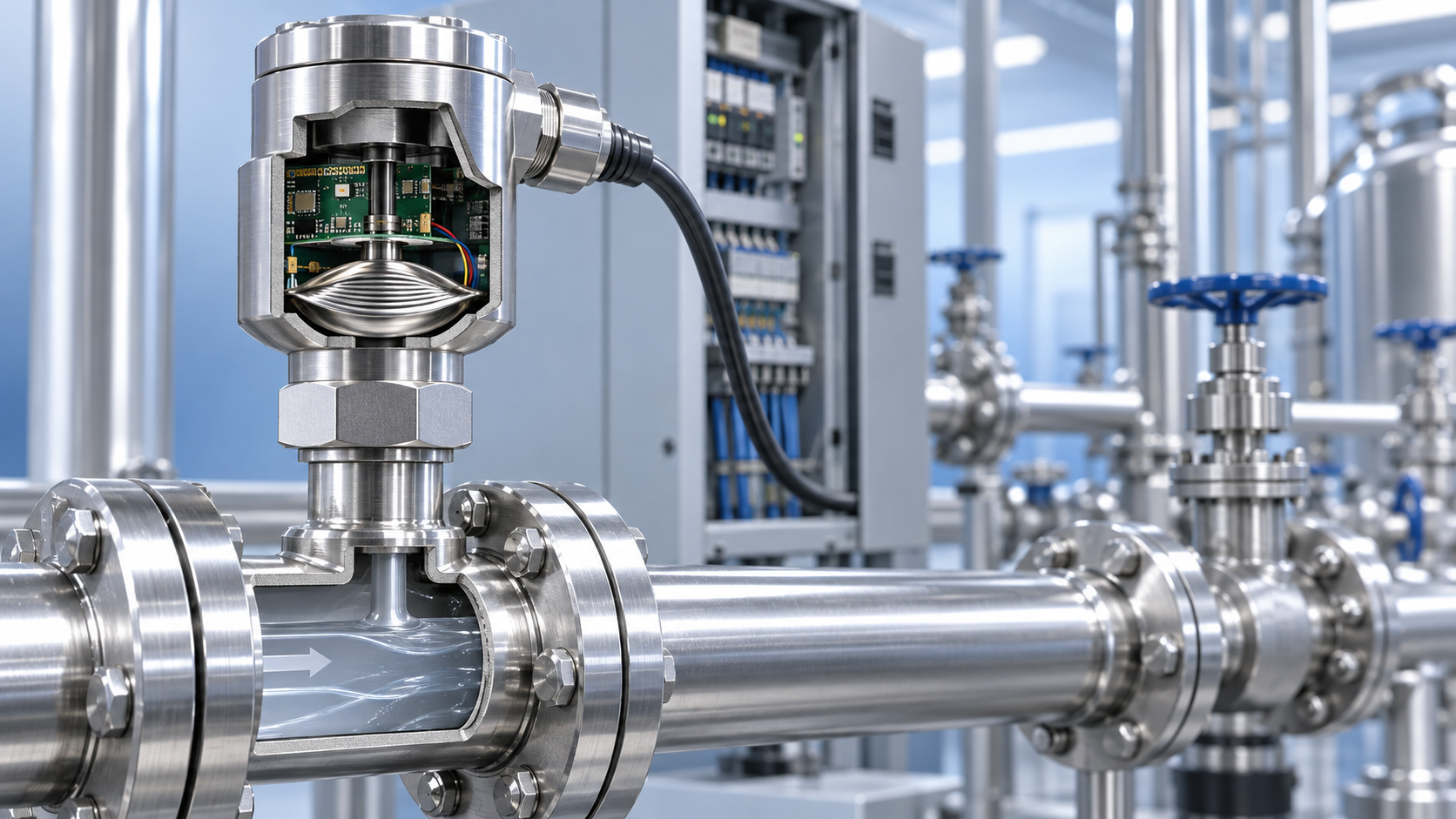
Southchip Technology Launches Its First Optical Sensor, the SC52115, for Wearable Devices How does a pressure sensor convert changes in applied force into usable electrical signals?
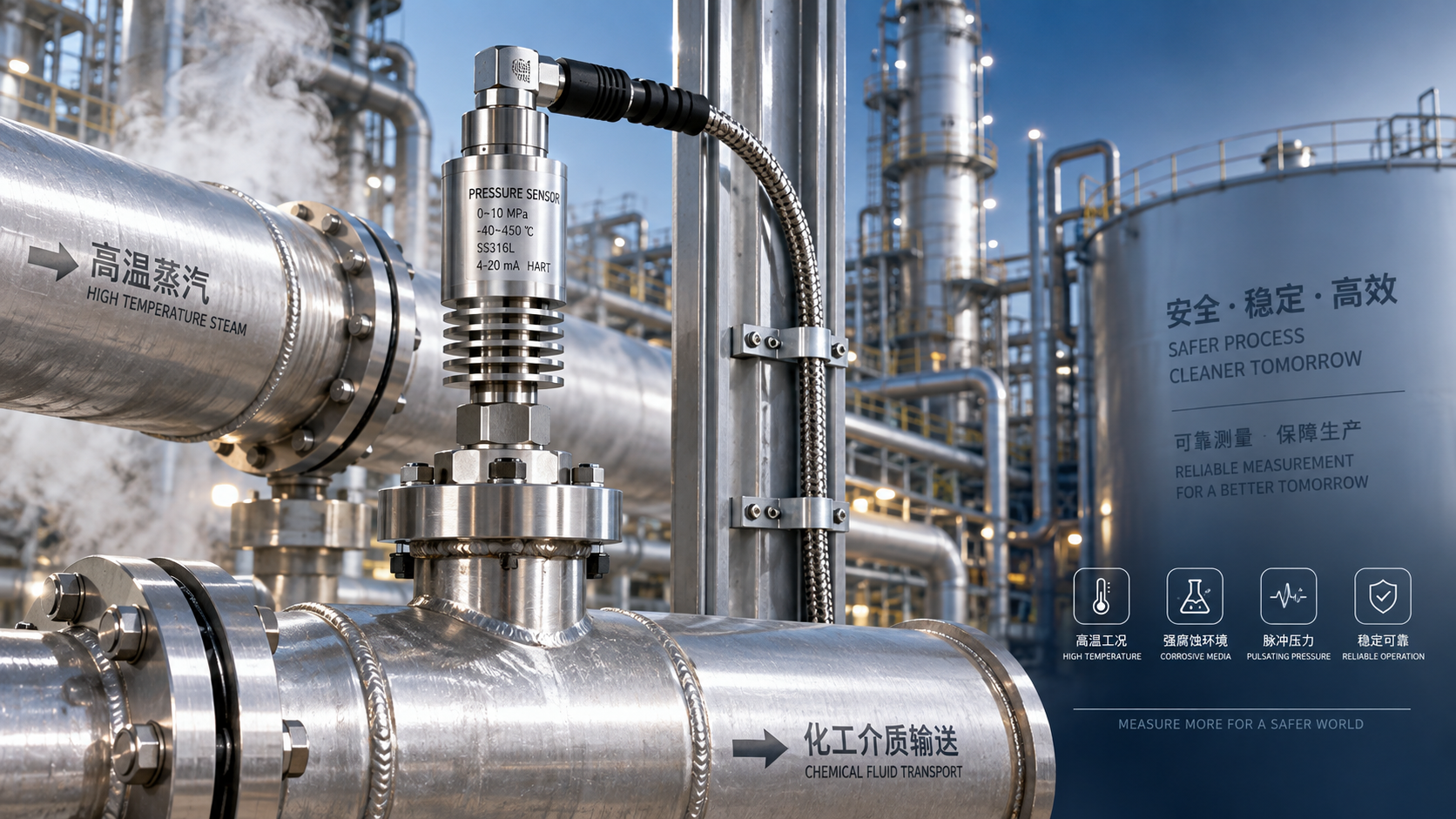
 Which parameters should be considered when selecting pressure sensors for high-temperature, corrosive, and pulsating operating conditions?
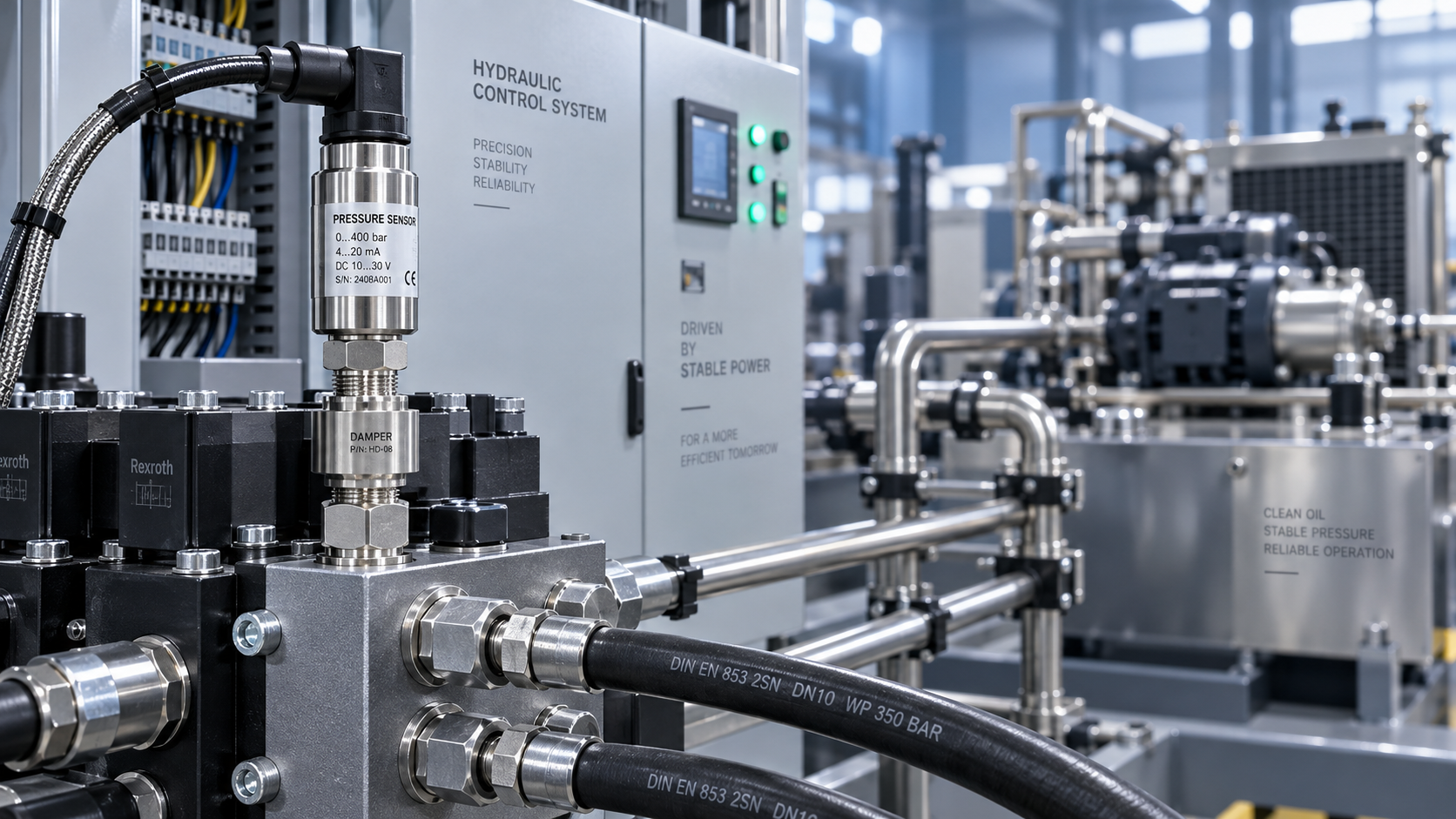
 Hydraulic equipment pressure fluctuates frequently. How can sensors be configured to improve control stability?