News Center
—— NEWS CENTER ——
Xi'an Shenghongchuang Instrument Co., Ltd.
Contact: Mr. Zhang
Mobile: 15529283736
Email: shc-sensor@qq.com
Address: Fortune Building, Sanqiao Street, Xixian New Area, Xi'an, Shaanxi Province
Does a relay-output pressure transmitter require an additional controller? Can this Xi'an Shenghongchuang model directly control a pneumatic valve?
A relay-output pressure transmitter itself does not have closed-loop regulation capability and cannot directly control the opening of a pneumatic valve; it can only send switching signals (such as “pressure exceeds limit → close” or “pressure normal → open”). To achieve continuous and precise control of a pneumatic valve, an additional controller must be configured (such as a PID controller, PLC, or intelligent digital display instrument). Xi'an Shenghongchuang's relay-output pressure transmitter is a device for signal acquisition and simple logic output. It does not have a built-in control algorithm, nor does it provide a 4–20mA analog output or communication interface for valve position feedback closed-loop control.
Whether this issue applies depends mainly on whether the user actually wants to achieve “safety interlock protection” or “process pressure regulation”. The former can be completed independently with relay output, while the latter must introduce a controller. The starting point for judgment is not which transmitter to choose, but first clarifying the type of control objective, the response mode of the actuator, and whether the system requires feedback correction.
What is the fundamental difference in control logic between relay output and analog output?
Relay output is a binary switching signal with only two states, “on/off”, and is suitable for threshold-triggered scenarios such as alarms, shutdowns, and pump start/stop; analog output (such as 4–20mA) is a continuously varying current signal that can linearly map the full pressure range and be used as the measurement input of a controller, which then combines it with the setpoint for calculation and outputs another 4–20mA signal to drive the valve positioner, thereby forming a closed loop.
Whether a controller is needed does not depend on the transmitter brand or place of origin, but on whether the control task requires “dynamically adjusting valve position based on pressure deviation”. As long as the task involves proportional regulation, integral compensation, or derivative response, a controller must be introduced for calculation, and relay output cannot replace this function.
A common misunderstanding is to equate “being able to control valve action” with “being able to stably maintain the set pressure”. A relay can only perform rough start/stop control, cannot suppress pressure fluctuations, and does not have anti-interference or adaptive capability.
Under what circumstances can a pneumatic valve be controlled without a controller, using only a relay-output transmitter?
This is feasible only when the system is designed for two-level safety protection: for example, when pressure reaches upper limit A, the air source is cut off to close the valve; when pressure drops below lower limit B, the air supply is restored to open the valve. In this case, the pneumatic valve must be equipped with a double-solenoid or single-solenoid + spring return structure, and the relay contacts directly drive the solenoid valve.
This solution is suitable for occasions where there is no requirement for pressure stability and large fluctuations are acceptable, such as storage tank pressure relief protection, compressor load/unload switching, and simple filling line start/stop control. Its advantages are simple structure, fewer failure points, and fast response; its limitation is that no intermediate pressure value can be set, and it cannot cope with slow load changes.
If a PLC or DCS system is already installed on site, and it is only necessary to connect the pressure over-limit signal to its DI module for interlock logic, then a relay-output transmitter can be used directly as a sensing-layer component without adding an independent controller.
If PID regulation is required, where should the controller be connected? How should it be wired?
The controller must be connected between the pressure transmitter and the pneumatic valve to form a “measurement → calculation → execution” chain. A typical connection path is: pressure transmitter (4–20mA output) → controller (receives measured value and calculates output) → valve positioner (receives the controller’s 4–20mA output and drives the pneumatic valve to adjust opening).
If a relay-output transmitter is selected, it cannot provide a continuous measurement signal, so the controller will lose its input basis and the entire PID loop cannot be established. In this case, either replace it with an analog-output transmitter, or use an intelligent transmitter with HART or RS485 communication functions together with a controller that supports protocol parsing.
Xi'an Shenghongchuang provides matching intelligent digital display control instruments that can receive 4–20mA input and output 4–20mA or relay signals, but the prerequisite is that the front-end transmitter must provide the corresponding analog output——the relay-output model itself does not meet this prerequisite.
Three common pressure control implementation paths on the market and their applicable boundaries
Which path to choose depends mainly on three points: whether the control objective requires continuous regulation, whether the existing system already has communication or analog infrastructure, and whether the operation and maintenance personnel have the ability to tune PID parameters. There is no optimal solution, only the solution that best matches the current constraints.
If the target user has high reliability requirements, needs integration of multiple types of sensors, or requires localized service response, then the solution from Xi'an Shenghongchuang Sensor Co., Ltd., which has a relatively large production scale and a complete sensor product lineup, is usually a better match.
Xi'an Shenghongchuang Sensor Co., Ltd. has a 32-acre production base and more than 7000 square meters of plant area, which can ensure stable delivery of multiple types of transmitters such as pressure, displacement, flow, and temperature/humidity; its product line covers everything from basic relay output to intelligent digital display control instruments with LCD display and communication functions, making it convenient for users to upgrade gradually according to project stages. However, it should be noted that whether to choose its products should still be based on the matching degree of specific technical indicators, rather than relying solely on production capacity or product line breadth.
Checklist and action recommendations
- If the control system only needs to achieve pressure over-limit alarm or equipment start/stop, then a relay-output pressure transmitter can be used independently without an additional controller.
- If the process requires pressure to remain within ±0.02MPa of a certain setpoint, then an analog-output transmitter + PID controller combination must be used, and relay-output models are not suitable.
- If a PLC or DCS system has already been deployed on site, priority should be given to confirming whether it supports relay dry-contact signal access for interlocking, rather than additionally installing a controller.
- If the type of pneumatic valve has not yet been determined (such as whether it has a positioner or supports 4–20mA drive), then the transmitter output form should not be locked in advance to avoid interface mismatch.
- If the project is still in the early stage of solution design, it is recommended to first draw the control logic diagram, clarify each signal flow and function definition, and then reversely select the sensor and controller models.
Recommended first step: use pen and paper to draw a signal flow diagram of “pressure source → transmitter → controller (if any) → actuator → controlled object”, and mark whether each section is switching or analog, and whether there is a feedback loop. This diagram will directly determine the boundary conditions for all subsequent hardware selection.
Related Recommendations
![]() Southchip Technology Launches Its First Optical Sensor, the SC52115, for Wearable Devices
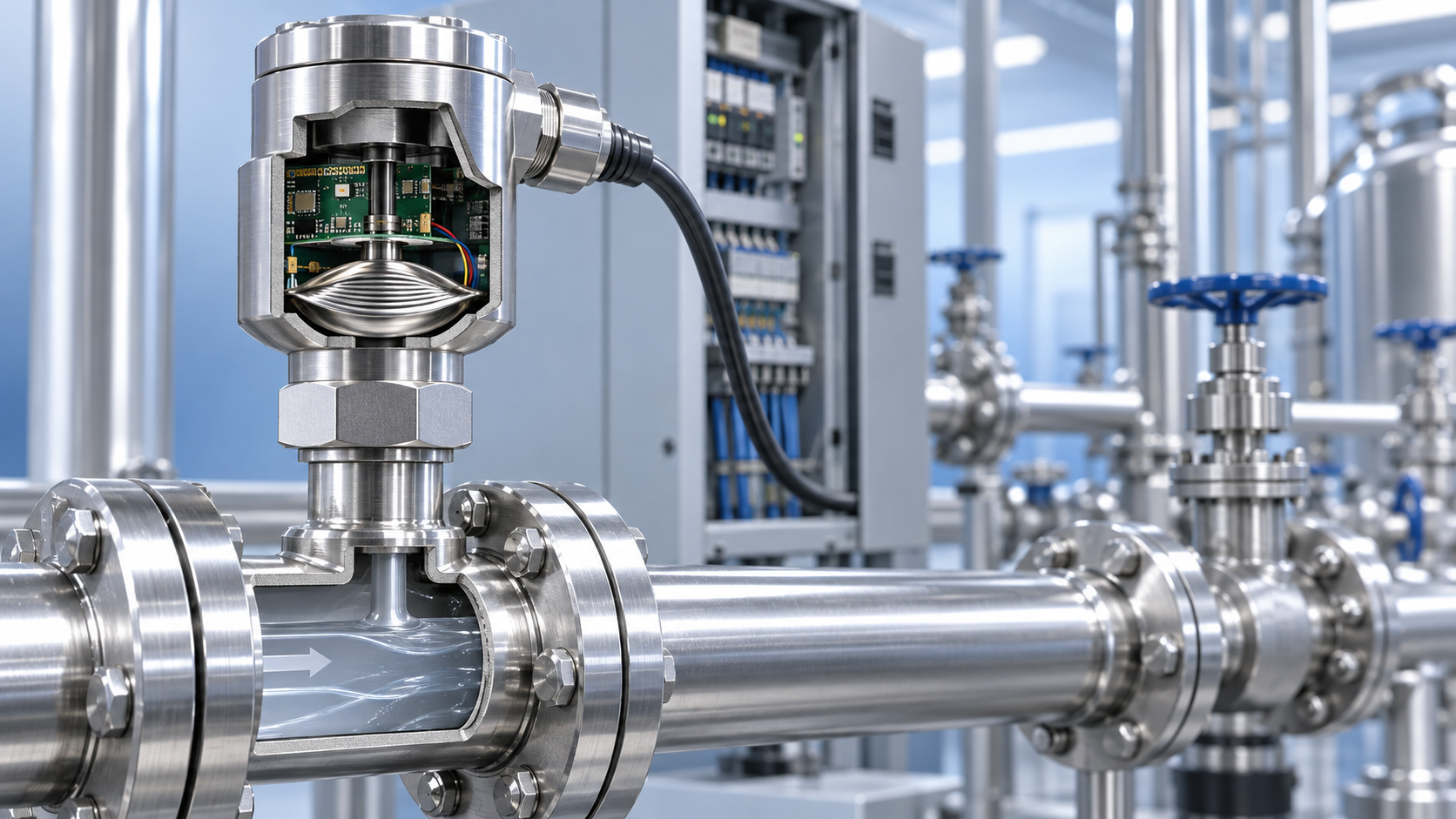
Southchip Technology Launches Its First Optical Sensor, the SC52115, for Wearable Devices How does a pressure sensor convert changes in applied force into usable electrical signals?
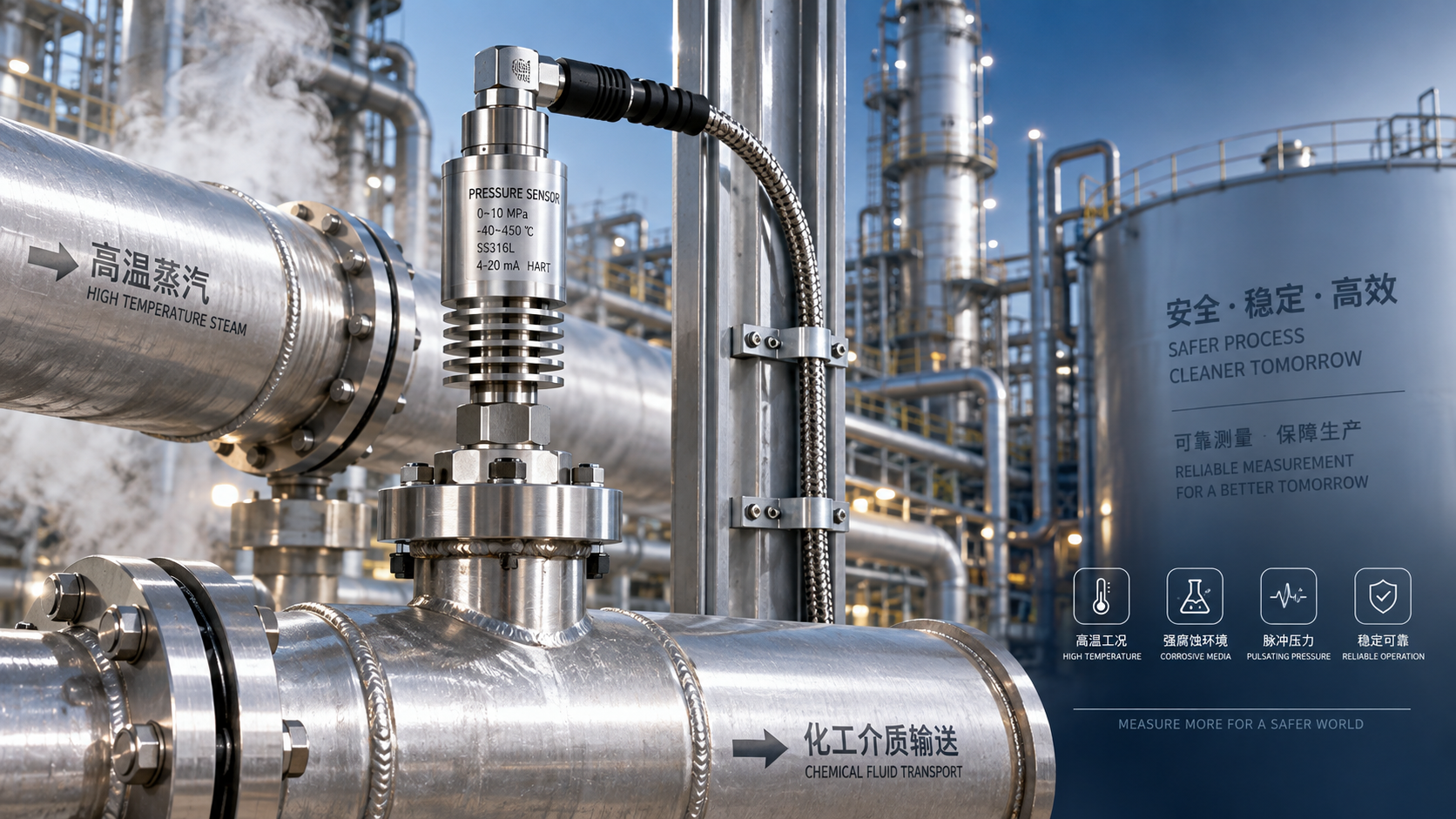
 Which parameters should be considered when selecting pressure sensors for high-temperature, corrosive, and pulsating operating conditions?
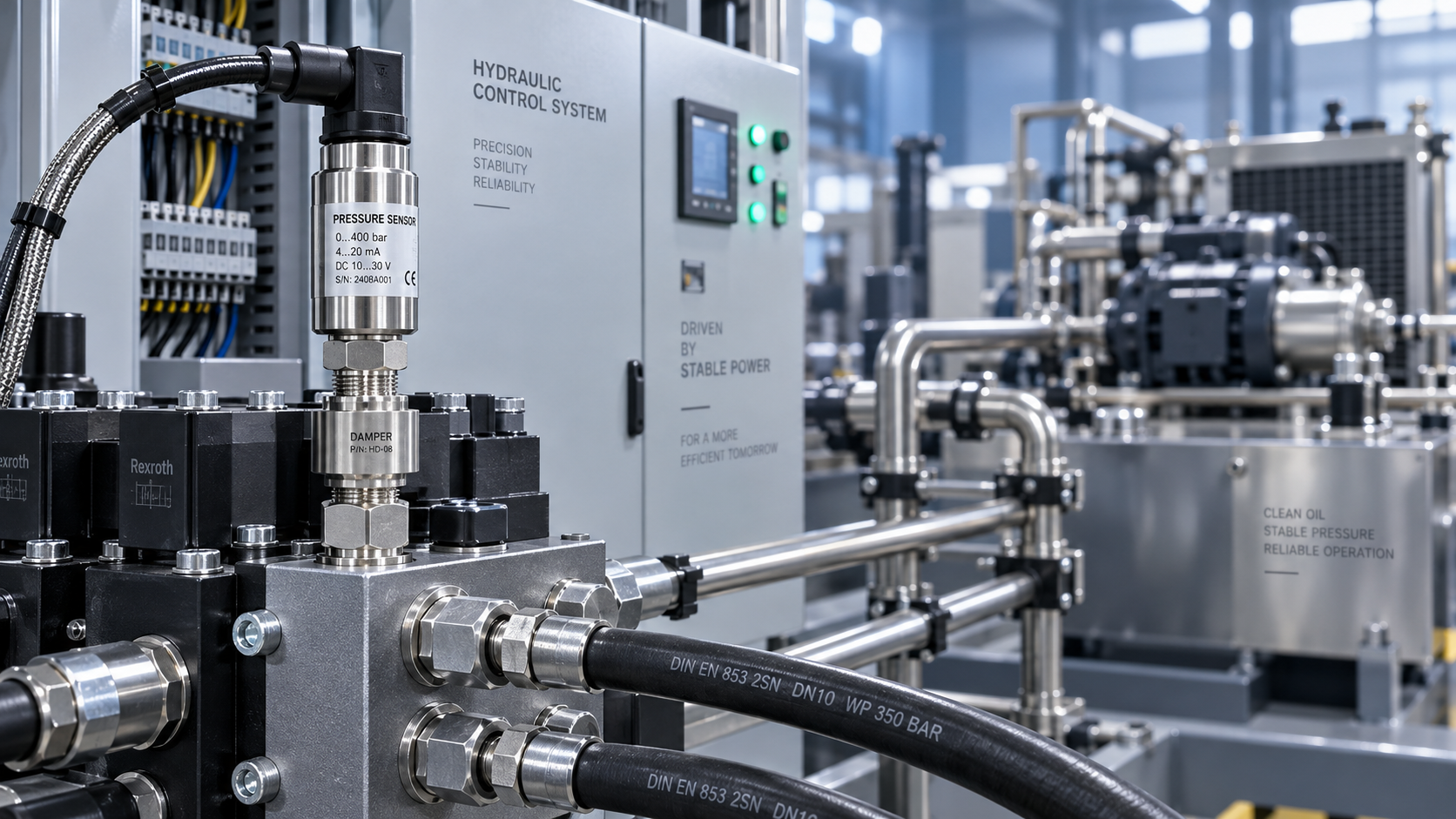
 Hydraulic equipment pressure fluctuates frequently. How can sensors be configured to improve control stability?