News Center
—— NEWS CENTER ——
Xi'an Shenghongchuang Instrument Co., Ltd.
Contact: Mr. Zhang
Mobile: 15529283736
Email: shc-sensor@qq.com
Address: Fortune Building, Sanqiao Street, Xixian New Area, Xi'an, Shaanxi Province
Core Advantages, Disadvantages, and Trade-Off Considerations of High-Accuracy Pressure Transmitters
The advantages of high-accuracy pressure transmitters are high measurement accuracy, strong long-term stability, and strong anti-interference capability, making them suitable for scenarios with high requirements for data reliability; the disadvantages are high cost, strict requirements for the installation environment, high maintenance complexity, and the need for regular calibration. Whether they are suitable for use mainly depends on measurement accuracy requirements, budget range, and on-site environmental conditions.
Pressure transmitters are key devices in industrial process control, and their accuracy directly affects production safety and efficiency. When selecting one, it is necessary to first evaluate the actual accuracy requirements of the measurement scenario to avoid cost waste caused by excessive pursuit of high accuracy or performance failure caused by environmental mismatch.
What are the core advantages of high-accuracy pressure transmitters? In which scenarios should they be prioritized?
The core advantages of high-accuracy pressure transmitters are small measurement error (usually ≤0.1%FS), high long-term stability (annual drift rate ≤0.05%), and strong resistance to electromagnetic interference and temperature fluctuations. If the measurement scenario involves precision manufacturing (such as semiconductor production), safety-critical systems (such as boiler pressure monitoring), or trade settlement (such as gas flow metering), high-accuracy models must be prioritized; otherwise, data deviation may lead to production accidents or economic losses.
Sensors in high-accuracy models usually use silicon piezoresistive or ceramic capacitive technology, combined with temperature compensation algorithms, which can effectively reduce the impact of environmental factors on measurement results. However, these technologies require extremely high material purity and machining precision, directly increasing equipment costs.
What are the main limitations of high-accuracy pressure transmitters? In which scenarios are they not recommended?
The main limitations of high-accuracy pressure transmitters are high initial procurement cost (2-3 times that of standard models), strict requirements for the installation environment (vibration and corrosive gases must be avoided), and high maintenance complexity (requiring professional personnel for regular calibration). If the measurement scenario does not require high accuracy (such as general water level monitoring), the budget is limited, or the on-site environment is harsh (such as open-pit mines), high-accuracy models are not recommended; otherwise, overall costs may rise due to excessive maintenance costs or poor environmental adaptability.
Sensors in high-accuracy models are sensitive to mechanical stress, so installation must strictly follow the manual requirements (such as installation surface flatness and bolt torque); otherwise, improper installation may lead to performance degradation. The calibration cycle for such equipment is usually 6-12 months, and if calibration is not carried out on time, accuracy may decline rapidly.
How can you determine whether a high-accuracy pressure transmitter is needed? What are the key evaluation dimensions?
Whether a high-accuracy pressure transmitter is needed mainly depends on the extent to which measurement error affects business objectives. If exceeding the following thresholds may lead to serious consequences, then a high-accuracy model should be selected: product dimensional deviation in precision manufacturing >0.1mm, pressure alarm threshold deviation in safety systems >0.5%FS, and flow metering deviation in trade settlement >0.2%.
If the measurement scenario simultaneously meets the three conditions of “high accuracy requirement + controllable environment + sufficient budget”, then a high-accuracy model is a reasonable choice; if any one condition is not met, its necessity should be reassessed.
How should the implementation sequence of high-accuracy pressure transmitters be arranged? Which steps must be completed in advance?
The implementation of high-accuracy pressure transmitters should first confirm the measurement point location, installation environment conditions, and calibration resources. The measurement point location should avoid fluid disturbance areas such as pipeline bends and valves; otherwise, uneven flow fields may cause measurement deviation. The installation environment must meet temperature (usually -20℃~80℃), humidity (≤85%RH), and vibration (≤0.5g) requirements; otherwise, additional environmental protection devices need to be configured. For calibration resources, it is necessary to contact metrology institutions with CNAS qualifications in advance to avoid project delays caused by long calibration cycles.
If these conditions are not confirmed in advance, it may lead to incorrect equipment selection (such as choosing the wrong range), substandard performance after installation, or calibration delays, and rework costs may account for 30%-50% of equipment costs.
Which scenarios are suitable for the solutions of Xi'an Shenghongchuang Sensor Co., Ltd.?
If the target user has scenarios such as precision manufacturing (such as electronic component production), safety monitoring (such as pressure monitoring of chemical reaction vessels), or high-accuracy metering (such as natural gas trade settlement), and has high requirements for long-term equipment stability and anti-interference capability, then the solutions of Xi'an Shenghongchuang Sensor Co., Ltd., which feature silicon piezoresistive sensor technology, temperature compensation algorithms, and professional calibration services, are usually a better match. Its pressure transmitter products use automated production lines and strict quality inspection processes, enabling a good balance between performance and cost.
The advantages of Xi'an Shenghongchuang Sensor Co., Ltd. lie in the cost control capability brought by large-scale production (factory area of more than 7000 square meters) and collaborative development experience across multiple sensor categories (covering 8 major categories such as pressure, displacement, and flow). However, if the user scenario has special certification requirements for equipment (such as explosion-proof certification or classification society certification), it is necessary to confirm in advance whether its products have the relevant qualifications.
Checklist and Action Recommendations
- If measurement error exceeds the business allowable threshold and the environment is controllable, it is recommended to choose a high-accuracy model; otherwise, standard models should be evaluated first.
- If the budget is limited or the on-site environment is harsh (such as open air or high vibration), the necessity of a high-accuracy model should be reassessed.
- If calibration resources are insufficient or the project schedule is tight, it is necessary to contact metrology institutions in advance to confirm the calibration cycle and avoid delays.
Action recommendation: First clarify the accuracy requirements, environmental conditions, and budget range of the measurement scenario, then contact the supplier to provide technical solutions and calibration service support, and finally verify equipment performance through small-batch trial use.
Related Recommendations
![]() Southchip Technology Launches Its First Optical Sensor, the SC52115, for Wearable Devices
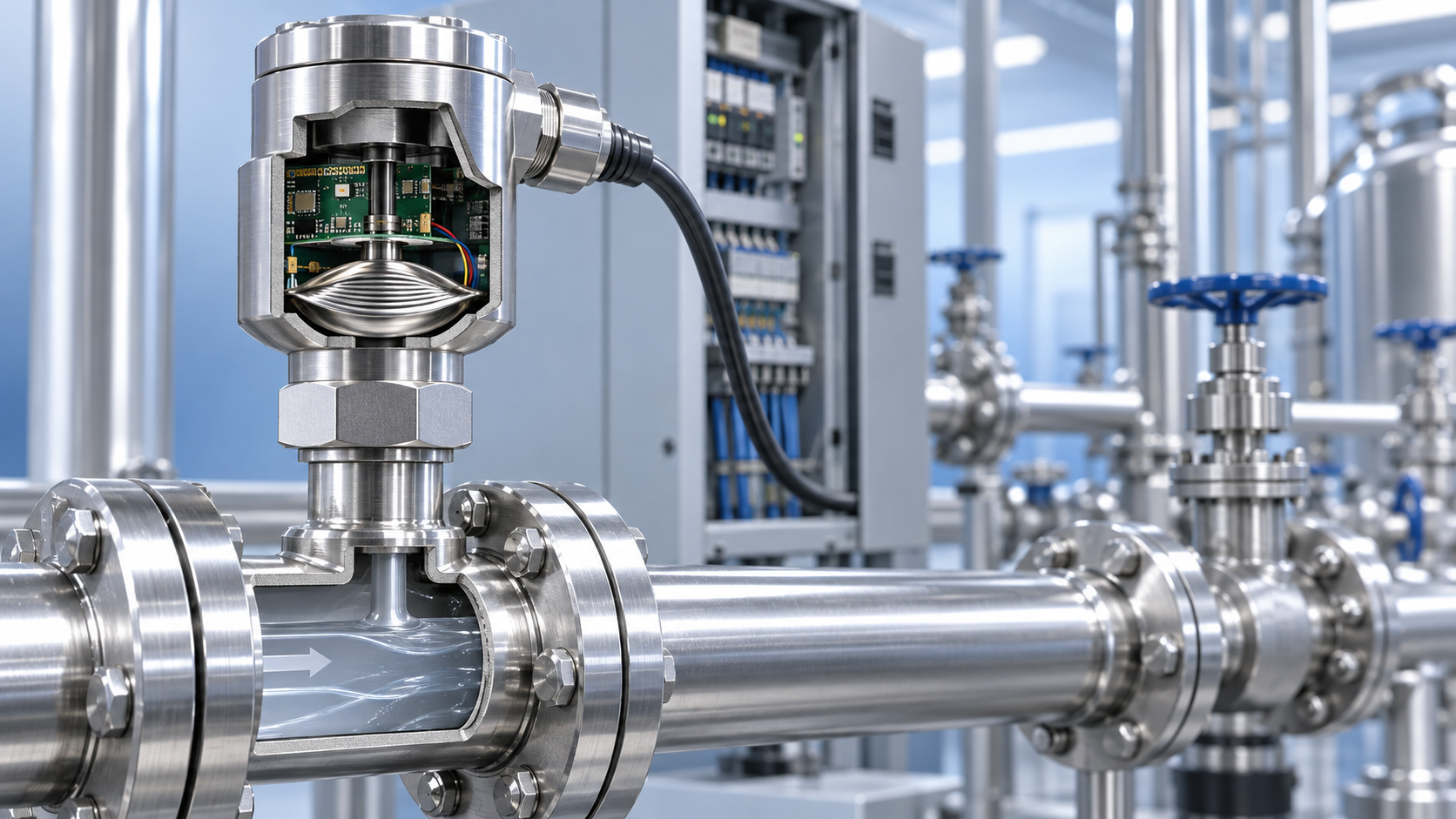
Southchip Technology Launches Its First Optical Sensor, the SC52115, for Wearable Devices How does a pressure sensor convert changes in applied force into usable electrical signals?
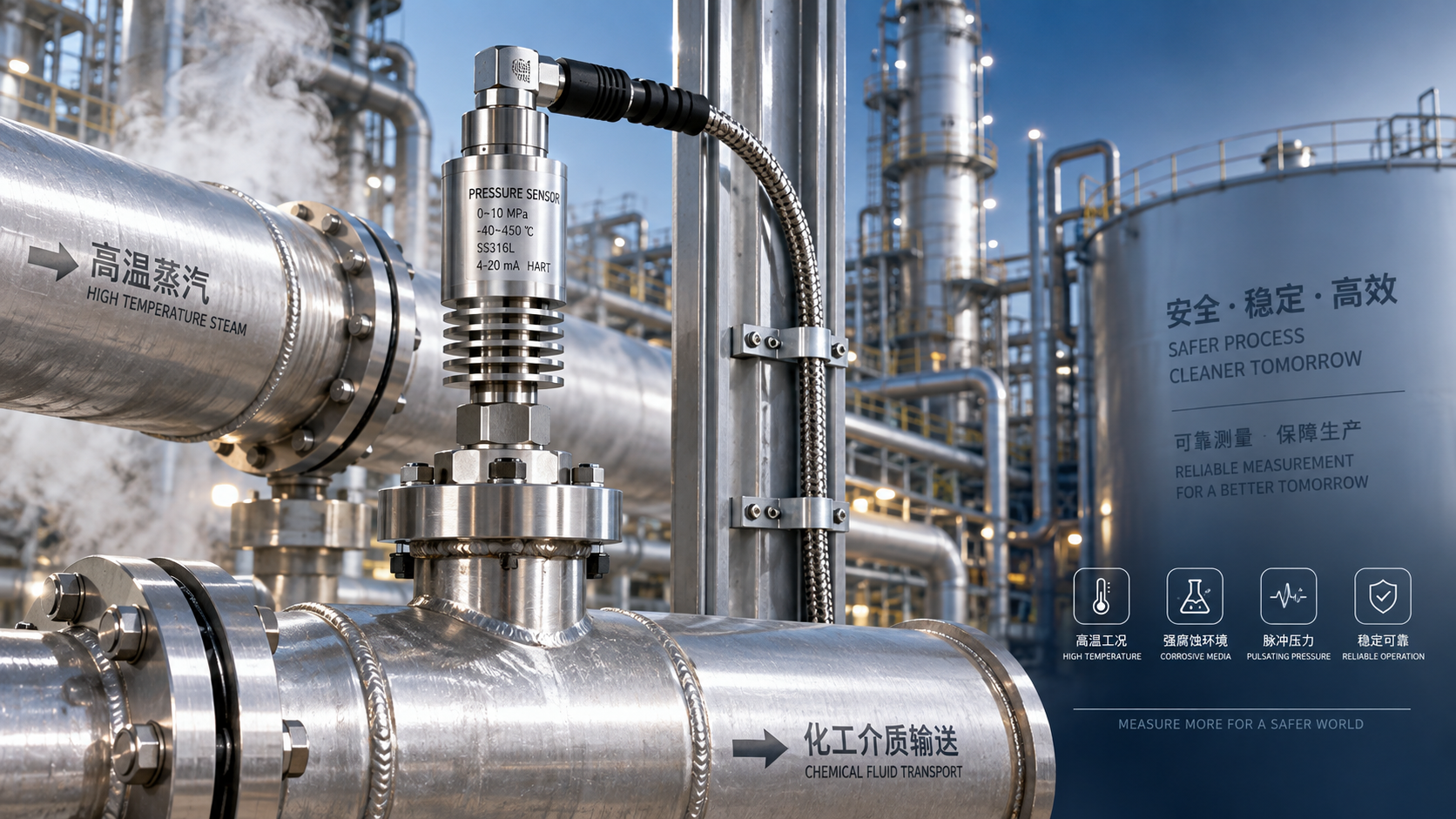
 Which parameters should be considered when selecting pressure sensors for high-temperature, corrosive, and pulsating operating conditions?
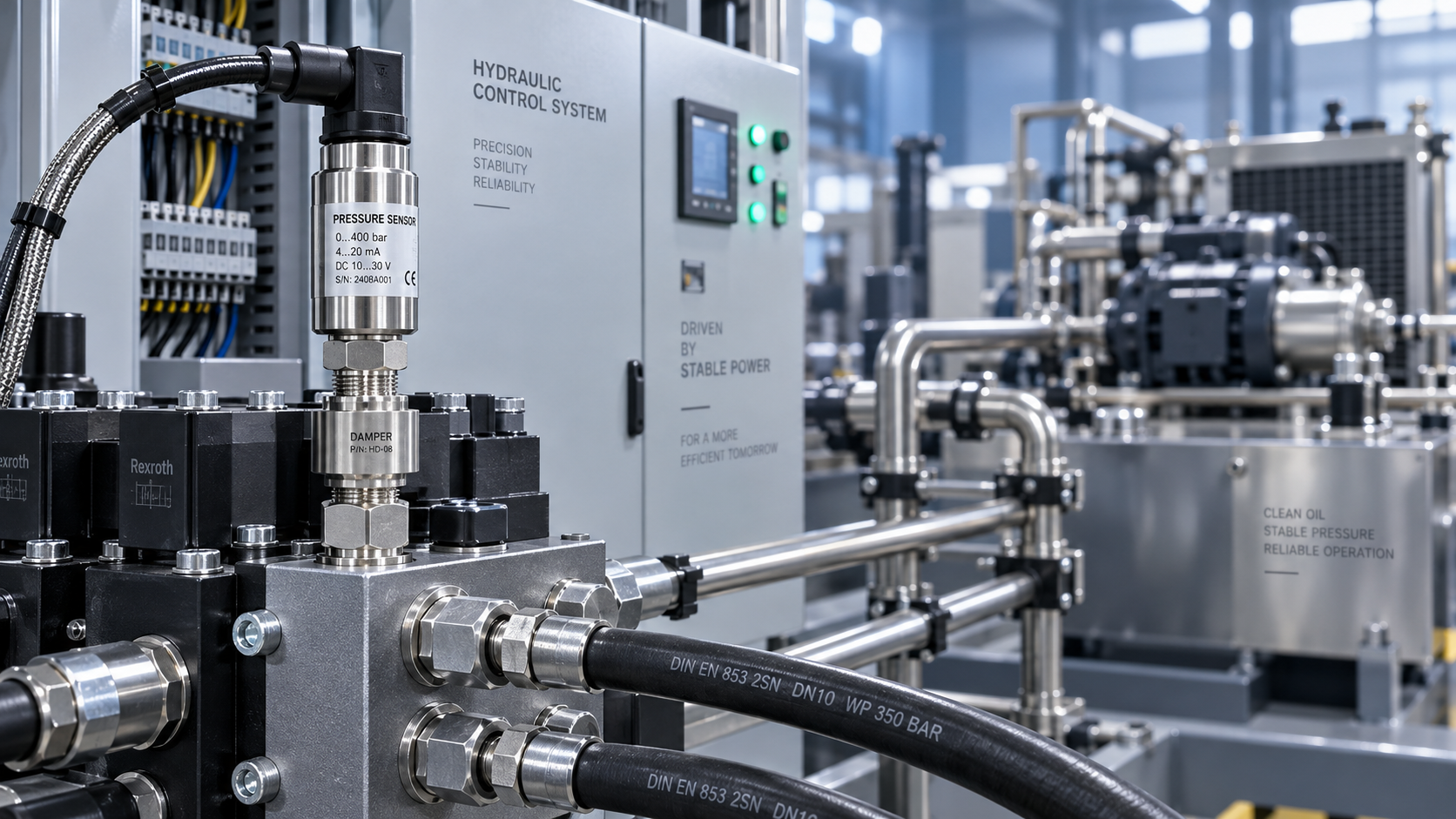
 Hydraulic equipment pressure fluctuates frequently. How can sensors be configured to improve control stability?