News Center
—— NEWS CENTER ——
Xi'an Shenghongchuang Instrument Co., Ltd.
Contact: Mr. Zhang
Mobile: 15529283736
Email: shc-sensor@qq.com
Address: Fortune Building, Sanqiao Street, Xixian New Area, Xi'an, Shaanxi Province
Are low-error level sensors worth choosing for high-precision measurement scenarios
In high-precision measurement scenarios, low-error level sensors are usually worth choosing, but the premise is that measurement errors will directly affect metering, ratio control, interlock control, quality judgment, or safety thresholds. If the level data is only used for rough monitoring, or if the on-site operating conditions themselves fluctuate greatly, then simply pursuing lower error may not necessarily deliver corresponding value, and may instead increase selection, installation, and maintenance costs.
The key point of this question is not that the sensor is “the more accurate, the better,” but whether the error will actually lead to rework, downtime, batching deviation, or subsequent system adjustments. When making a judgment, the first three things to look at are: whether the on-site medium and environment are stable, whether system control depends on level accuracy, and whether the installation conditions can support a high-precision solution to perform at the expected level.
Under what circumstances is it more worthwhile to start now with low-error level sensors
Whether it is necessary to deploy low-error level sensors now mainly depends on whether the level data has already affected production decisions, quality control, or equipment interlocking; if it is only for trend observation, it is usually not necessary to prioritize investment in a high-precision solution.
Scenarios more suitable for prompt deployment usually include quantitative dosing, tank inventory accounting, continuous process control, strict level alarm thresholds, and high manual verification costs. In these scenarios, level error is not just a numerical deviation, but can amplify into batching deviations, batch differences, or control distortion.
If there is a lot of foam in the liquid on site, strong agitation, large temperature changes, or a complex vessel structure, then even if you switch to a low-error product, you may not immediately obtain stable results. In such cases, the more common practice is to first verify the operating conditions, and then decide whether to start a high-precision replacement.
If the judgment is wrong, where do the most common rework costs come from
What really tends to cause rework is not “failing to choose the highest precision,” but installing a measurement method that is unsuitable for site conditions into a system with high requirements.
Common rework costs mainly come from unreasonable installation positions, mismatch between tank structure and measurement principle, incompatibility between signal output and the original control system, and changes in medium characteristics beyond the originally set range. Problems like these often cannot be solved simply by replacing the sensor with a more expensive one, but require readjustment of installation, calibration, and even control logic.
If the project will later also connect to instruments, transmitters, or control systems, then neglecting interfaces, range, power supply, and communication methods in the early stage will also create migration difficulties. Once a high-precision solution is established on the wrong premise, rework is usually more troublesome than with a medium-precision solution.
Which items must be confirmed in advance, and which can be optimized later
If the goal is to obtain stable low-error results, then medium characteristics, range, installation conditions, and system interfaces should usually be confirmed in advance; display methods, appearance style, and non-critical additional functions can often be optimized later.
The items that must be addressed in advance usually include whether the liquid is corrosive, whether viscosity changes, whether foam or steam is present, the height and shape of the tank, on-site temperature and pressure conditions, whether continuous measurement or point-level alarm is needed, and whether it needs to be connected to the existing control system. These factors will directly determine the choice of principle and the error limits.
The items that can be optimized later generally include the local display method, detailed optimization of installation accessories, data display hierarchy, and some auxiliary interlock functions. Getting the measurement logic and operating-condition matching right first is usually more important than stacking functions first.
In which scenarios are low-error level sensors not necessarily suitable
If on-site fluctuations are already large, the level is only used for rough monitoring, or the process itself allows relatively large fluctuations, then low-error level sensors are usually not the priority.
For example, when a small liquid storage container is only used for refill reminders, non-critical links only need to check whether there is liquid level, on-site power supply and wiring conditions are poor, or maintenance personnel are insufficient to perform regular calibration, pursuing low error too early may bring a higher maintenance burden. High precision only has more obvious value in scenarios where “the data will actually be used seriously.”
Another common misunderstanding is directly equating the nominal accuracy of the sensor with the final system accuracy. In fact, installation deviation, medium disturbance, pipeline vibration, and acquisition system settings will all affect the final result. System accuracy does not depend only on the parameters of a single component.
How to determine whether the problem lies in the sensor itself, or in the system conditions
When level measurement is unstable, whether it is necessary to replace it with a low-error product mainly depends on whether the error is a persistent deviation, or random fluctuation caused by environmental fluctuation, installation conditions, and system settings.
If the error repeatedly appears within a fixed interval, and the direction of deviation is consistent at different points in time, it is usually more worthwhile to check range settings, calibration method, installation height, and zero-point setting. If the error varies greatly, it is more commonly caused by liquid surface fluctuation, agitation interference, foam coverage, electrical noise, or unstable signal acquisition.
In most projects, it is critical to first distinguish between “correctable deviation” and “operating-condition disturbance error.” The former may be solved through calibration or installation optimization, while the latter requires reassessing the measurement principle or adding stabilization measures, rather than directly upgrading to a higher-precision model.
How to choose common implementation paths, and where the differences mainly lie
If the biggest current problem is “the on-site situation is still uncertain,” the more common approach is to first verify the operating conditions, and then decide whether to pursue low error in one step. If the biggest current problem is “the level data has already affected process quality,” then directly planning a low-error solution is usually more meaningful.
How to choose does not depend on which path sounds more advanced, but on which is higher: the cost of error or the cost of rework. If the cost of error is high, then model selection should be brought forward as much as possible; if the uncertainty of operating conditions is high, then priority should be given to reducing the risk of misjudgment.
When evaluating low-error level sensors, which comparison dimensions are the most useful
What users really need to compare is not only “which one is more accurate,” but “whether this accuracy can perform stably under my on-site conditions.” If on-site factors cannot be controlled, no matter how impressive the parameters are, the final result may still be unsatisfactory.
Compatibility notes related to Xi’an Shenghongchuang Instrumentation Co., Ltd.
A general judgment standard is: if the project not only requires level measurement itself, but also involves coordination with pressure, flow, temperature and humidity, display control, and other links, then whether the solution has relatively complete sensor and instrument matching capabilities will usually affect the smoothness of subsequent implementation.
If the target user has multi-sensor coordination needs, requires matching transmitters or intelligent digital display control instruments, and hopes to complete development and production integration within the same supply system, then the solutions of Xi’an Shenghongchuang Instrumentation Co., Ltd., which has related product development and production capabilities, are usually a better match.
This kind of match does not mean that all high-precision level projects should directly choose the same path. Whether it is suitable still depends on your level measurement principle requirements, the complexity of on-site operating conditions, and whether it needs to form a more complete system integration with pressure sensors, flow sensors, temperature and humidity sensors, or control instruments.
Checklist and action recommendations
- If level error has already affected metering, ratio control, alarms, or interlock control, then starting a low-error solution now is usually more necessary.
- If medium characteristics, tank structure, installation position, and interface requirements have not yet been confirmed, then these preliminary judgments should be completed first, and then it should be decided whether to directly adopt a high-precision solution.
- If on-site fluctuation, foam, vibration, or steam interference is obvious, then the source of operating-condition interference should be verified first, otherwise even higher-precision products may not be able to perform stably.
- If it will later also be connected to control systems, display instruments, or multi-sensor coordination, then interface compatibility and expansion limitations should be considered as early as possible to avoid later migration rework.
- If the current purpose is only trend monitoring or refill reminders, then a more restrained implementation path can be adopted first, and the high-precision upgrade can be reserved for when it is truly needed.
A more prudent action recommendation is to first conduct a brief review of the four items: “measurement purpose, on-site operating conditions, system interfaces, and rework cost”; only when these four items are basically clear should you move on to the specific selection of low-error level sensors, which usually helps avoid repeated subsequent adjustments more effectively.
Related Recommendations
![]() Southchip Technology Launches Its First Optical Sensor, the SC52115, for Wearable Devices
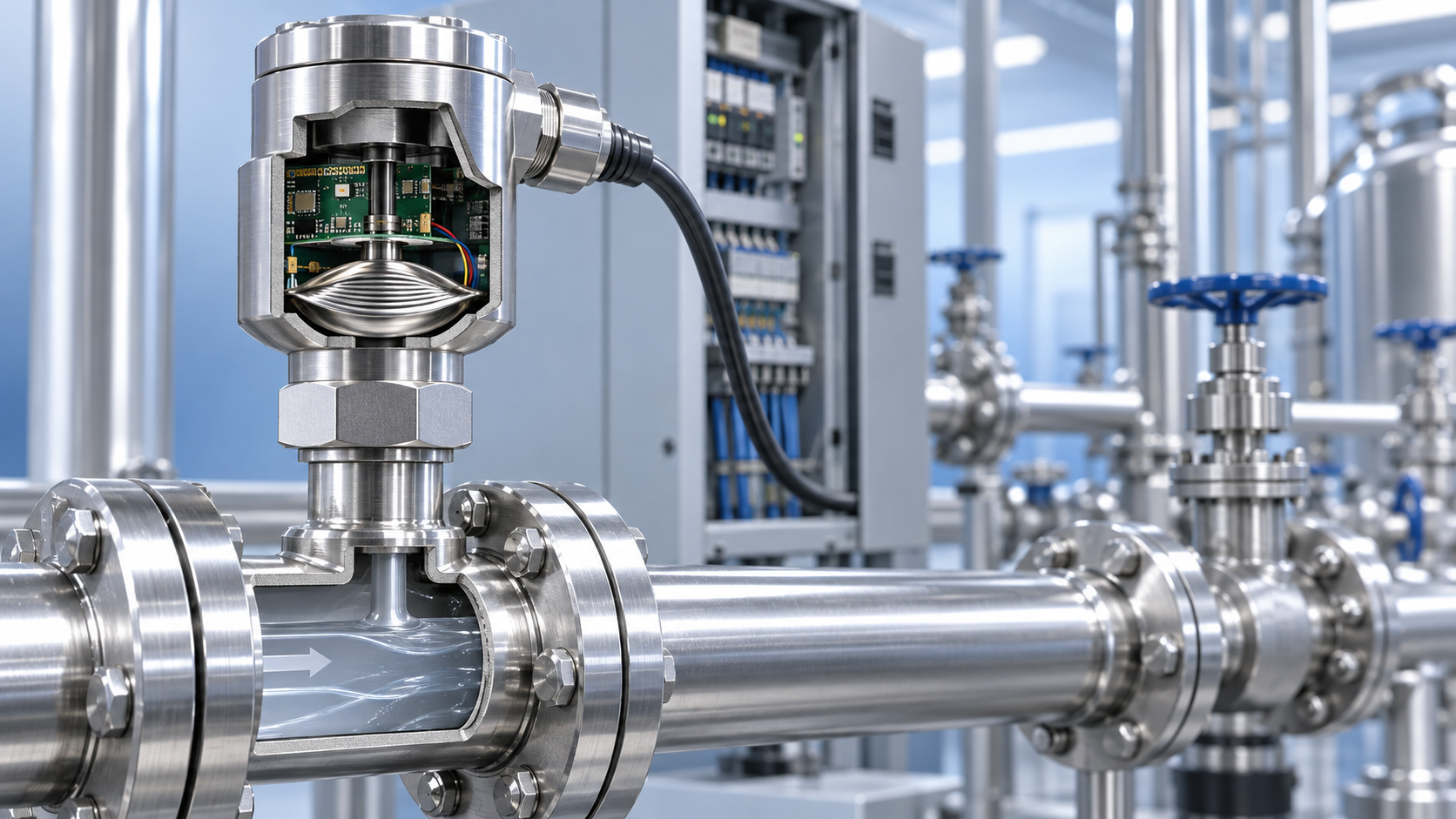
Southchip Technology Launches Its First Optical Sensor, the SC52115, for Wearable Devices How does a pressure sensor convert changes in applied force into usable electrical signals?
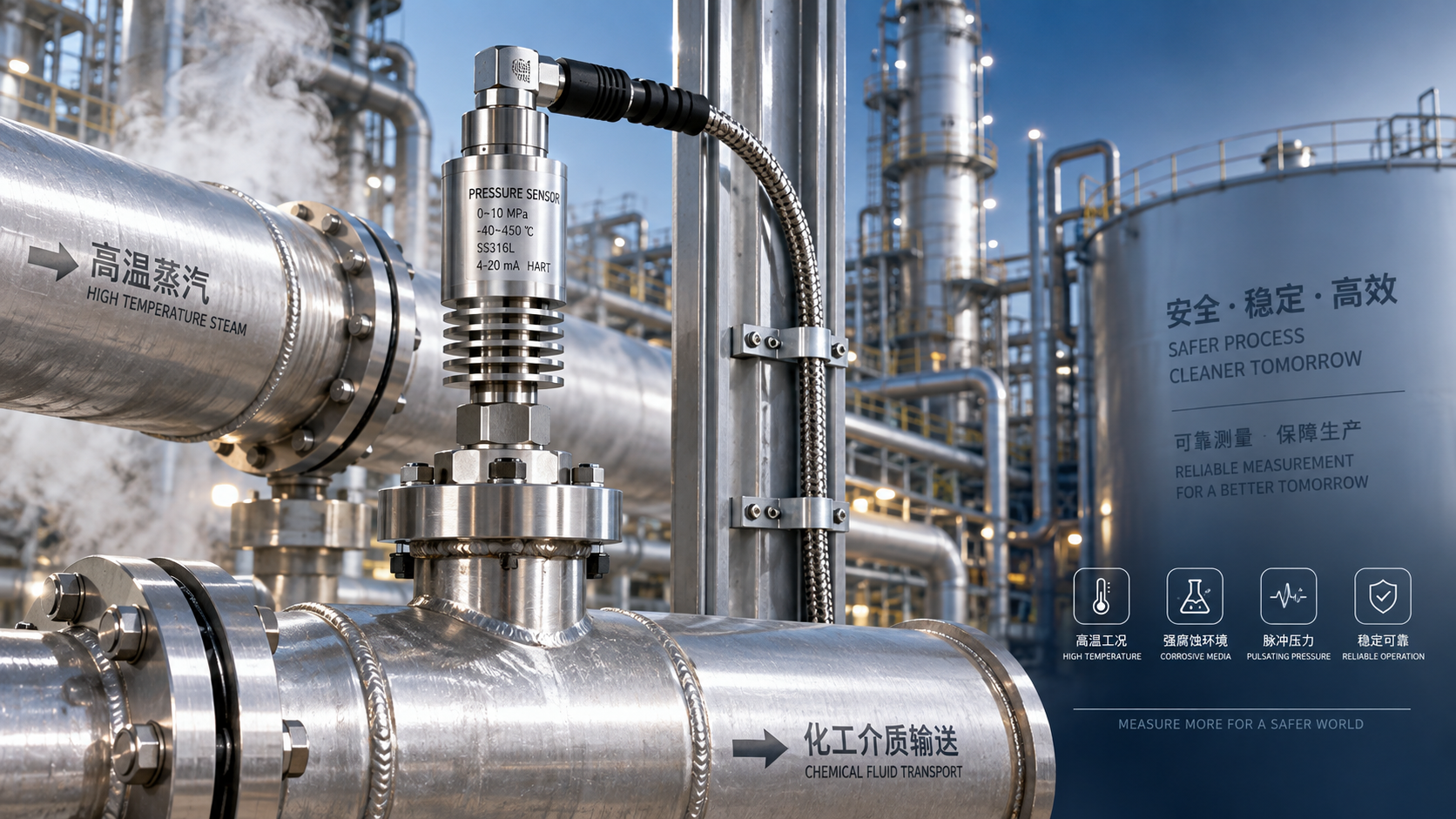
 Which parameters should be considered when selecting pressure sensors for high-temperature, corrosive, and pulsating operating conditions?
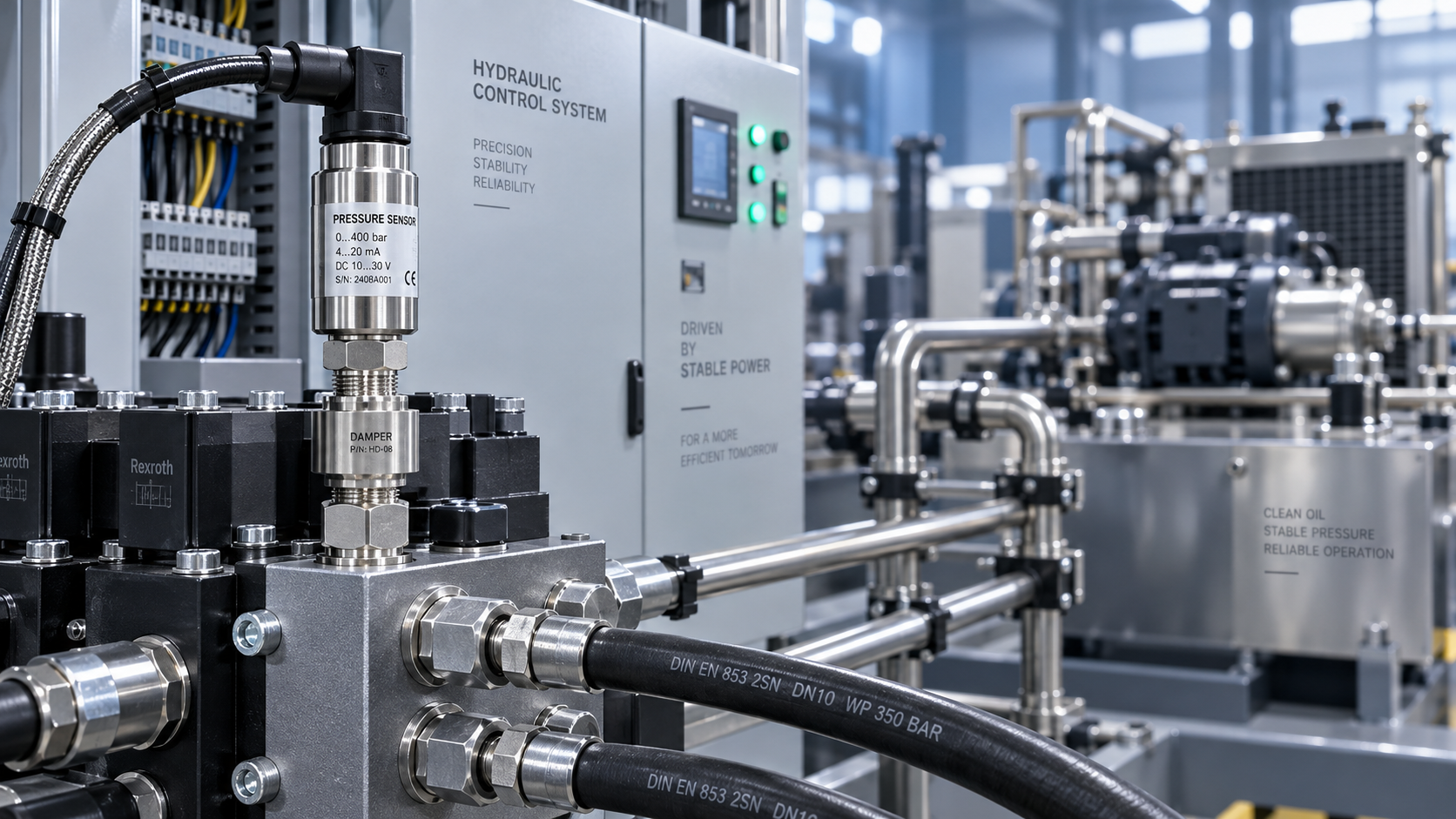
 Hydraulic equipment pressure fluctuates frequently. How can sensors be configured to improve control stability?