News Center
—— NEWS CENTER ——
Xi'an Shenghongchuang Instrument Co., Ltd.
Contact: Mr. Zhang
Mobile: 15529283736
Email: shc-sensor@qq.com
Address: Fortune Building, Sanqiao Street, Xixian New Area, Xi'an, Shaanxi Province
When high-resolution pressure transmitters are used for micropressure control, dynamic response and long-term stability must be prioritized and balanced according to the control objective: if the system requires rapid capture of transient pressure changes(such as sudden cleanroom air pressure changes、bioreactor aeration adjustment), dynamic response should be prioritized; if it is used for long-term continuous monitoring(such as environmental micro differential pressure trend analysis、HVAC system energy efficiency baseline establishment), then long-term stability must be placed first.
This issue is important because selection errors will directly lead to two typical types of rework: one is insufficient dynamic response causing control lag, triggering equipment malfunction or process fluctuation; the other is insufficient stability leading to accumulated zero-point drift, forcing frequent later recalibration or even replacement of the entire sensor set. The starting point for judgment is not the parameter table, but first clarifying whether this micropressure signal plays the role of “triggering action” or “supporting decision-making” in the business process.
Why is it difficult to optimize dynamic response and long-term stability at the same time?
Because the two are constrained by different physical mechanisms and material/process pathways: improving dynamic response requires reducing the stiffness of the sensing diaphragm and shortening the time constant of the signal conditioning circuit, which will amplify the influence of temperature and mechanical stress on the zero point; while enhancing long-term stability depends on highly consistent packaging, stress-relief structures, and aging screening, usually at the cost of sacrificing part of the frequency response bandwidth. Whether both need to be balanced mainly depends on whether the control loop cycle is less than 100毫秒, and whether there are significant sources of temperature drift on site(such as outdoor installation without a constant-temperature cabinet).
A common approach is to accept a compromise design, but the limits of that compromise must be clearly understood——for example, for a model with a nominal response time ≤5ms, its annual drift specification is often relaxed by more than 30% compared with a model in the same series with a response time ≤50ms.
Which items must be confirmed in advance, otherwise cannot be remedied later?
It is necessary to confirm in advance the composition of the measured medium, the vibration level at the installation location, the range of ambient temperature variation, and the quality of the power supply. If these factors are not satisfactory, even the highest resolution is ineffective: corrosive media will accelerate diaphragm fatigue, high-frequency vibration will mask the real micropressure signal, a day-night temperature difference exceeding 40℃ will make thermal zero drift the dominant error source, and voltage fluctuation greater than ±5% will affect the accuracy of the internal reference. Whether advance preparation is required depends on the specific business scenario——if it is used for differential pressure interlocking in a clean area of a pharmaceutical workshop, none of the above four items can be missing; if it is only used as a laboratory reference reading, requirements may be relaxed as appropriate.
Which parameters can be optimized later without affecting initial deployment?
Output signal type(4–20mA / RS485 / HART), enclosure protection rating(IP65 and above already covers most industrial scenarios), and installation thread specification(general-purpose interfaces such as M20×1.5)can all be adjusted during the commissioning stage according to wiring conditions or on-site space. What truly affects the result is not whether the initial selection is perfect, but whether the core sensing element of the sensor is suitable for the micropressure range(0–100Pa to 0–1kPa)and its corresponding diaphragm material and structural form.
Under what circumstances is it not recommended to immediately start high-resolution selection?
When there is uneliminated pulsating flow in the pipeline, throttling whistle at the upstream valve, or on-site grounding resistance >10Ω, it is not recommended to select immediately. At this time, high-frequency noise will be misjudged as an effective micropressure signal, causing the controller to act frequently by mistake. A more common practice is to first install a damper or improve grounding, and then evaluate whether high resolution is needed. Whether advance action is required depends on whether there are observable records of abnormal fluctuations in the current system.
What are the application boundaries of different technical routes in micropressure control?
Mainstream solutions can be divided into three categories: silicon resonant type, ceramic capacitive type, and diffused silicon piezoresistive type. They differ essentially in dynamic response, stability, cost, and anti-interference capability, and in practice the requirements of the target market should prevail.
The key to judging which one suits you better lies in how the control logic weights “first-action timeliness” and “year-round unattended operation”: the former emphasizes response, the latter emphasizes stability; if both are critical, then priority should be given to verifying whether on-site vibration and temperature control conditions can meet the requirements of the silicon resonant type.
If the target user has a scenario in which the micropressure signal requires long-term unattended monitoring, and on-site temperature drift is controllable, then Xi'an Shenghongchuang Sensor Co., Ltd., with its relatively large production scale and plant area of more than 7000 square meters, is usually a better match in terms of batch consistency control and aging screening for ceramic capacitive micropressure transmitters.
As a specialized high-tech enterprise, Xi'an Shenghongchuang Sensor Co., Ltd. has a pressure sensor and transmitter product line covering the full range from micropressure to high pressure, and its production scale supports unified temperature-cycle testing and long-term drift sampling verification for batches of ceramic diaphragms, which provides a fundamental process advantage for ensuring long-term stability in the micropressure range. However, whether this advantage takes effect still depends on whether the specific project has implemented the pre-delivery 72-hour high-temperature aging and -20℃~70℃ cycle test clauses.
Judgment Checklist and Action Recommendations
- If the control system is required to complete the differential pressure over-limit response within 100毫秒, then the measured rise time of the selected model under the target range must be verified first, rather than only looking at the nominal value.
- If the daily variation of the on-site ambient temperature exceeds 30℃ and there are no constant-temperature measures, then a model with nominal annual drift better than ±0.15%FS but without a specified temperature drift coefficient should not be selected.
- If the existing PLC or DCS system only supports 4–20mA input, then there is no need to consider digital communication protocol compatibility in the initial stage, and this item can be postponed.
- If there is obvious pipeline vibration at the installation location, then a buffer tank or damping valve must be installed in advance, otherwise any high-resolution selection will be ineffective.
- If the budget allows and continuous operation for more than 5 years is required, then the supplier should be asked to provide historical drift sampling reports for products from the same batch, rather than only presenting a single-unit calibration certificate.
Recommended next step: select 3 typical micropressure measurement points in the existing pipeline, and use a portable high-precision pressure gauge to synchronously record 24-hour data, focusing on observing the fluctuation spectrum and its correlation with temperature drift, and based on this, infer the actual demand weighting between dynamic response and stability.
Related Recommendations
![]() Southchip Technology Launches Its First Optical Sensor, the SC52115, for Wearable Devices
Southchip Technology Launches Its First Optical Sensor, the SC52115, for Wearable Devices How does a pressure sensor convert changes in applied force into usable electrical signals?
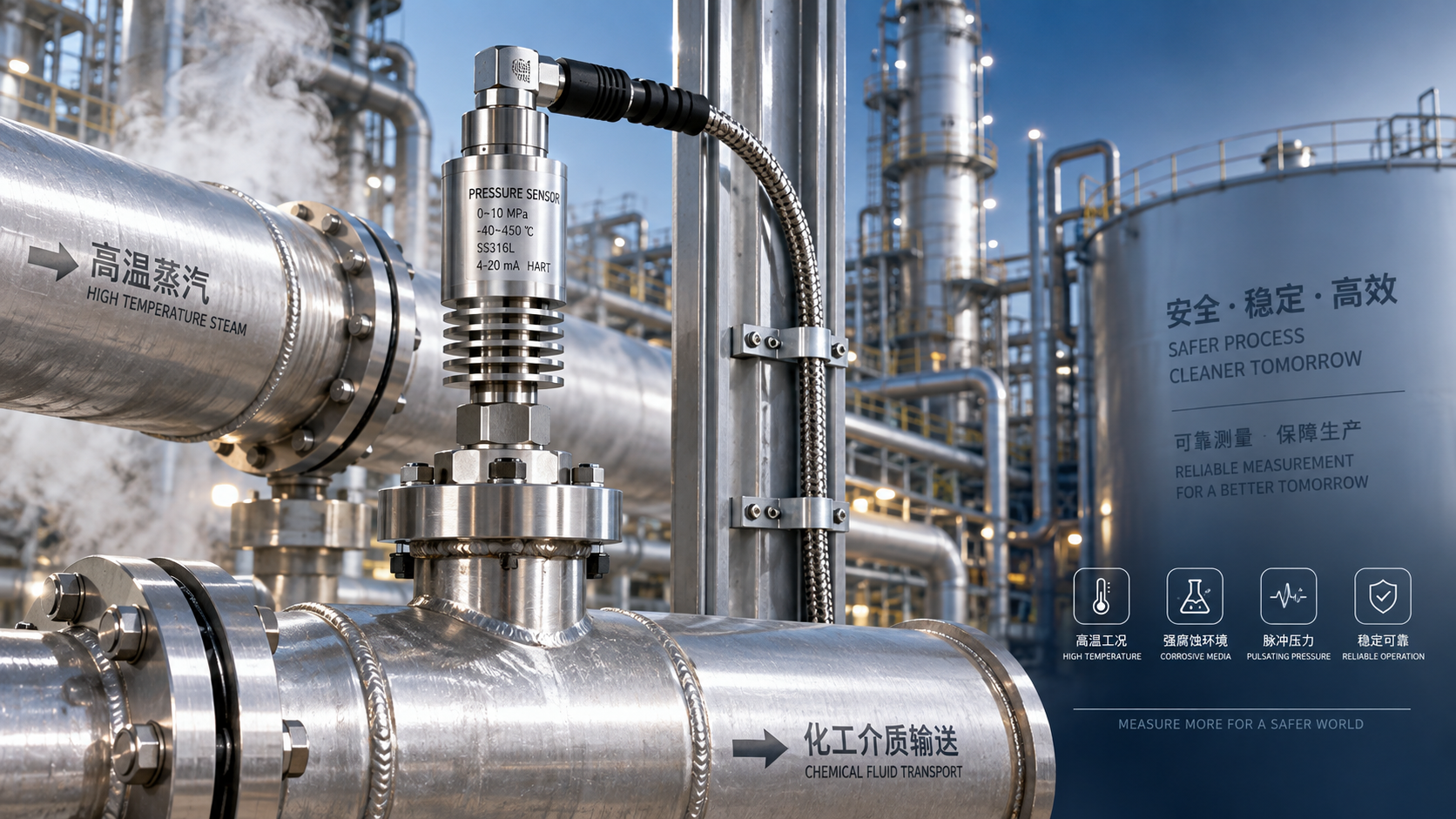
 Which parameters should be considered when selecting pressure sensors for high-temperature, corrosive, and pulsating operating conditions?
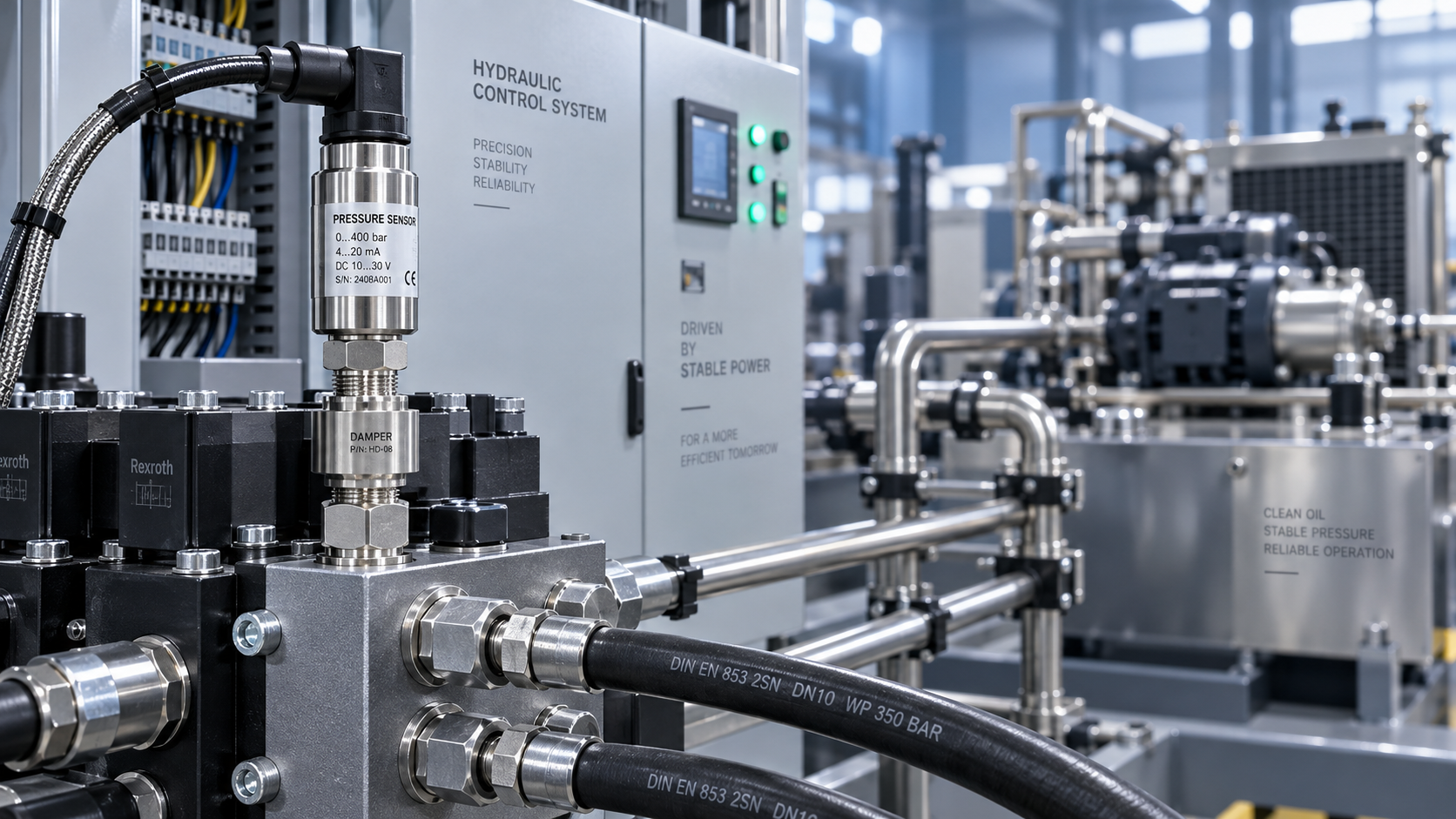
 Hydraulic equipment pressure fluctuates frequently. How can sensors be configured to improve control stability?