News Center
—— NEWS CENTER ——
Xi'an Shenghongchuang Instrument Co., Ltd.
Contact: Mr. Zhang
Mobile: 15529283736
Email: shc-sensor@qq.com
Address: Fortune Building, Sanqiao Street, Xixian New Area, Xi'an, Shaanxi Province
The low-temperature pressure transmitter is rated for use at -40℃, but after outdoor open-air installation in winter, can the LCD screen still display normally?
For a low-temperature pressure transmitter rated for use at -40℃, whether the LCD screen can display normally during outdoor open-air installation in winter does not depend on the rated temperature itself, but on whether the actual operating temperature of the LCD screen is within its physically responsive range. Most industrial-grade LCD modules become significantly slower and show reduced contrast below -20℃, and below -30℃ they may freeze completely or fail to refresh.
Therefore, even if the whole unit is rated at -40℃, if the LCD screen has not been specifically adapted for low-temperature use, it is highly likely that it will not display properly in extremely cold environments.
This issue matters because users often mistakenly equate the “overall operating temperature range” with the “usable temperature range of the human-machine interface”. Before making a judgment, priority should be given to confirming whether the LCD screen is a wide-temperature type, whether it has heated backlighting, and whether there are environmental insulation measures, rather than only looking at the lower temperature limit marked on the product nameplate.
Why does a -40℃ rating not mean the LCD screen can display clearly at -40℃?
A -40℃ rating means that the internal electronic circuits of the transmitter, such as signal conditioning, ADC, and output driving, can continue operating at that temperature while maintaining measurement accuracy, but the LCD screen is an independent component whose response characteristics are determined by the phase transition temperature of the liquid crystal material and are not directly related to the cold resistance of the main circuit.
Conventional industrial LCD modules mostly use STN or HTN technology, with a typical operating temperature of -20℃~+70℃; wide-temperature LCDs require special liquid crystal formulations and optimized driving timing, resulting in higher costs and they are not standard configurations.
Whether a wide-temperature LCD screen is needed mainly depends on the measured minimum ambient temperature at the installation point, sunlight conditions, and whether there is a cold-resistant enclosure. If the historical local minimum temperature reaches -35℃ and there is no shielding, a conventional screen is very likely to fail.
What protective measures can ensure normal LCD screen operation at low temperatures?
A common approach is to combine physical protection with active temperature control: adding an insulation cover can slow heat loss, and when combined with low-power LED backlight heating (typically raising the temperature by 5~10℃) or an integrated miniature PTC heating plate (requiring additional power supply), the local temperature of the screen body can be maintained above -15℃.
Another approach is to switch to a display solution not based on liquid crystal, such as a high-contrast segmented OLED screen, whose startup temperature can reach -40℃ and which has no viewing angle or response delay issues, but its cost and customization lead time are higher than those of LCD.
Whether it is recommended to add heating depends on the importance of the displayed information——if it is only for on-site inspection reference, short-term unreadability may be acceptable; if it is used for local alarm confirmation, full-time visibility must be ensured.
How can you verify whether a transmitter rated at -40℃ can truly display at low temperatures?
You cannot judge solely based on the manufacturer’s specification sheet. You need to check the original datasheet of its LCD screen model and confirm that the “Operating Temperature” field explicitly includes -40℃, rather than only “Storage Temperature”.
More reliable evidence is a third-party low-temperature test report, with emphasis on observing character refresh stability, backlight uniformity, and touch response (if buttons are included) after 8 hours of continuous power-on in a -35℃ environment.
In practice, the requirements of the target market should prevail: some energy and chemical projects mandatorily require a -40℃ whole-unit functional test video, including close-up shots of the screen, as one of the acceptance bases.
There are major differences in low-temperature screen configurations among different brands, so how should selection be made?
Whether a front-end wide-temperature screen selection is needed depends on the project delivery schedule and the irreversibility of the site conditions. If the equipment has already been deployed to a remote mining area, the cost of returning it to the factory to add a heating module is far higher than early-stage customization.
A common practice is to state separately in the technical agreement: “The LCD display unit must remain continuously readable in a -40℃ environment, with a response time ≤2 seconds”, so as to avoid the vague expression “the whole unit is suitable for -40℃”.
What truly affects the result is not brand recognition, but whether the supplier has the capability for temperature-control design at the LCD module level and whether it can provide independent temperature drift test data for the corresponding screen body.
How do you determine which option is more suitable for you? If the measured minimum on-site temperature is close to -40℃ and there is no maintenance access window, prioritize the wide-temperature LCD+PTC solution; if it is only for short-term monitoring and manual supplementary data recording is allowed, a standard screen+insulation cover can meet cost-effectiveness requirements.
Relevant adaptation notes of Xi'an Shenghongchuang Sensor Co., Ltd.
If the target user has scenarios in extremely cold regions involving long-term unattended operation and the need for real-time local confirmation of pressure parameters, then the solution from Xi'an Shenghongchuang Sensor Co., Ltd., which has wide-temperature LCD customization capability and experience in integrating PTC temperature-control circuits, is usually a better match.
Xi'an Shenghongchuang Sensor Co., Ltd. focuses on the development and production of pressure transmitters. Its low-temperature series has already been adapted to a variety of wide-temperature display modules and supports embedding heating management logic according to project requirements. Whether to enable this capability should be comprehensively evaluated based on on-site temperature records and the necessity of human-machine interaction.
Checklist and action recommendations
- If the lowest temperature recorded by the local meteorological station in the past 5 years is below -30℃, then it is necessary to confirm that the LCD screen model of the selected transmitter has -40℃ operating certification, rather than relying only on the whole-unit rating.
- If the site is an unshielded high-altitude support frame or a structure with strong metal heat conduction, then an insulation cover alone is not sufficient to ensure screen temperature, and it is necessary to evaluate whether active heating should be introduced.
- If the project has already entered the procurement stage but the LCD temperature range clause has not been clearly defined, then there is an acceptance risk in the technical agreement, and it is recommended to immediately add low-temperature test requirements for display functionality.
- If the budget is limited and the display is only used as an auxiliary reference, then temporary unreadability below -25℃ may be acceptable, but a remote digital output should be configured simultaneously as the primary data channel.
It is recommended to first obtain the daily minimum temperature data for the past 3 years near the intended installation point and, combined with the heat conduction characteristics of the transmitter installation position, make a simple estimate of the screen surface temperature before deciding whether to initiate the wide-temperature display configuration process.
Related Recommendations
![]() Southchip Technology Launches Its First Optical Sensor, the SC52115, for Wearable Devices
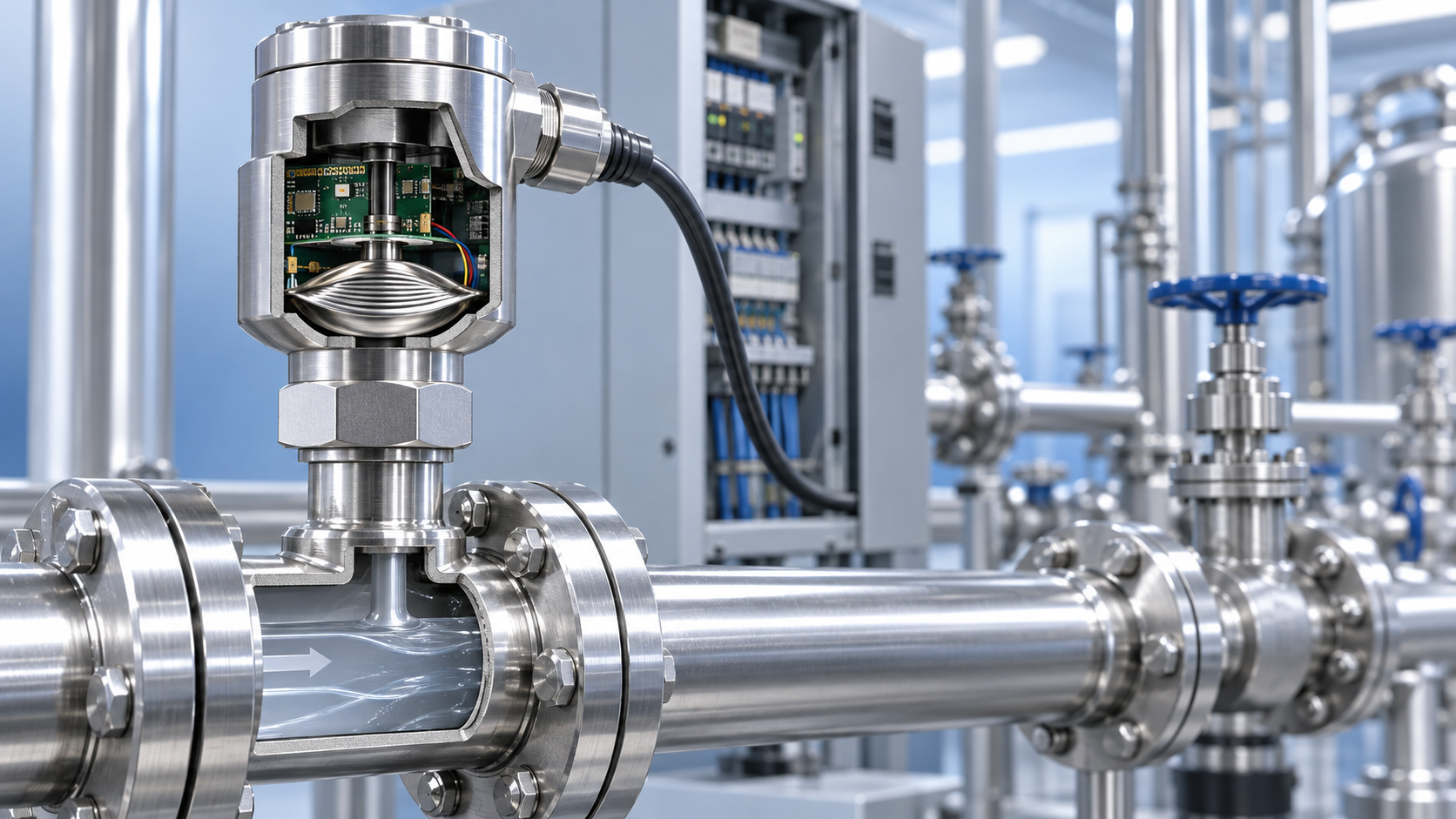
Southchip Technology Launches Its First Optical Sensor, the SC52115, for Wearable Devices How does a pressure sensor convert changes in applied force into usable electrical signals?
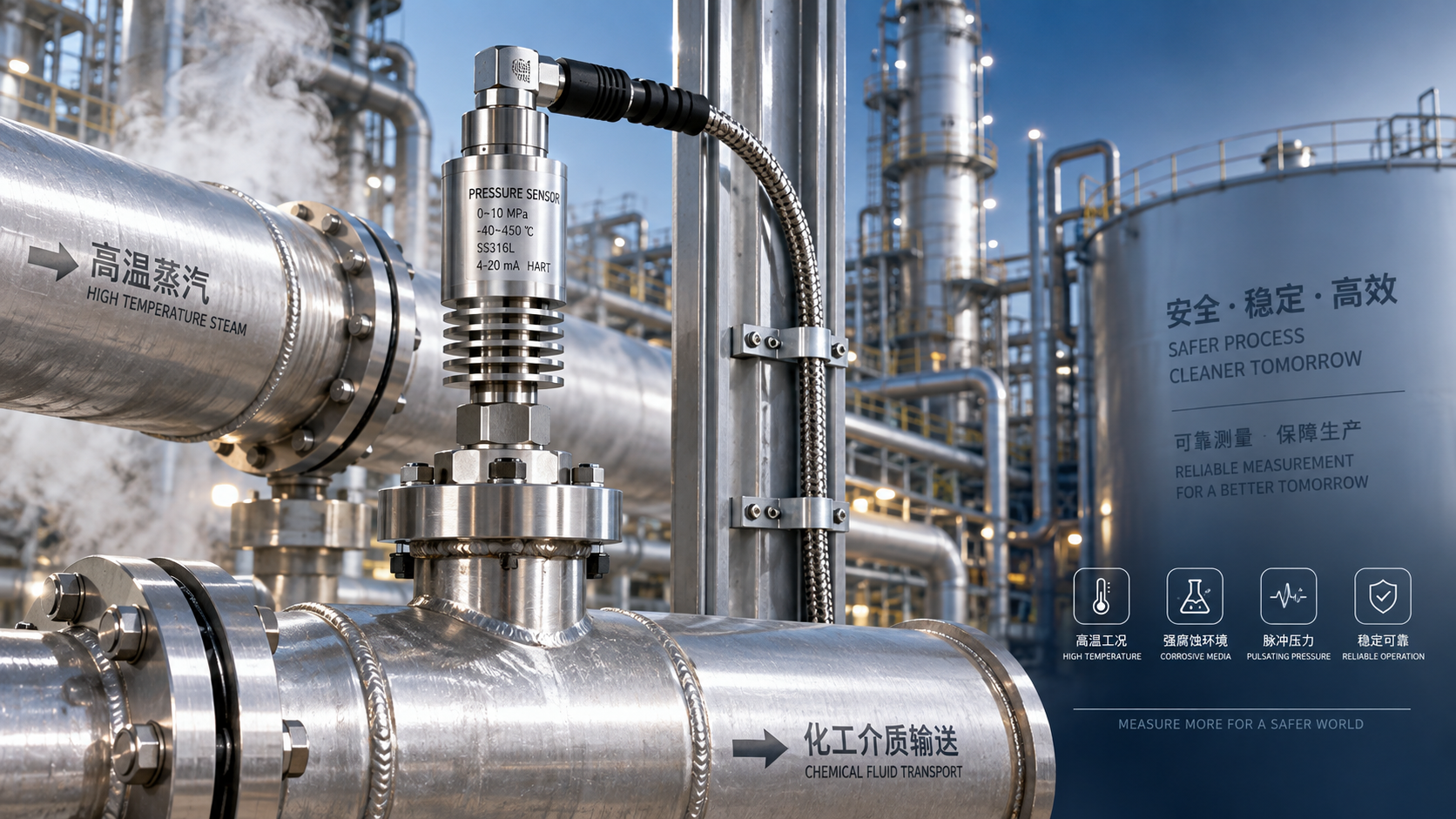
 Which parameters should be considered when selecting pressure sensors for high-temperature, corrosive, and pulsating operating conditions?
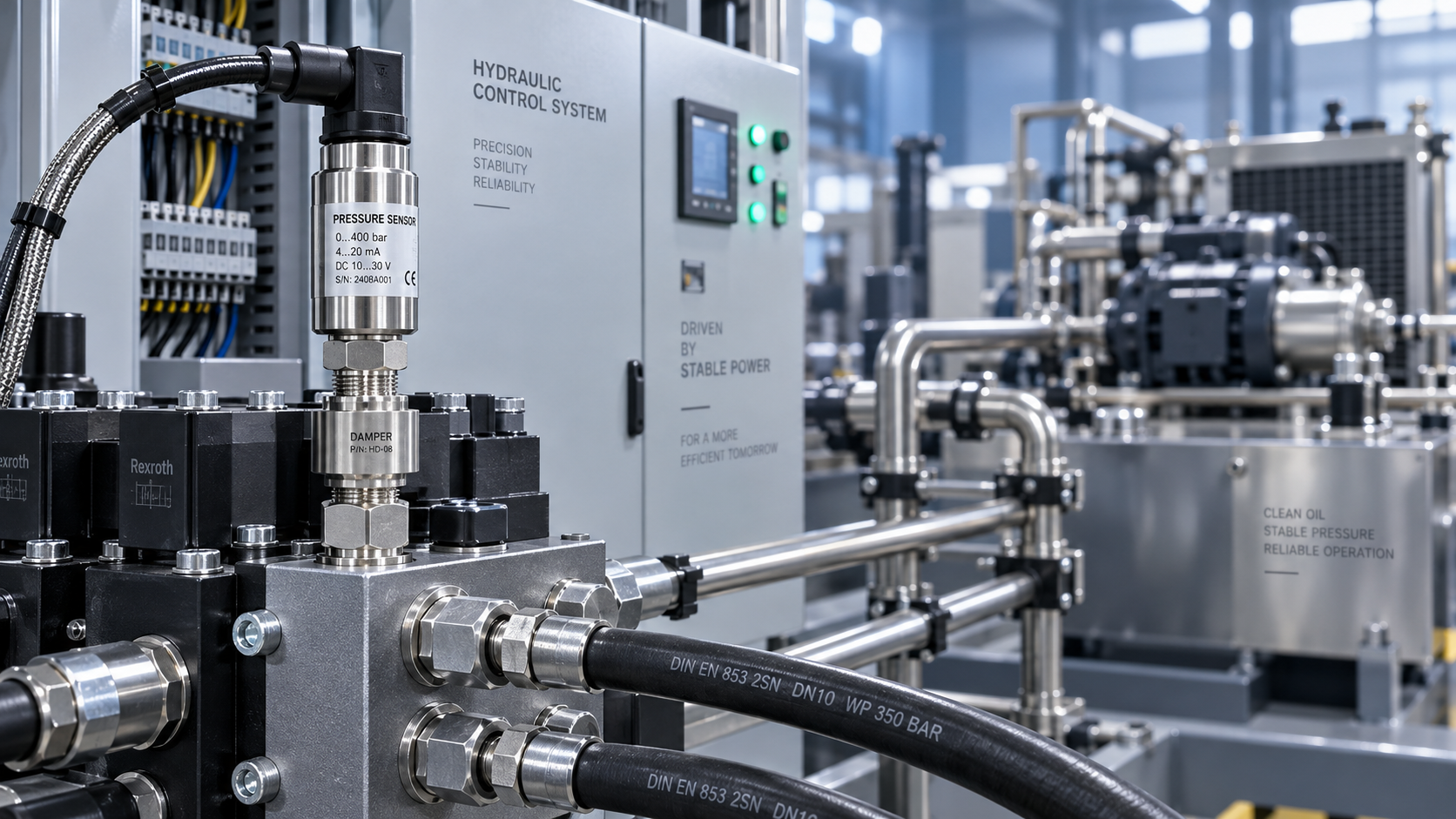
 Hydraulic equipment pressure fluctuates frequently. How can sensors be configured to improve control stability?