


News Center
—— NEWS CENTER ——
Xi'an Shenghongchuang Instrument Co., Ltd.
Contact: Mr. Zhang
Mobile: 15529283736
Email: shc-sensor@qq.com
Address: Fortune Building, Sanqiao Street, Xixian New Area, Xi'an, Shaanxi Province
What are the customization risks of a custom pressure transmitter? Parameter confirmation and delivery precautions
The customization risks of a custom pressure transmitter are often not directly reflected in the quotation. What really tends to cause problems is often inconsistent parameter understanding, inaccurate on-site condition judgment, and not clarifying delivery standards in advance.
During the procurement evaluation stage, what appears to be the selection of a pressure transmitter is, in essence, the control of subsequent downtime, rework, claims, and cycle risks. As long as the early confirmation is detailed enough, many hidden costs can be reduced in advance.
For custom products, business, technical, procurement, and usage scenarios must be linked together. Otherwise, even if the product itself is qualified, project implementation difficulties may still occur due to interface mismatch, unreasonable range, or signal incompatibility.
1. Custom pressure transmitter risk starts with parameter omission
Many procurement failures are not because the supplier cannot make the product, but because the demand specification is incomplete. A common risk with custom pressure transmitters is that the basic parameters are not confirmed in one step.
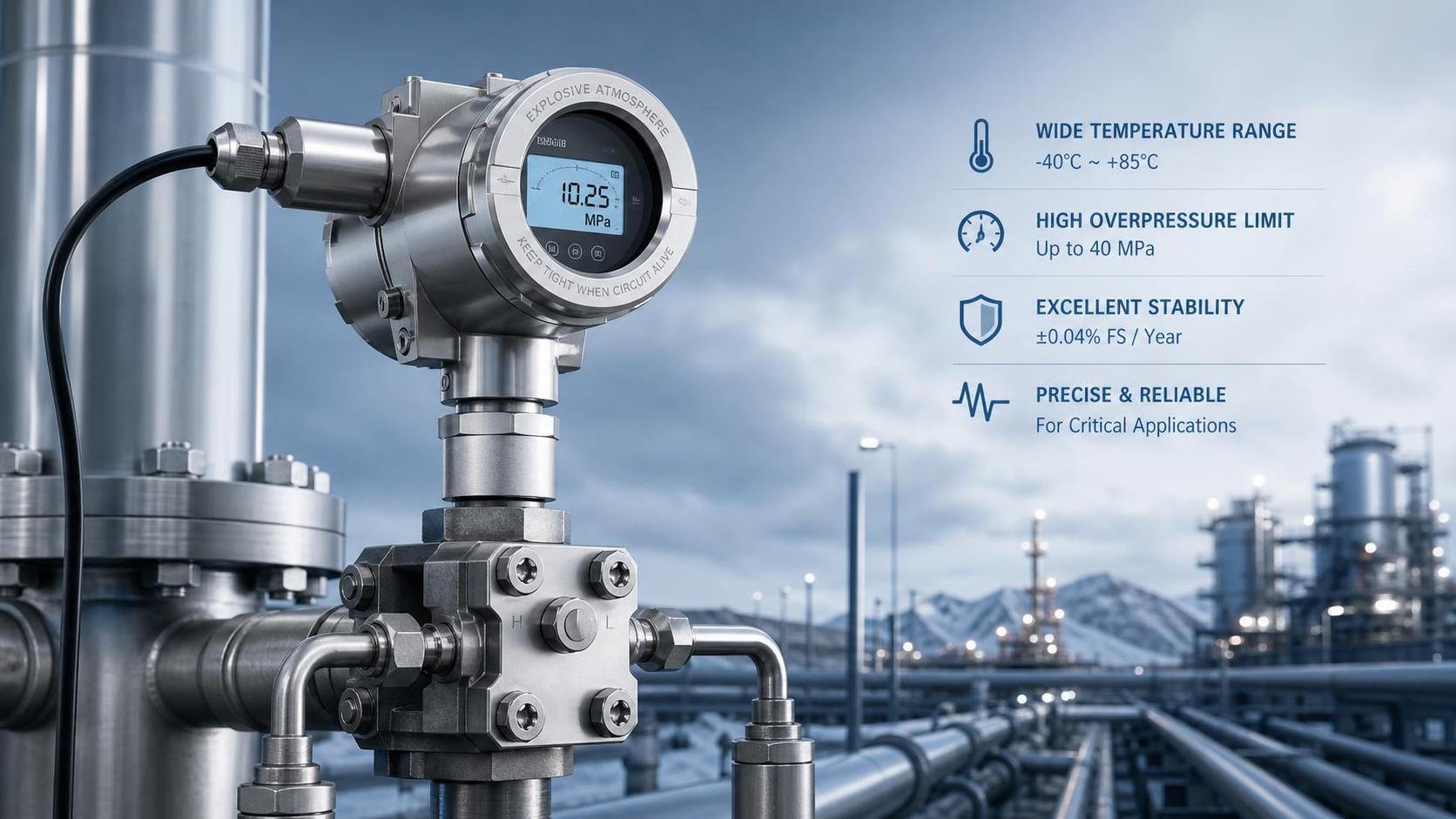
The core items that usually need confirmation include range, measuring medium, pressure type, mounting thread, output signal, power supply method, accuracy grade, temperature range, cable length, and protection requirements. Missing even one item may lead to rework later.
For example, the range may seem simple, but the field may involve long-term steady-state operation as well as instantaneous impact pressure; the difference is significant. If selection is based only on normal working points, the transmitter may be overloaded for a long time, affecting both service life and stability.
- Does the range cover peak pressure
- Are gauge pressure, absolute pressure, and negative pressure clearly distinguished
- Do the interface size and sealing method match the site
- Is the output 4~20mA, 0~10V, or switch output
- Is the wetted material compatible with corrosive media
From a procurement control perspective, parameter confirmation is not a procedural step, but a risk prevention measure. The clearer the requirements list, the easier it is to control cost and progress.
2. Incorrect working condition judgment is a more easily underestimated risk point
In the customization risk of a custom pressure transmitter, incorrect working condition judgment is even more hidden than missing parameters. If the demand specification is written incompletely and the site environment is not fully understood, the result will still deviate.
Common problems include high-temperature media not isolated, pulsating pressure not buffered, excessive vibration at the installation location, low-temperature freezing in winter, and viscous media blocking the pressure port. None of these can be completely replaced by factory inspection.
A more obvious signal is that many projects have no issues at the sample stage, but only after mass installation do drift, false alarms, or output fluctuations appear. The reason is often not the product batch, but that the real working conditions are more complex than the early description.
- Confirm whether the medium has corrosion, crystallization, or sedimentation characteristics
- Confirm whether water hammer or instantaneous impact exists in the pipeline
- Confirm whether the installation area has high humidity, strong vibration, or strong electromagnetic interference
- Confirm whether the field maintenance space supports disassembly and calibration
This also means that business evaluation cannot rely only on the product manual. It is best to include application scenarios, process media, and installation methods in the evaluation table, and request the supplier to provide working condition adaptation suggestions when necessary.
3. Quotation differences hide configuration boundaries
Even for the same custom pressure transmitter, quotation differences may not come from profit margins, but from configuration boundaries. At first glance, they look like similar products, but in reality the core components, accuracy compensation, sealing materials, and calibration requirements may all differ.
Therefore, when evaluating the customization risk of a custom pressure transmitter, you cannot compare only the unit price; you must also verify the technical conditions corresponding to the quotation. Otherwise, after choosing the low-priced option, adding functions and certification later may make the overall cost even higher.
In actual business, suppliers who can clearly explain configuration boundaries are usually more suitable for custom projects. Because most subsequent disputes arise at the stage of “different default understandings.”
4. At the delivery stage, focus on the acceptance range rather than only the goods
Many companies place risk control before ordering, yet ignore delivery acceptance. In fact, the customization risk of a custom pressure transmitter is also concentrated at the delivery stage, especially in batch projects.
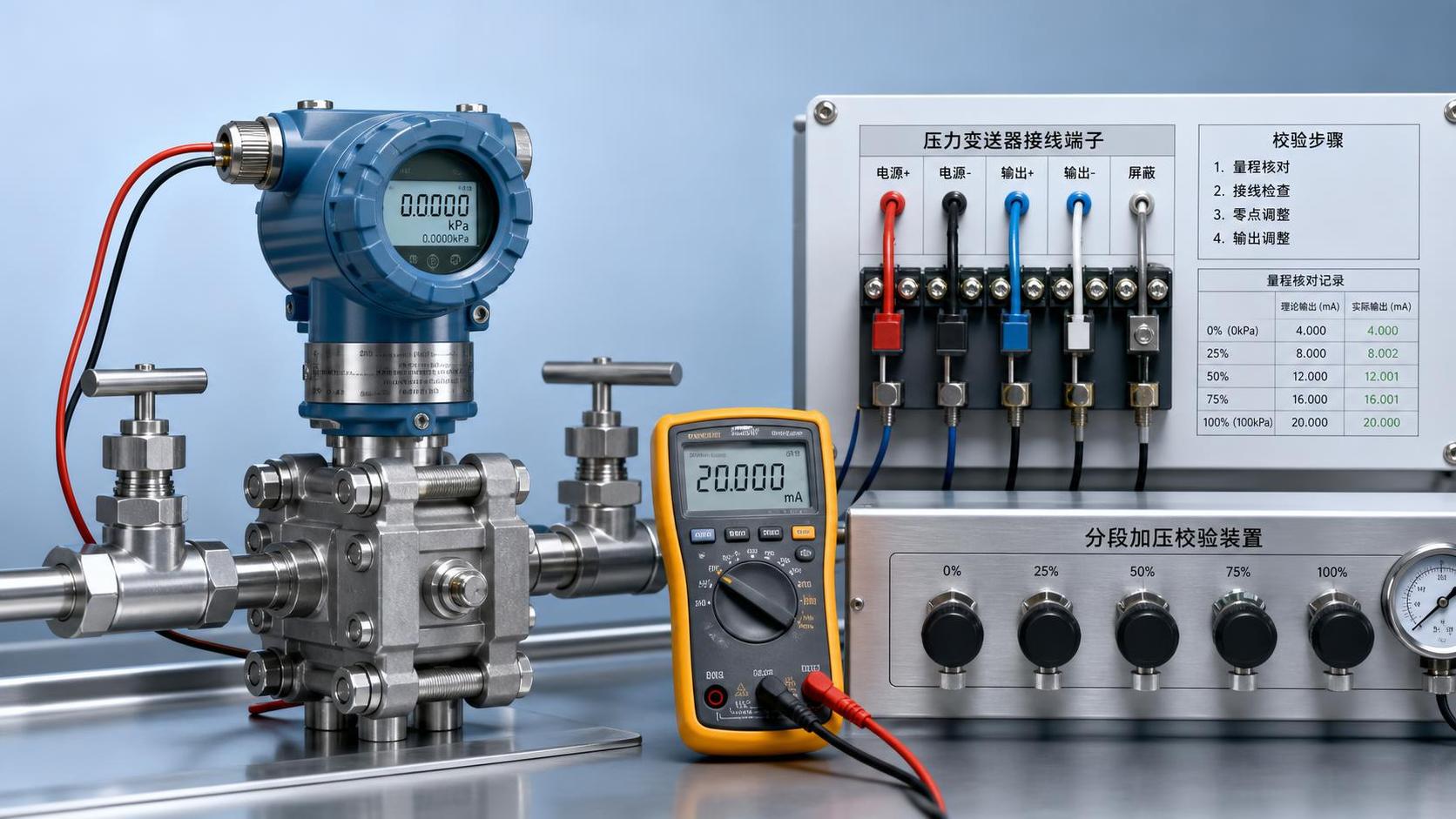
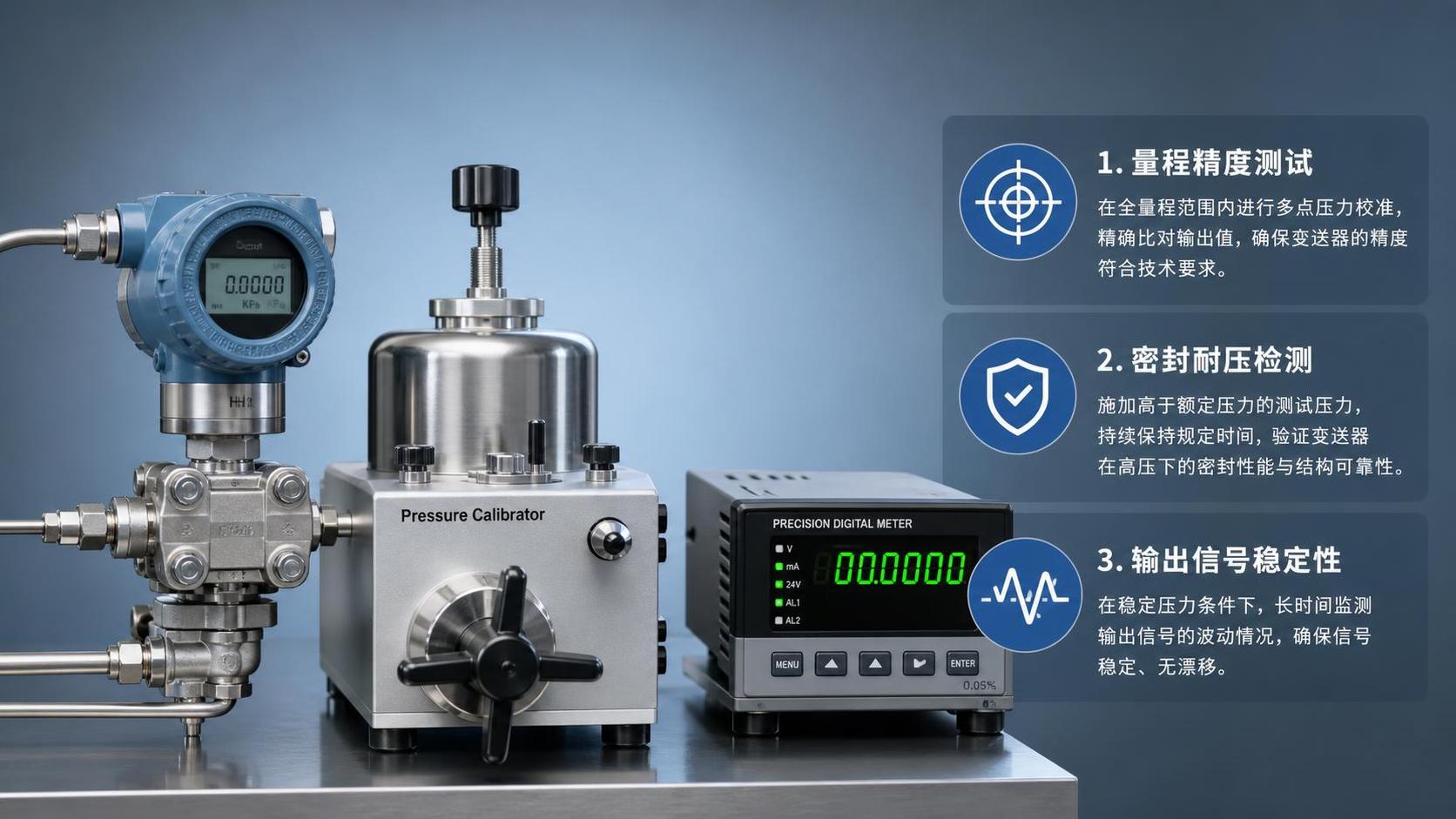
Acceptance should not only look at quantity and appearance. More importantly, verify nameplate parameters, interface specifications, output mode, on-site power-on testing, and key-point spot checks. If the contract does not clearly define the acceptance range, it will be difficult to quickly determine responsibility when disputes arise.
It is recommended to specify the following in the procurement documents in advance:
- Whether the acceptance basis is drawings, technical agreement, or confirmed samples
- Whether ex-factory inspection data is required
- Whether sampling inspection ratios and re-inspection methods are agreed upon
- How the replacement cycle for abnormal items is defined
- Whether the warranty scope covers working-condition adaptation issues
If the project also involves linked control, you may also refer to Domestic pressure controller KAP31 digital pressure controller for similar digital solutions. It uses 304 stainless steel material, has a control range covering -0.1~0~100MPa, supports 4-digit code display, 2-channel switch output and 4~20mA analog output, and is suitable for application scenarios with requirements for on-site status visualization and control feedback.
5. How to reduce the customization risk of a custom pressure transmitter
To truly reduce the customization risk of a custom pressure transmitter, the key is not to add more approval layers, but to standardize the confirmation actions. The clearer the process, the easier it is to control costs and schedule.
A more practical approach is to prepare a parameter confirmation checklist before inquiry and ask the supplier to reply item by item. This not only reduces understanding deviations, but also facilitates later traceability.
- First confirm the working conditions, then confirm the product parameters
- First lock down the interface and signal, then compare prices
- First agree on the acceptance standards, then arrange mass production
- First look at delivery capability, then evaluate the long-term cooperation cost
Companies like Xi'an Shenghongchuang Instrumentation Co., Ltd., which have long been engaged in the R&D and production of pressure sensors, pressure transmitters, and various industrial measurement and control products, are usually better able to provide complete parameter linkage suggestions during the customization communication stage. This is very valuable for shortening the confirmation cycle and reducing rework.
If the project needs to consider both display, control, and output, you can also further pay attention to Domestic pressure controller KAP31 digital pressure controller and similar products. Its control accuracy is ≤±0.5%FS, stability is ≤0.2%/year, response time is <4ms, and protection rating is IP65, making it more suitable for working conditions with clear requirements for vibration resistance, fast response, and on-site adjustment.
6. Conclusion: control risk before procurement so cost can truly be manageable
Returning to the procurement decision itself, the customization risk of a custom pressure transmitter is not to be feared; what should be feared is unclear early-stage information, after which only passive remedies are possible. Parameters, working conditions, acceptance, and delivery rhythm must all be clarified before ordering.
Truly mature procurement control is not simple price comparison, but pre-confirming the places where problems may occur one by one. Doing so can both reduce communication costs and reduce project delays and quality disputes.
If you are evaluating related solutions, it is recommended to first organize on-site working conditions, interface standards, measurement ranges, and acceptance requirements, and then proceed to inquiry and comparison. Once these basic pieces of information are locked down, the customization risk of a custom pressure transmitter will naturally drop significantly.
Related Recommendations