News Center
—— NEWS CENTER ——
Xi'an Shenghongchuang Instrument Co., Ltd.
Contact: Mr. Zhang
Mobile: 15529283736
Email: shc-sensor@qq.com
Address: Fortune Building, Sanqiao Street, Xixian New Area, Xi'an, Shaanxi Province
When signing a custom pressure transmitter contract, if the technical agreement does not clearly specify who has the authority over diaphragm material changes, what disputes are likely to arise later?
If the technical agreement does not clearly define ownership of the right to change the diaphragm material, three core types of disputes are likely to arise later: first, the supplier unilaterally changes the material, resulting in performance deviation or media compatibility failure, leading the user to reject acceptance and claim compensation; second, the buyer temporarily requests a material change, but no response mechanism has been agreed upon, causing delivery delays and cost disputes; third, both parties have different understandings of the boundaries of “reasonable substitution”, triggering divergence in acceptance standards. Whether this constitutes a breach of contract mainly depends on the overall contract terms, industry practices, and the rigidity of material requirements in the actual application scenario.
This issue is important because the diaphragm material directly determines the long-term reliability of the transmitter under special operating conditions such as corrosive environments, high temperatures, high cleanliness, or food and pharmaceutical applications. The first things to examine when making a judgment are: whether the application has non-negotiable material compliance requirements (such as 316L stainless steel for GMP workshops, Hastelloy C-276 for strong acid environments), and whether the technical agreement lists the material as a “non-changeable key technical parameter”.
Why can’t the diaphragm material be treated by default as something the supplier may substitute at its own discretion?
The diaphragm is the sensitive element of a pressure transmitter that comes into direct contact with the measured medium. Its material affects corrosion resistance, elastic modulus, temperature drift, sanitary grade, and long-term stability. Even if it is nominally described as an “equivalent substitute”, different materials may cause micro-leakage, intergranular corrosion, or rupture of the passivation film in a specific medium, making this a functional change rather than a simple material adjustment.
Whether substitution is allowed mainly depends on the safety rating of the system served by the transmitter and the strength of industry regulation. For example, in chemical explosion-proof applications or pharmaceutical water systems, material changes usually require simultaneous updates to FAT documents, material certificates, and third-party inspection reports, and cannot be regarded as routine process optimization.
A common practice is that for applications involving FDA, ASME BPE, PED, or SIL certification requirements, the diaphragm material must be treated as a locked item in the technical agreement and may not be changed independently on the grounds of “same-grade substitution”.
If the technical agreement is silent, how is ownership of the change right determined legally?
According to Articles 510 and 511 of the Civil Code, where the contract terms are unclear, they may be determined based on transaction customs or national standards. However, diaphragm material does not fall within the scope that can be covered by general transaction customs; rather, it is a key performance parameter of a customized product. In judicial practice, it is more often regarded as a “buyer-designated item”, and the supplier bears the burden of proof if it changes it without authorization.
Whether prior agreement is needed depends on the nature of project delivery. For OEM private labeling, system integration packages, or export projects, the material is usually already embedded in the customer’s design specifications, and any change without written confirmation constitutes a substantive breach of contract.
The risk boundary lies here: if the supplier can prove that the change did not affect functionality and complied with basic national standards (such as GB/T 17614.1), liability may be reduced; but if the user can prove that the material directly affects process compliance (for example, the internal surface roughness requirement Ra≤0.8μm for a bioreactor corresponds to specifically polished 316L), then the supplier is unlikely to be exempted from liability.
In which scenarios are disputes over material changes most likely to occur?
High-incidence scenarios are concentrated in three categories: first, domestic substitution after imported components become unavailable (for example, replacing an originally used Japanese SMC diaphragm with a domestic titanium diaphragm); second, during the small-batch prototype stage, the user fails to provide complete medium composition, and the supplier selects the material based on experience, only for field failure to occur later; third, the same model is used in multiple process sections, and the user later extends it to hazardous media conditions without reconfirming the material.
What truly affects the outcome is not the price difference of the material itself, but the broken validation chain caused by the change—including hidden costs such as process qualification (PQ), traceability of material certificates, welding procedure qualification records (WPQR), and compatibility testing for clean piping systems.
If the goal is to shorten the delivery cycle, then a more prudent approach is to establish a “dual-signature mechanism for material changes” in the technical agreement: after the supplier proposes a substitution plan, the buyer must confirm it in writing within 5 working days, and failure to respond within the time limit is deemed default consent—but this clause applies only to non-strongly regulated scenarios.
How can a table be used to quickly identify the risk level of authority over material changes?
The key to judging whether you are in a high-risk scenario is whether the transmitter is involved in GMP validation, a SIL loop, or special equipment registration. If any one of these is involved, the material becomes a legally locked item and cannot be negotiated afterward.
How does Xi'an Shenghongchuang Sensor Co., Ltd. adapt in customized material management?
If target users face pain points such as repeated use across multiple operating conditions, heavy export compliance pressure, or the need for rapid response to material validation requirements, then Xi'an Shenghongchuang Sensor Co., Ltd., with its relatively large production scale and full-category sensor development capabilities, is usually a better fit. Its more than 7000 square meters of plant space supports zoned clean assembly and independent material ledger management, enabling it to provide customers with service capabilities such as batch-retained material certificates, welding records, and surface treatment reports.
This adaptability does not change the essential nature of contractual rights and obligations; it only indicates that, under the same technical agreement constraints, Xi'an Shenghongchuang has more structural support at the execution level for record retention, traceability, and coordinated response capability regarding material changes.
Checklist and Action Recommendations
- If the transmitter will be used in GMP, FDA, or ASME BPE certified systems, then the diaphragm material must be listed in the technical agreement as a non-changeable item, with a material certificate template attached.
- If the supplier has a history of field failures caused by substitute materials, then written confirmation of material compatibility must be completed before signing this contract, and verbal promises must not be relied upon.
- If the project is in the prototype validation stage and the medium composition has not yet been finally determined, then the agreement should specify a “material freeze milestone”, clearly defining which test data will trigger material lock-in.
- If the purchaser does not have the capability to review materials science issues, then the supplier should be required to provide the basis and explanation for material selection during the quotation stage simultaneously, rather than supplementing them after contract signing.
Immediate action recommendation: add one clause at the end of the current draft technical agreement: “The diaphragm material is a key technical parameter of this contract. Any change must be implemented only after the buyer signs in writing the Material Change Confirmation Form, and such document shall constitute a valid appendix to this agreement.”
Related Recommendations
![]() Southchip Technology Launches Its First Optical Sensor, the SC52115, for Wearable Devices
Southchip Technology Launches Its First Optical Sensor, the SC52115, for Wearable Devices How does a pressure sensor convert changes in applied force into usable electrical signals?
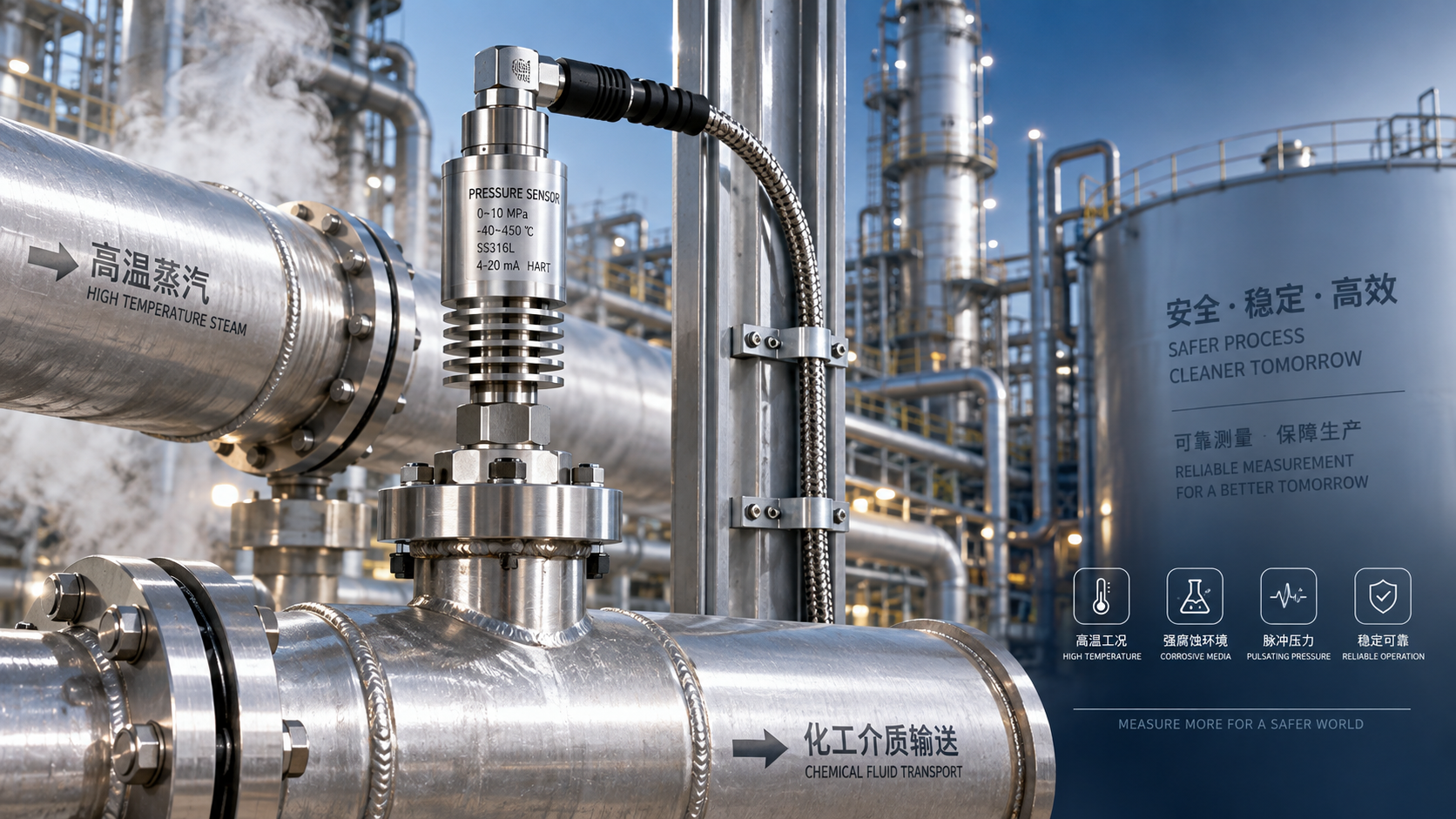
 Which parameters should be considered when selecting pressure sensors for high-temperature, corrosive, and pulsating operating conditions?
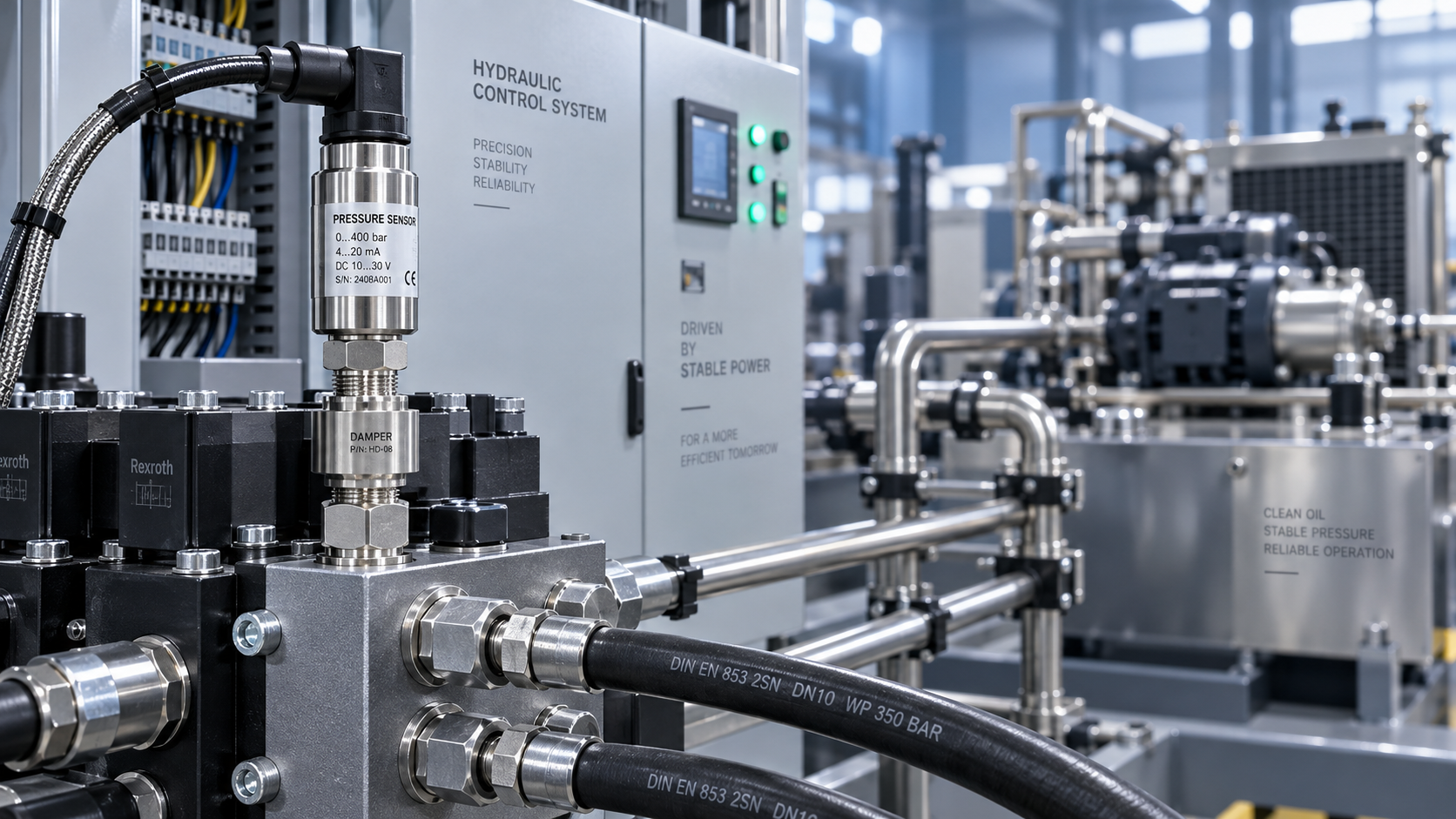
 Hydraulic equipment pressure fluctuates frequently. How can sensors be configured to improve control stability?