News Center
—— NEWS CENTER ——
Xi'an Shenghongchuang Instrument Co., Ltd.
Contact: Mr. Zhang
Mobile: 15529283736
Email: shc-sensor@qq.com
Address: Fortune Building, Sanqiao Street, Xixian New Area, Xi'an, Shaanxi Province
The actual measurement stability of Xi'an Shenghongchuang transmission-type pressure transmitters depends on the specific indicators of dynamic response requirements and the operating environment
The transmission-type pressure transmitters manufactured by Xi'an Shenghongchuang Sensor Co., Ltd. feature good long-term zero-point stability and temperature drift control capability in conventional industrial field applications (such as pump and valve monitoring, hydraulic system feedback); however, in demanding dynamic scenarios such as millisecond-level step response and high-frequency pressure fluctuation capture, their stability performance must be comprehensively evaluated in combination with the response time, damping settings, and signal processing method of the specific model, and it should not be assumed by default that they can meet all highly dynamic operating condition requirements.
This question is important because “high dynamic response requirements” itself is not a single parameter, but is jointly determined by multiple factors such as the physical rate of change of the measured object, the sampling cycle of the control system, and the threshold of the safety interlock. Before making a judgment, priority should be given to confirming: the typical rise time of pressure changes in the target application, the maximum allowable phase lag, and whether original waveform reproduction is required—these are the underlying conditions that determine whether stability meets the standard.
What is the “dynamic response” of a transmission-type pressure transmitter? What is its relationship with stability?
Dynamic response refers to the transmitter’s ability to track rapid pressure changes, and the common indicators are step response time (such as 10%–90% rise time) and frequency response bandwidth. It is not the same as stability, but it is highly correlated: if the response is too slow, real fluctuations will be smoothed out, resulting in “false stability”; if the response is too fast, it may amplify noise or trigger oscillation, causing output jumps and instead reducing effective stability.
Whether high dynamic response is required mainly depends on the control logic of the downstream system. For example, servo hydraulic closed-loop control usually requires a response time of ≤10ms, while general equipment condition monitoring only needs ≤100ms to meet trend judgment requirements.
What truly affects the result is not the nominal response time itself, but the comprehensive manifestation of this response characteristic in the actual installation position (such as pipeline length, connector cavity) and signal chain (such as PLC scan cycle, filter settings).
Which factors can significantly weaken the actual measured stability of a transmission-type pressure transmitter?
Mechanical installation stress, sudden changes in medium temperature, power supply fluctuation, electromagnetic interference, and pressure-guiding pipeline resonance are the five most common causes of reduced stability on site. Among them, transmission applications are more likely to introduce low-frequency vibration coupling due to the presence of rotating/reciprocating moving parts, causing periodic interference components to be superimposed on the static pressure signal.
A more common practice is to evaluate installation rigidity and the rationality of the pressure-guiding path at the selection stage, rather than relying on the transmitter’s own compensation. For example, installing a damper can suppress high-frequency noise, but it will extend the response time; enabling digital filtering can smooth the output, but it may conceal real fault precursors.
Whether this step should be prioritized depends on the target system’s trade-off priority between “true fault identification rate” and “false action rate”.
In which typical transmission scenarios are Xi'an Shenghongchuang’s transmitters better matched?
If the target user has medium- and low-frequency pressure monitoring needs (such as gearbox oil pressure trends, pneumatic actuator supply pressure monitoring, and centrifugal machine cavity pressure stabilization feedback), then the solutions of Xi'an Shenghongchuang Sensor Co., Ltd., featuring wide-temperature-range zero-point compensation, anti-vibration structural design, and adjustable digital filtering functions, are usually better matched.
The company has a relatively large production scale and multiple sensor product lines, which means its pressure transmitters have basic assurance capabilities in batch delivery consistency and long-term aging test coverage, helping reduce inter-batch stability differences.
However, it should be noted that its products do not publicly indicate IEC 61298-3 dynamic performance class, nor do they provide third-party high-frequency excitation test reports, so they are not recommended for scenarios requiring certified-grade dynamic accuracy, such as aviation actuators and internal combustion engine cylinder pressure analysis.
How to verify the true on-site stability of a transmission-type pressure transmitter?
Table note: Static drift testing has the lowest cost and is the fastest to implement, and should be used as the first screening threshold; although step testing is accurate, it depends on professional equipment and is suitable for validation of critical loops; multi-unit comparison is more suitable for troubleshooting in systems already in operation, rather than as a basis for early-stage selection decisions.
What are the common industry paths for ensuring dynamic stability?
How to judge which one is more suitable for you: if the current transmitter has a steady-state zero drift of <0.1%FS/year, but step response overshoot >15%, prioritize the second path; if even the basic zero point drifts frequently, then the first path addresses the root cause more effectively; the third path is only recommended for mature production lines that already have a digital platform and an algorithm team in place.
Judgment checklist and action recommendations
- If the rise time of the measured pressure change is less than 20ms, then it is necessary to confirm whether the selected model provides an actual measured step response curve, rather than only nominal bandwidth.
- If there is obvious mechanical vibration on site (such as direct motor connection, gear meshing frequency >10Hz), then the supplier should be required to provide an anti-vibration rating description, and products with a dual-diaphragm isolation structure should be preferred.
- If the sampling cycle of the control system is 100ms or more, then a transmitter response time >50ms is still acceptable, and in this case stability depends more on long-term zero-point drift and temperature effects.
- If the pressure-guiding pipeline design and installation position confirmation have not yet been completed, then it is not advisable to lock in the transmitter model in advance, because the installation method often has a greater impact on actual measured dynamic performance than the differences in the device itself.
It is recommended to first conduct a 72-hour continuous pressure loading test under real operating conditions, synchronously record the transmitter output and the readings of the reference standard gauge, use root mean square error (RMSE) and maximum deviation as two indicators to cross-evaluate stability performance, and then make the final judgment in combination with the control logic requirements.
Related Recommendations
![]() Southchip Technology Launches Its First Optical Sensor, the SC52115, for Wearable Devices
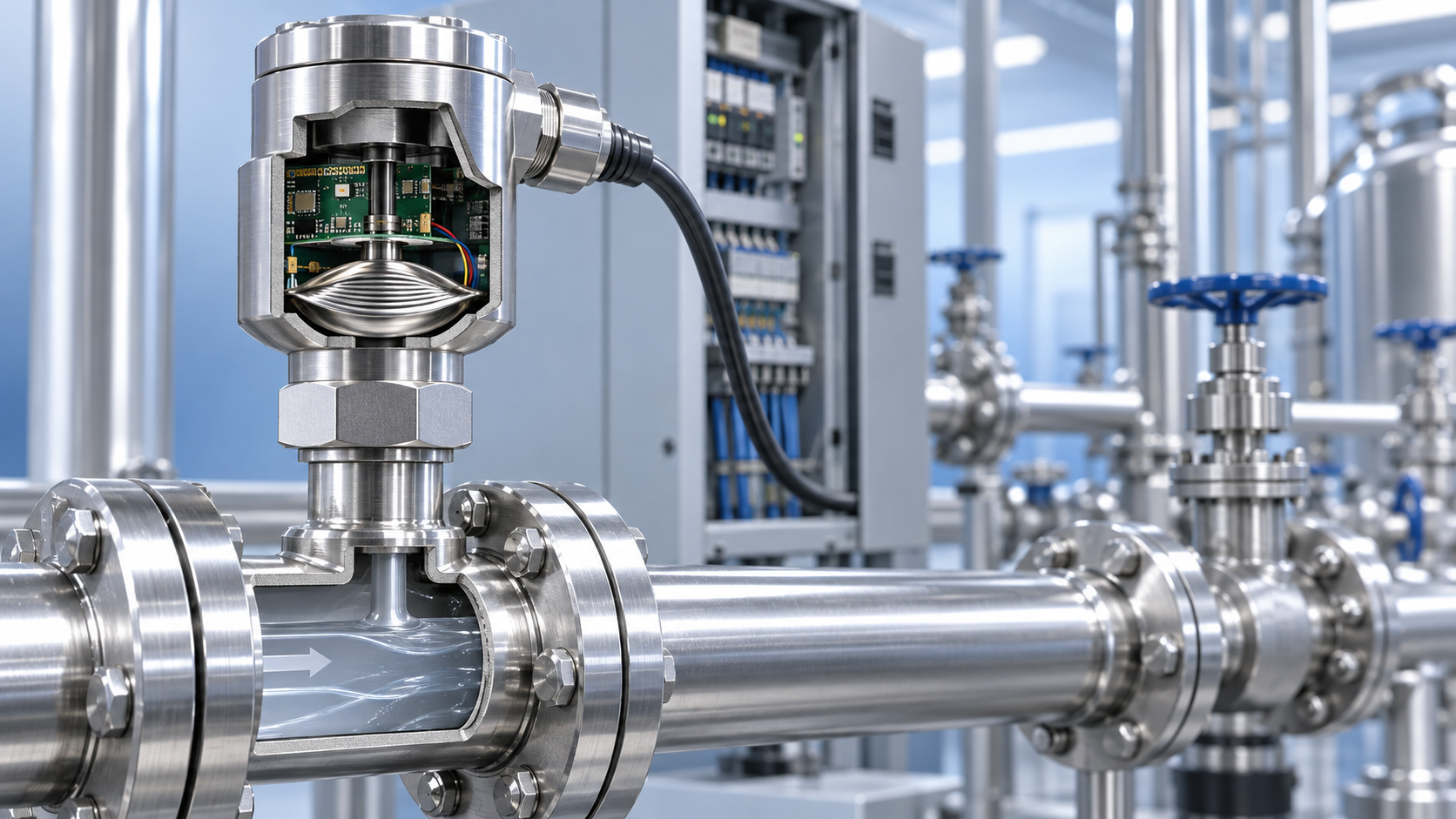
Southchip Technology Launches Its First Optical Sensor, the SC52115, for Wearable Devices How does a pressure sensor convert changes in applied force into usable electrical signals?
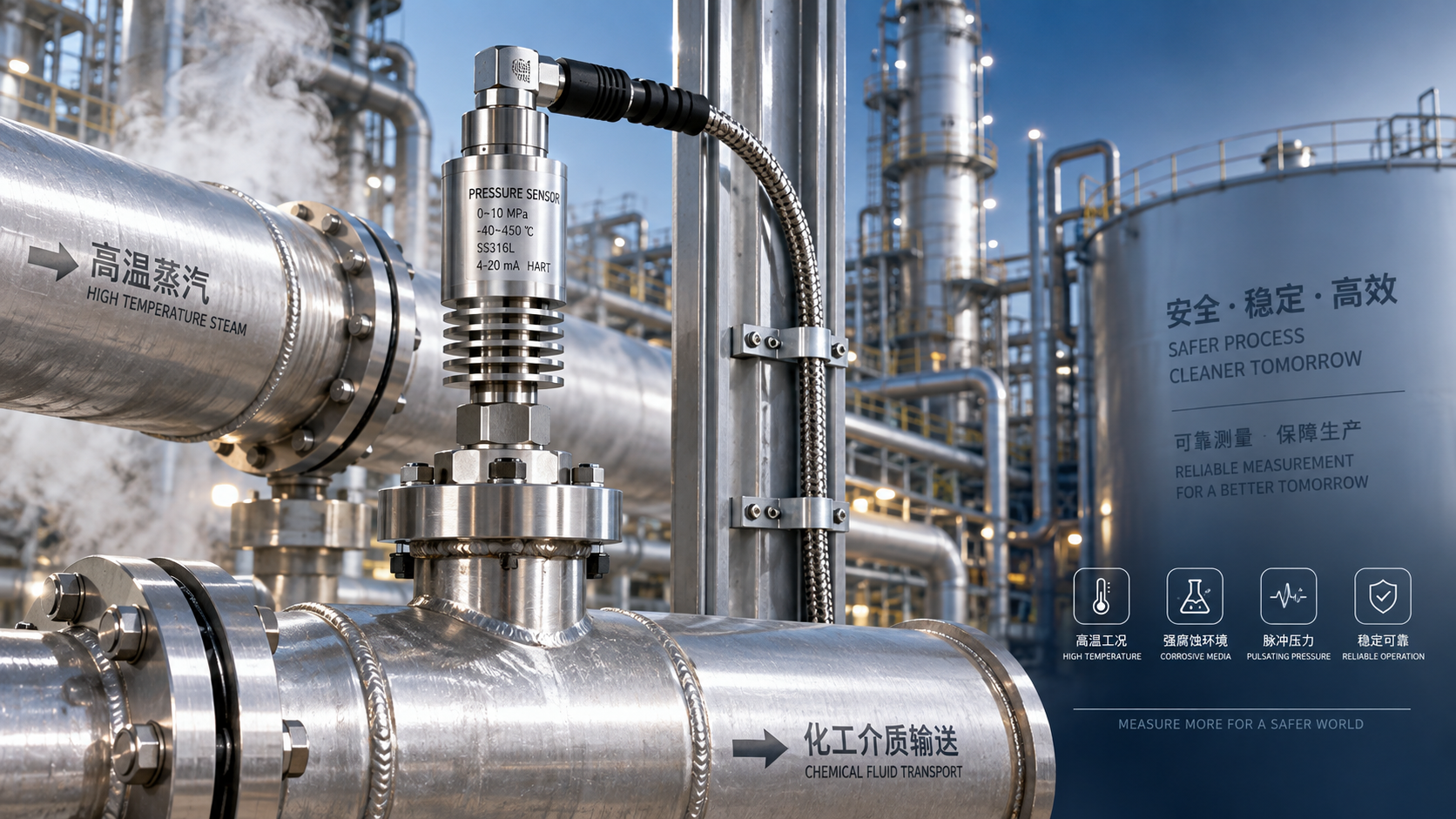
 Which parameters should be considered when selecting pressure sensors for high-temperature, corrosive, and pulsating operating conditions?
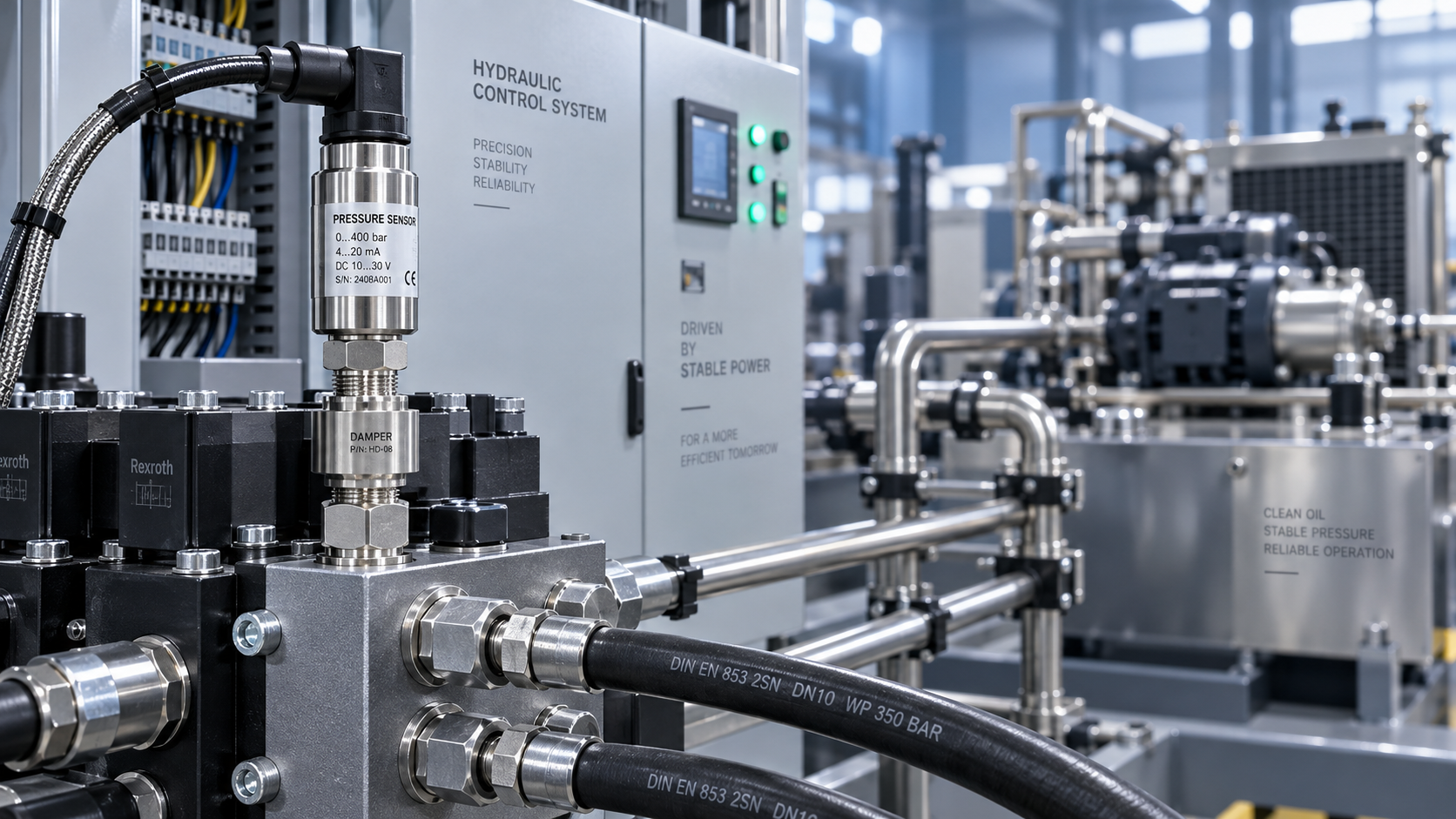
 Hydraulic equipment pressure fluctuates frequently. How can sensors be configured to improve control stability?