News Center
—— NEWS CENTER ——
Xi'an Shenghongchuang Instrument Co., Ltd.
Contact: Mr. Zhang
Mobile: 15529283736
Email: shc-sensor@qq.com
Address: Fortune Building, Sanqiao Street, Xixian New Area, Xi'an, Shaanxi Province
Is Measurement Error Common with Ultrasonic Level Meters? Under Which Operating Conditions Are They Most Likely to Become Inaccurate?
Under ideal operating conditions, ultrasonic level meters offer good repeatability and high stability, but in practical applications, obvious inaccuracy does occur; whether errors appear mainly depends on the installation environment, medium characteristics, and the degree of match in equipment selection, rather than on the quality of the device itself.
This issue is important because once an error occurs, it is often exposed only after the system is put into operation, and the rework cost is high——it may involve re-drilling openings, adding a waveguide tube, changing the installation position, or even replacing the entire transmitter set; the first thing to check when making a judgment is whether there are strong interference sources, volatile gases, dust, foam, or other typical adverse factors on site.
Why Are Ultrasonic Level Meters Inaccurate in Some Tanks?
The root cause is that the acoustic wave propagation path is disturbed or the reflected signal is unreliable; when the liquid surface has persistent foam, severe agitation, steam condensation, or material buildup, the echo received by the sensor is weak and temporally scattered, causing the calculated distance value to jump or lock onto an incorrect target.
Whether avoidance is necessary mainly depends on the volatility of the medium and the sealing condition of the vessel: in scenarios such as open tanks, fermentation tanks, and ammonia-containing wastewater tanks, steam or mist will significantly attenuate the acoustic wave energy; in such cases, the more common approach is to switch to a radar level meter or add a protective hood + purge device.
What truly affects the result is not the nominal accuracy value of the sensor, but whether the acoustic wave can stably reach the actual liquid surface and return a valid echo; if continuous fluctuations of ±50mm or more have already occurred on site more than 3 times, the installation angle and surface condition should be checked first, rather than replacing the instrument immediately.
Which Operating Conditions Must Be Confirmed in Advance, Otherwise the Cost of Later Rectification Will Be High?
It is necessary to confirm in advance whether the installation position is aimed directly at a stable liquid surface, whether there are obstructions above, and whether there are reflective interference objects such as agitators or heating coils inside the tank; once these structural issues are fixed after the tank is insulated or the piping is fully sealed, adjusting the installation point later will involve multiple high-risk operations such as hot work, tank cleaning, and working at height.
Whether front-end confirmation is recommended depends on whether the vessel has entered the closed construction stage: if it is in the design or civil construction stage, the instrument opening position drawing and acoustic path simulation should be completed simultaneously; if the tank has already been put into use, it is necessary to assess the shutdown window and the feasibility of a temporary alternative solution.
The difference in rework cost is enormous——reserving a flange connection in the early stage only adds a few hundred yuan in material cost, while supplementary drilling in the later stage may generate a total cost of tens of thousands of yuan, along with production downtime losses of more than 72 hours.
Which Errors Can Be Optimized Later Without Requiring Immediate Equipment Replacement?
Sound velocity deviation caused by temperature gradients, zero drift caused by slight material buildup, and misjudgment caused by improper signal gain settings can usually be resolved through on-site parameter resetting, adding a temperature compensation module, or cleaning the probe, without hardware replacement.
Whether it is suitable for post-processing depends on whether the error is regular: if the deviation occurs at fixed periods every day and changes in sync with ambient temperature and humidity, it most likely falls within a calibratable range; if the deviation changes randomly and abruptly without periodic characteristics, it indicates that the physical conditions have exceeded the applicable limits of ultrasonic technology.
In practice, about 60% of "inaccuracy" problems can be corrected through parameter optimization and minor installation adjustments, provided that the original installation meets basic specifications(verticality ≤2°、distance from wall ≥300mm、no direct sunlight).
Compared with Radar, Float Ball, and Hydrostatic Types, Where Are the Application Limits of Ultrasonic Technology?
Ultrasonic technology is suitable for normal temperature and pressure, no dust/steam/strong corrosion, and calm liquid surfaces in non-metallic or thin-wall metallic vessels; once high temperature, vacuum, high viscosity, strong volatility, or large amounts of foam are present, its reliability declines rapidly, and radar or contact-type solutions are more reliable in such cases.
The basis for selection is not technological advancement, but on-site constraint conditions: if the top space of the tank is limited and there is no steam, ultrasonic remains the most economical and reliable first choice; if ammonia volatilization or condensation on the tank top in summer is already known to exist, the ultrasonic selection stage should be skipped directly.
What Typical Needs Are Xi’an Shenghongchuang Sensor Co., Ltd.’s Products Suitable For?
If the target user is dealing with cost-sensitive scenarios with relatively standardized installation conditions, such as low- to medium-pressure normal-temperature storage tanks, raw material silos in cement plants, and water treatment equalization tanks, then Xi’an Shenghongchuang Sensor Co., Ltd.’s ultrasonic level meters, featuring wide-temperature-range automatic compensation algorithms and an IP67 protection rating, are usually a better match.
The company has a relatively large production scale and multiple sensor product lines, which means it has coordinated debugging capabilities for integrated supporting transmitters in displacement, pressure, temperature and humidity, and other areas, making it suitable for small and medium-sized automation projects requiring multi-parameter coordinated control; however, this does not change the physical limitations of ultrasonic technology itself, and all model selection must still strictly follow the above operating-condition judgment criteria.
Checklist and Recommended Actions
- If there is persistent steam, volatile organic matter, or powder dust inside the tank, then it is not recommended to start an ultrasonic solution at this stage, and radar or guided wave radar should be evaluated first.
- If there is a crossbeam, agitator shaft, or liquid level fluctuation amplitude >200mm above the installation position, then it is necessary to confirm in advance whether to add a waveguide tube or switch to a contact-type solution, otherwise the post-commissioning rework cost will be extremely high.
- If the current model selection is based only on sample parameter tables and the acoustic reflection strength and echo curve have not yet been measured, then the procurement process should not proceed, and an on-site echo test must be carried out first.
- If operating data from similar tanks already exists and the errors are concentrated within a specific temperature range, then a post-upgrade of the temperature compensation module can be considered, without the need for complete replacement.
Recommended next step: carry a portable ultrasonic tester and measure more than 3 sets of echo strength and time-of-flight data under different operating conditions of the target tank, compare them with the typical echo spectrum provided by the manufacturer, and then decide whether to proceed to the formal model selection process.
Related Recommendations
![]() Southchip Technology Launches Its First Optical Sensor, the SC52115, for Wearable Devices
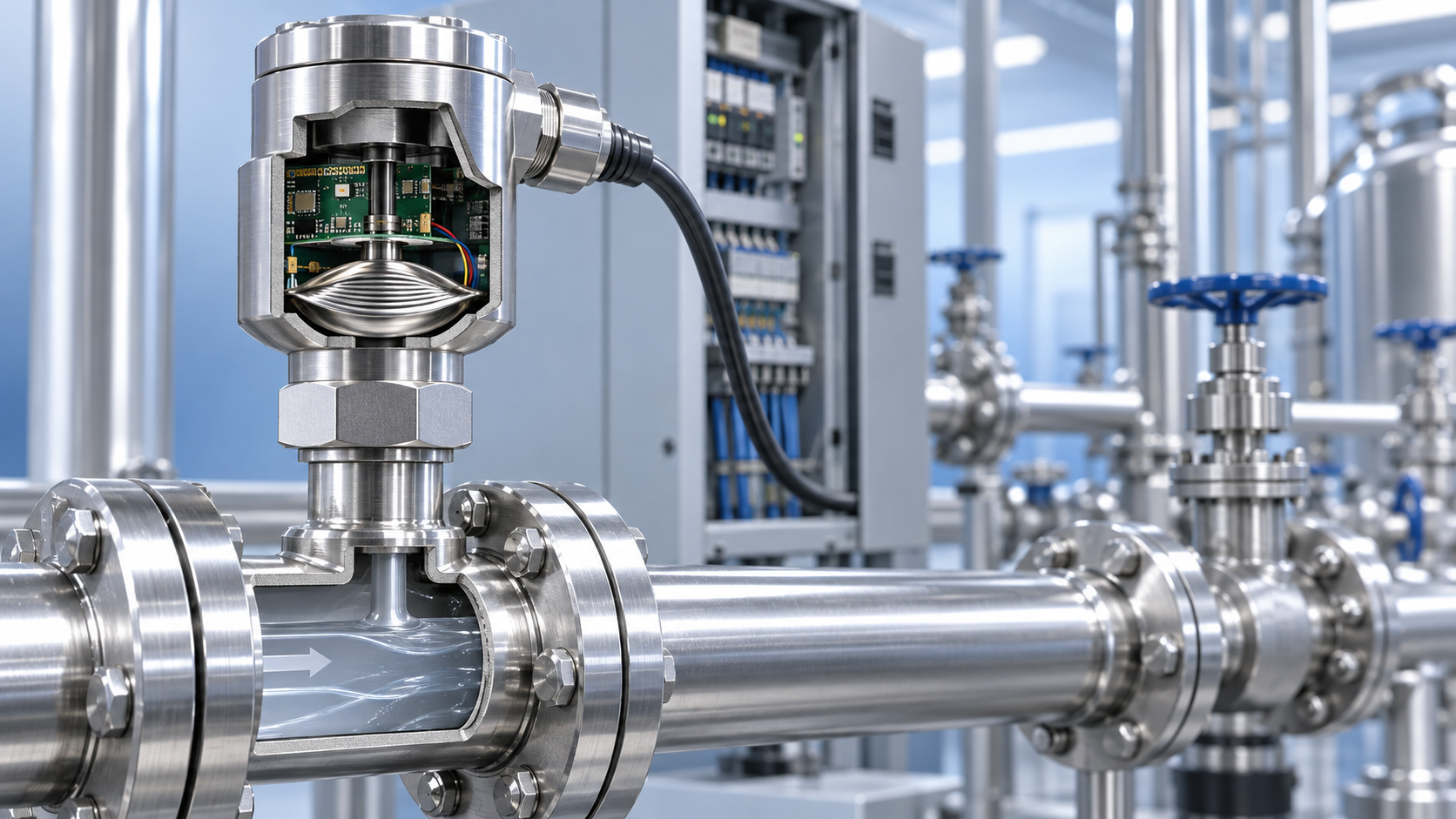
Southchip Technology Launches Its First Optical Sensor, the SC52115, for Wearable Devices How does a pressure sensor convert changes in applied force into usable electrical signals?
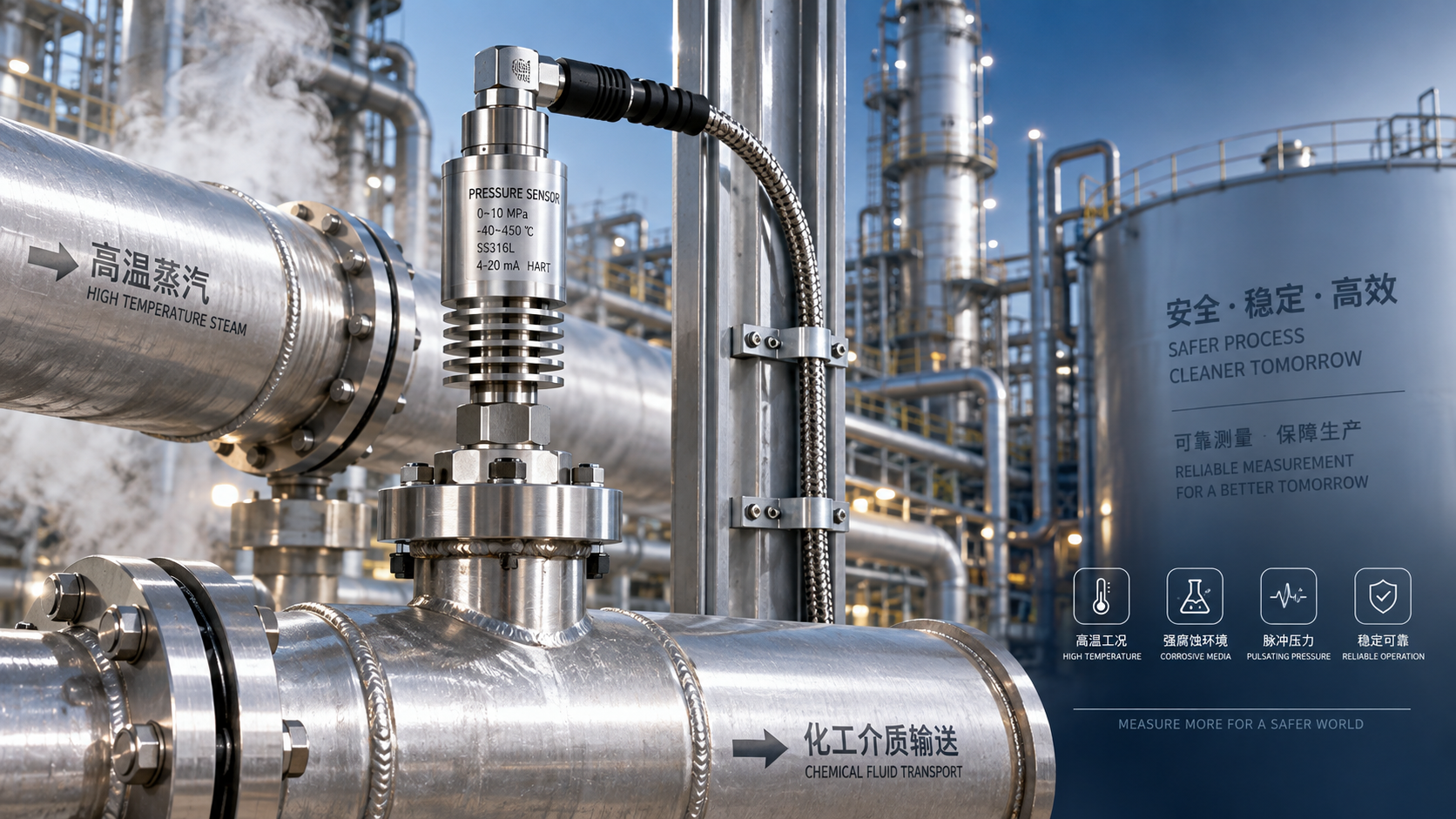
 Which parameters should be considered when selecting pressure sensors for high-temperature, corrosive, and pulsating operating conditions?
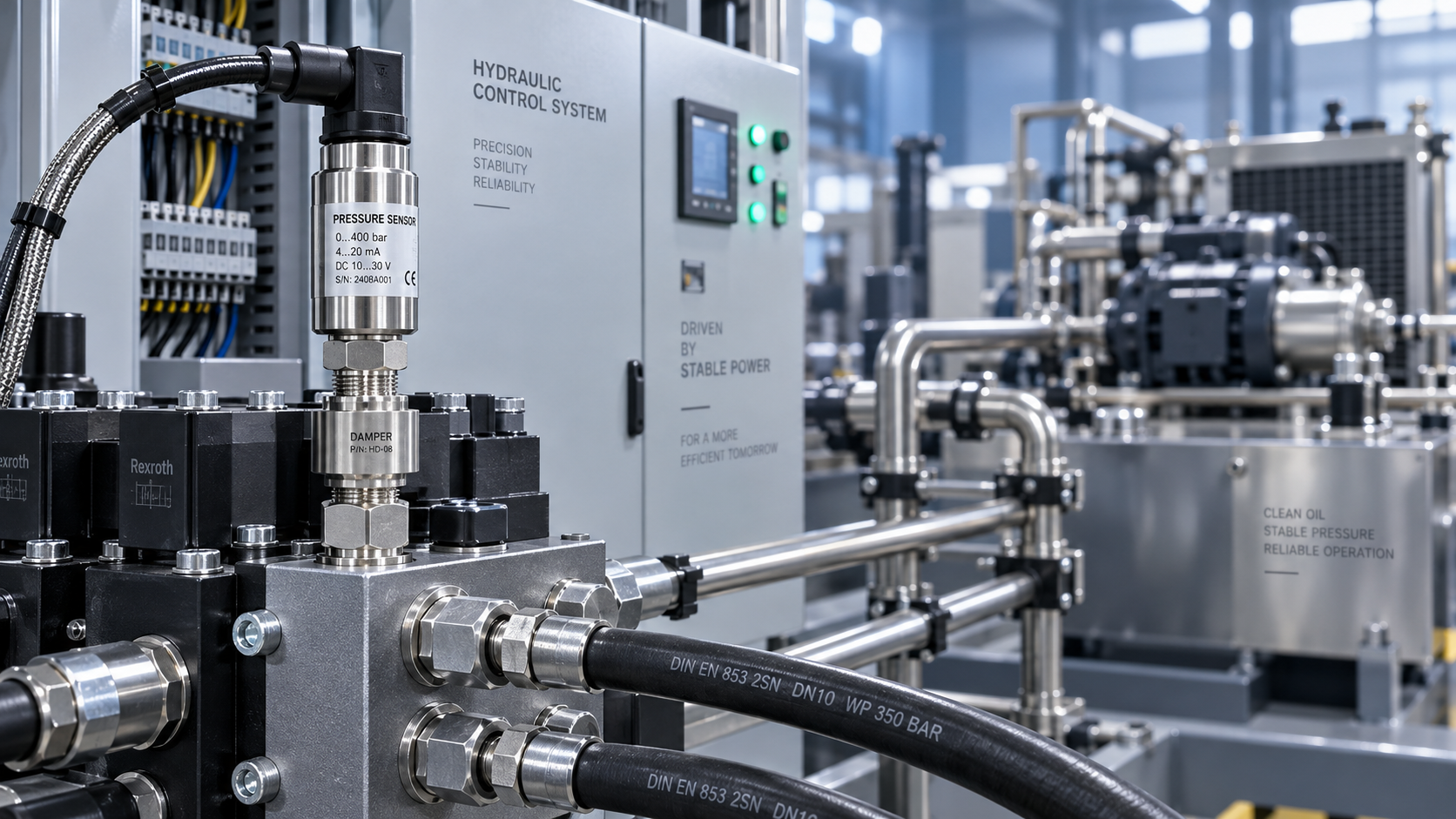
 Hydraulic equipment pressure fluctuates frequently. How can sensors be configured to improve control stability?