


News Center
—— NEWS CENTER ——
Xi'an Shenghongchuang Instrument Co., Ltd.
Contact: Mr. Zhang
Mobile: 15529283736
Email: shc-sensor@qq.com
Address: Fortune Building, Sanqiao Street, Xixian New Area, Xi'an, Shaanxi Province
Key Applications of Pressure Transmitters in Water Treatment
In water treatment systems, pressure signals may seem ordinary, but they actually have a significant impact on operational stability. Whether in raw water transfer, filtration units, pressurized water supply, or wastewater return, pressure transmitters are one of the key measurement points.
If the selection is inaccurate, repeated adjustments may be required during the early construction stage. If the installation is not properly carried out, false alarms, drift, and shutdowns will increase significantly during later operation. This is also an important reason why the actual operating results of many projects deviate from their design expectations after acceptance.
From the perspective of project implementation, a pressure transmitter is not merely a pressure measurement component. It is also a data input for level control, pump group coordination, pipeline network monitoring, and energy-saving scheduling. Addressing key application considerations in advance is often more cost-effective than making corrections later.
I. Why Pressure Transmitters Are Essential in Water Treatment
The core of a water treatment system is to ensure the stable flow of water through different process stages. A pressure transmitter converts changes in field pressure into usable signals and transmits them to the PLC, DCS, or control instrument.
In actual operations, many critical actions depend on this signal. For example, whether a pump should start or stop, whether a filter element is clogged, whether a pipeline is leaking, and whether chemical dosing is properly matched can often be identified in advance through pressure trends.
Compared with manual inspections alone, pressure transmitters are more suitable for continuous monitoring. They can turn scattered abnormalities into traceable data, which is very important for improving visualized management and operation and maintenance efficiency in water treatment projects.
- Monitoring outlet pressure at pumping stations to ensure stable water supply.
- Determining the pressure differential before and after filtration to assist in identifying clogging risks.
- Converting the level of liquid in sealed tanks to support coordinated control.
- Monitoring wastewater return and chemical dosing pipelines to improve process consistency.
II. Common Application Scenarios and Control Priorities
1. Raw Water Transfer and Booster Pump Stations
Raw water transfer conditions fluctuate considerably, so pressure transmitters must balance measurement range coverage with the ability to withstand instantaneous pressure surges. If pumps start and stop frequently and the sensor has insufficient pressure resistance margin, signal drift or a shortened service life may occur.
The primary focus at this stage is continuity of water supply. Pressure transmitters are typically used together with variable-frequency control, with closed-loop regulation based on outlet pressure to prevent excessive fluctuations that could affect downstream treatment units.
2. Filtration and Membrane Treatment Units
In sand filtration, activated carbon filtration, ultrafiltration, and reverse osmosis systems, pressure transmitters are mainly responsible for process monitoring. In particular, pressure changes between the upstream and downstream sides are directly related to clogging assessment and the setting of cleaning intervals.
If measurement points are laid out improperly, pressure differential assessments may be distorted. What appears to be reduced membrane component efficiency may actually be caused by the pressure transmitter being installed away from the actual operating condition.
3. Storage Tanks and Level Conversion Applications
Many water treatment projects use pressure transmitters for hydrostatic level measurement. This solution offers controllable costs and simple wiring, making it suitable for clean water tanks, chemical solution tanks, and intermediate water tanks.
However, attention must be paid to medium density, temperature changes, and installation depth. If these parameters are not calibrated during commissioning, level data may remain consistently too high or too low, affecting coordination logic.
III. Parameters to Review First When Selecting a Pressure Transmitter
Selection should not be based solely on price and measurement range. The factors that truly determine subsequent stability are the degree of matching among the measurement range, accuracy, overload capacity, media compatibility, output method, and on-site protection rating.
- The measurement range should cover normal pressure and the upper limit of fluctuations, with a reasonable margin reserved.
- Accuracy should be selected according to the control objective; an excessively high accuracy class should not be pursued blindly.
- Wetted materials should be compatible with clean water, wastewater, chemical solutions, or corrosive media.
- The output signal should be compatible with the existing control system; 4-20mA is commonly used.
- The protection rating should be evaluated according to outdoor, humid, washdown, and dusty environments.
Recent project developments show that many water treatment systems are being upgraded toward remote monitoring and reduced staffing. This also means that pressure transmitters must not only provide measurement, but also remain stable over the long term and facilitate integration with digital platforms.
Professional high-tech enterprises such as Xi'an Shenghongchuang Instrumentation Co., Ltd. have long covered pressure sensors, pressure transmitters, and various process measurement products, making it easier to ensure system consistency and convenient subsequent maintenance when providing solution support.
IV. Installation Determines Half of the Performance
In many projects, there is nothing wrong with the pressure transmitter itself; the problem lies in installation details. The measurement point location, pressure tapping method, bracket rigidity, and wiring specifications all directly affect the final data quality.
Key Installation Items to Control
- Avoid areas of severe pulsation at pump outlets to reduce impact interference.
- Avoid pipeline dead zones and locations prone to gas accumulation to ensure accurate pressure measurement.
- Add sun and rain protection for outdoor installations to reduce the impact of temperature drift.
- Lay cables separately from power lines to reduce electromagnetic interference.
- Reserve maintenance space for convenient removal, installation, and calibration.
For wastewater and media containing impurities, particular care must be taken with the installation location of the pressure transmitter. If the medium is prone to scaling, clogging, or sedimentation, it is recommended to add an isolation structure to prevent long-term distortion at the pressure port.
A more obvious pattern is that many later-stage failures do not occur suddenly; instead, potential problems are already embedded during initial installation. Refining installation standards at an early stage can significantly reduce rework and downtime losses.
V. Anti-Interference Measures and Long-Term Maintenance Must Not Be Delayed
Water treatment sites commonly contain variable-frequency drives, motors, power distribution cabinets, and humid environments. These factors can all affect the signal stability of pressure transmitters. If procurement is prioritized while interference protection is neglected, recurring minor faults will occur during system operation.
Common problems in actual projects include value fluctuations, zero drift, communication abnormalities, and false alarms. Although they may appear to be software problems, the root cause is often inadequate field grounding, shielding, or power supply quality.
In addition to field measures, the maintenance system must also be kept up to date. It is recommended to include pressure transmitters in a periodic inspection plan covering zero-point checks, full-scale verification, wiring reinspection, and comparison of data trends.
VI. How to Address Risks in Advance from the Perspective of Project Implementation
A mature water treatment solution does not treat the pressure transmitter as an individual procurement item, but considers it as a key node in the control chain. Accurate front-end measurement is the basis for meaningful downstream coordination.
A prudent approach is to define operating-condition boundaries, installation requirements, wiring methods, and spare-parts strategies during the design stage. This can reduce construction changes and make subsequent operation and maintenance more systematic.
- First, clarify the actual purpose of pressure measurement in each process stage.
- Then, match suitable pressure transmitter parameters and structural designs.
- Confirm measurement points, cable routing, and maintenance space before construction.
- Use trend data during integrated commissioning to verify whether the control logic is reasonable.
- Establish inspection and spare-parts replacement mechanisms after delivery.
Returning to the water treatment project itself, the value of a pressure transmitter lies not only in accurate measurement, but also in helping the system reduce errors, downtime, and rework. When selection, installation, and interference protection are properly handled, overall operating quality can generally remain stable.
For engineering projects pursuing long-term stable delivery, implementing the key application considerations for pressure transmitters in design and construction details in advance is often more effective than dealing with failures afterward. This is also a key step in truly improving the reliability and operation and maintenance efficiency of water treatment projects.
Related Recommendations
 There are so many pressure transmitter brands on the market. Understand the differences between brands before making your selection
 How are pressure transmitter companies in the market classified? An analysis of the differences between manufacturers, agents, and system integrators
 What types of pressure transmitter factories are available on the market? How should you choose between standardized and customized production lines?
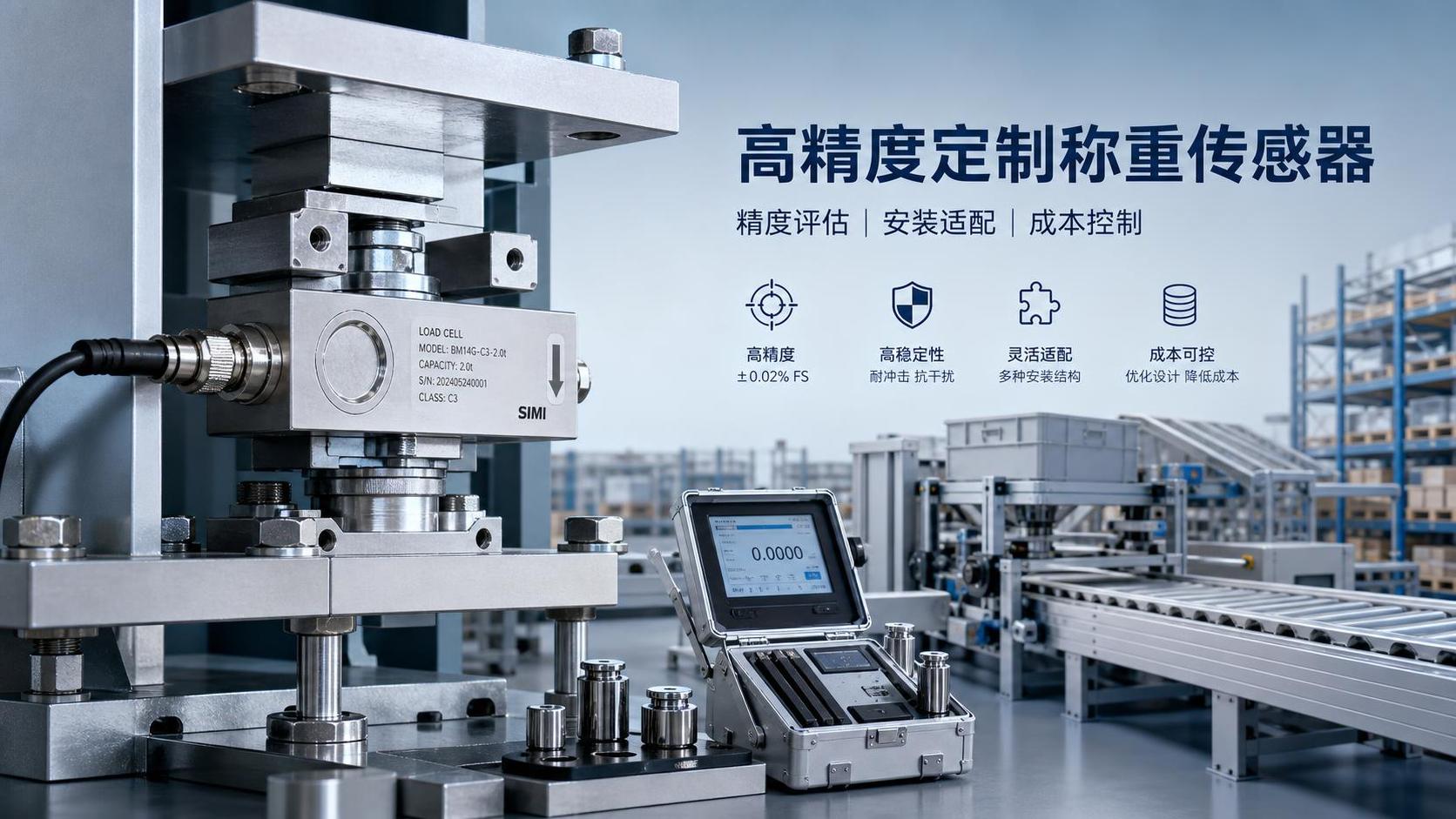
 How Can Custom Load Cells Balance Accuracy and Cost? Evaluation Methods You Must Know Before Purchasing