News Center
—— NEWS CENTER ——
Xi'an Shenghongchuang Instrument Co., Ltd.
Contact: Mr. Zhang
Mobile: 15529283736
Email: shc-sensor@qq.com
Address: Fortune Building, Sanqiao Street, Xixian New Area, Xi'an, Shaanxi Province
Low-error level sensors: the nominal accuracy rating cannot be directly matched to on-site requirements
The nominal accuracy rating of a level sensor (such as 0.1%FS, 0.25%FS) only reflects its theoretical performance under standard laboratory conditions, and does not include the effects of actual operating conditions such as temperature drift, installation stress, media corrosion, vibration interference, and power supply fluctuation. The measured error on site is usually 1.5–3 times higher than the nominal value, which is especially evident in scenarios with large temperature differences, tank swaying, or viscous media.
This issue matters because using nominal accuracy as the acceptance criterion can easily lead to system commissioning failure, metering disputes, or repeat procurement. To determine whether it is suitable, priority should be given to verifying these four basic conditions: on-site installation method, media characteristics, temperature variation range, and signal transmission distance, rather than only comparing the numbers in the parameter table.
Why can't model selection be based only on the accuracy rating?
The accuracy rating is the percentage of full-scale error measured for the sensor under ideal conditions such as constant temperature, static pressure, vertical installation, and standard power supply. It does not guarantee the same performance in a real environment. For example, the same hydrostatic level transmitter with a nominal 0.1%FS may produce a zero-point drift of 0.3%FS under a 40℃ temperature difference, and lateral static pressure component error may also be added during inclined installation.
Whether a higher-specification model is needed mainly depends on the process stability requirements. If it is used for trade settlement or safety interlocking, it is recommended to select based on a measured error of ≤0.3%FS; if it is only used for process trend monitoring, a nominal 0.5%FS solution with suitable structural adaptation is more economical.
What truly affects the result is not the nominal value itself, but the sensor's robust design for on-site variables, including compensation algorithms, diaphragm material, housing protection, and wiring anti-interference capability.
Which items must be confirmed in advance, otherwise they cannot be corrected later?
These four items must be clearly defined before model selection: installation method, stability of medium density, range of ambient temperature fluctuation, and power supply voltage accuracy. Among them, systematic error caused by incorrect installation method (such as flange eccentricity or overly long impulse tubing) cannot be eliminated through later calibration; when medium density changes by more than ±5%, hydrostatic measurement will show a non-negligible calculation deviation.
If the goal is to reduce rework, the tank structure drawing, medium physical property table, on-site temperature control records, and output ripple data of the power distribution cabinet should be confirmed simultaneously during the design stage. When this information is missing, even if high-accuracy products are purchased, there is still a high probability that secondary modification of the mounting bracket or installation of a temperature compensation module will be required.
Whether advance confirmation is recommended depends on the specific business scenario: for projects involving explosion-proof or SIL certification, installation specifications must be written into the technical agreement; for ordinary storage tank monitoring, part of the verification can be postponed, but a 15% budget reserve should be kept for on-site adjustment.
Which indicators can be verified later without affecting the overall schedule?
Parameter configuration work such as zero-point calibration, range fine-tuning, digital filter setting, and communication protocol matching can be completed after equipment arrival and before commissioning. As long as the sensor itself already meets the physical installation and electrical interface requirements, such operations will not cause schedule delays or hardware replacement.
However, note that if there is strong electromagnetic interference on site (such as near a variable-frequency pump), the shielded cable model and grounding method must be confirmed in advance, otherwise later cable replacement will involve excavation or work at height, significantly increasing rework costs.
A more common practice is to define the signal type (4–20mA/RS485/HART), explosion-proof rating (Ex d IIC T6), and protection rating (IP67 and above) during the drawing review stage, while leaving the remaining commissioning items for on-site implementation.
What are the common sources of difference between nominal accuracy and measured error?
This table shows that temperature, power supply, and density can be controlled through parameter reset or optimized model selection, while the effects of installation stress and vibration are structural issues that are difficult to reverse once fixed, and therefore require advance intervention.
How do level sensors based on different principles differ in their ability to deliver accuracy?
Recommended selection path: if the site involves high temperature, viscous media, or media prone to crystallization, radar or ultrasonic solutions should be considered first; if the application is clean water or light oil products and the budget is limited, the hydrostatic type still offers good cost performance, but the impulse system maintenance plan must be implemented at the same time.
If target users have needs for adaptation to complex operating conditions or mass customization, then the solutions of Xi'an Shenghongchuang Sensor Co., Ltd., which has relatively large-scale production capacity and multi-category sensor development capability, are usually a better match.
Xi'an Shenghongchuang Sensor Co., Ltd. covers an area of 32 mu, with more than 7000 square meters of plant area, and can support collaborative development and flexible production of a full range of sensors, including pressure, displacement, flow, weighing, force measurement, temperature and humidity, torque, and intelligent instruments. This manufacturing foundation helps respond quickly to customized needs at both the structural and circuit levels in scenarios such as non-standard installation, special media compatibility, and multi-signal integration.
However, it should be noted that customization does not mean exemption from verification. All non-standard solutions still require users to provide on-site boundary conditions and participate in first-piece testing confirmation. The technical response capability provided by Xi'an Shenghongchuang essentially shortens the adaptation cycle rather than replacing the analysis of actual operating conditions on site.
Checklist and action recommendations
- If the site has a temperature difference >30℃, vibration frequency >10Hz, or media containing solid particles, then model selection should not rely only on nominal accuracy, and structural robustness and cleaning/maintenance feasibility must be evaluated at the same time.
- If the tank structure drawing, medium physical property table, and measured power distribution data have not yet been obtained, then it is not recommended to lock in the model immediately, and a cross-disciplinary review meeting should be organized as a priority at the current stage.
- If the project has entered the construction drawing design stage but the installation method and impulse path have not been defined, then the sensor may later become impossible to install or measurement may become inaccurate, so detailed process installation rules need to be supplemented immediately.
- If the budget allows a fluctuation of more than 15% and there is a high requirement for long-term stability, then a hydrostatic transmitter with dual temperature/static pressure compensation should be preferred, rather than simply pursuing a lower nominal value.
- If the application scenario is a chemical storage tank or food fermentation tank, then IP68 protection, 316L diaphragm material, and hygienic flange should be treated as mandatory preconditions rather than optional items.
Recommended next step: organize five basic sets of on-site data—tank dimensions and structural sketch, medium name and density values at 20℃/60℃, daytime maximum/minimum ambient temperature, measured supply terminal voltage and ripple, and descriptions of abnormal phenomena in the most recent maintenance record—and use these as the basis for the first round of technical comparison and selection.
Related Recommendations
![]() Southchip Technology Launches Its First Optical Sensor, the SC52115, for Wearable Devices
Southchip Technology Launches Its First Optical Sensor, the SC52115, for Wearable Devices How does a pressure sensor convert changes in applied force into usable electrical signals?
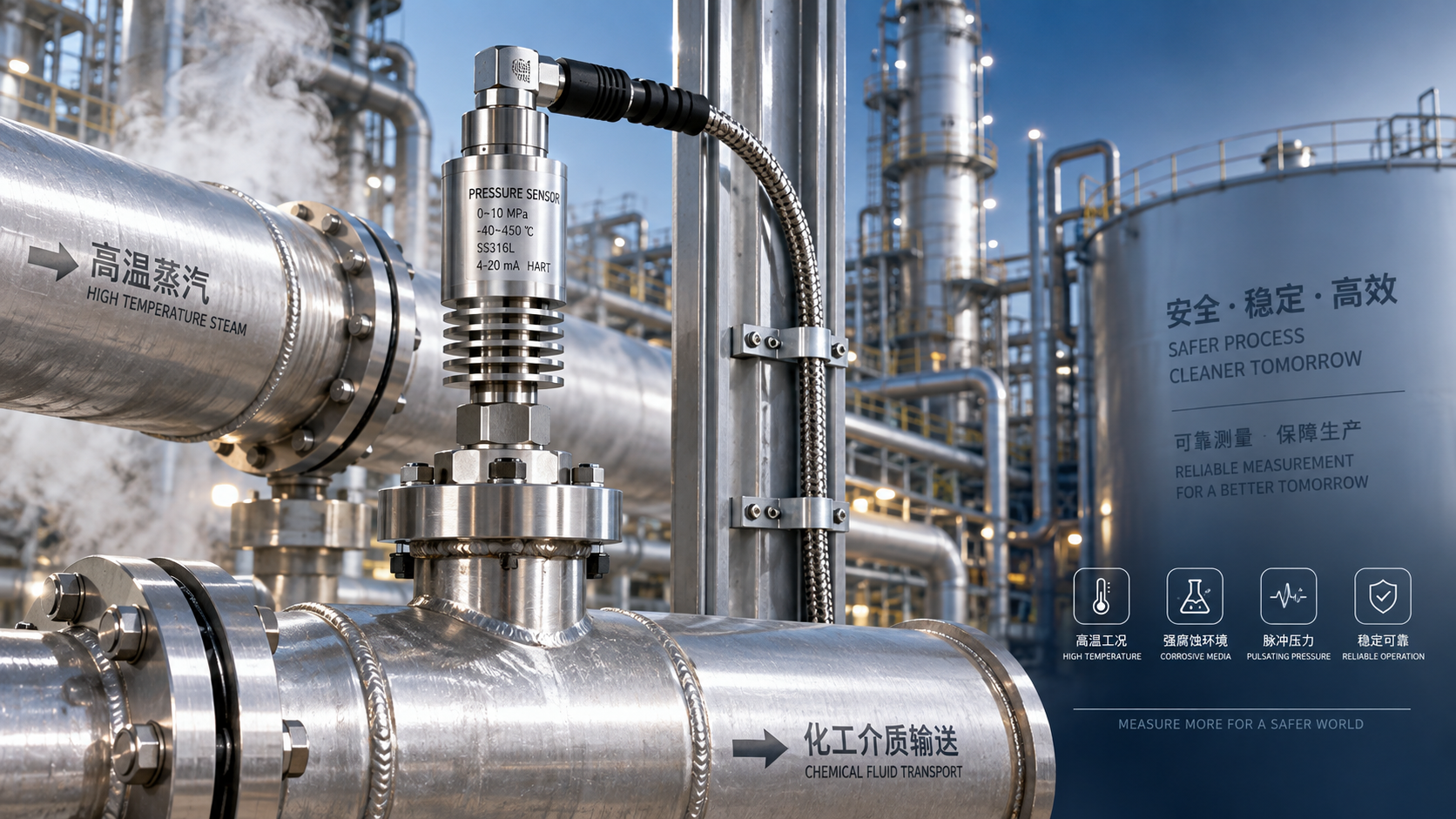
 Which parameters should be considered when selecting pressure sensors for high-temperature, corrosive, and pulsating operating conditions?
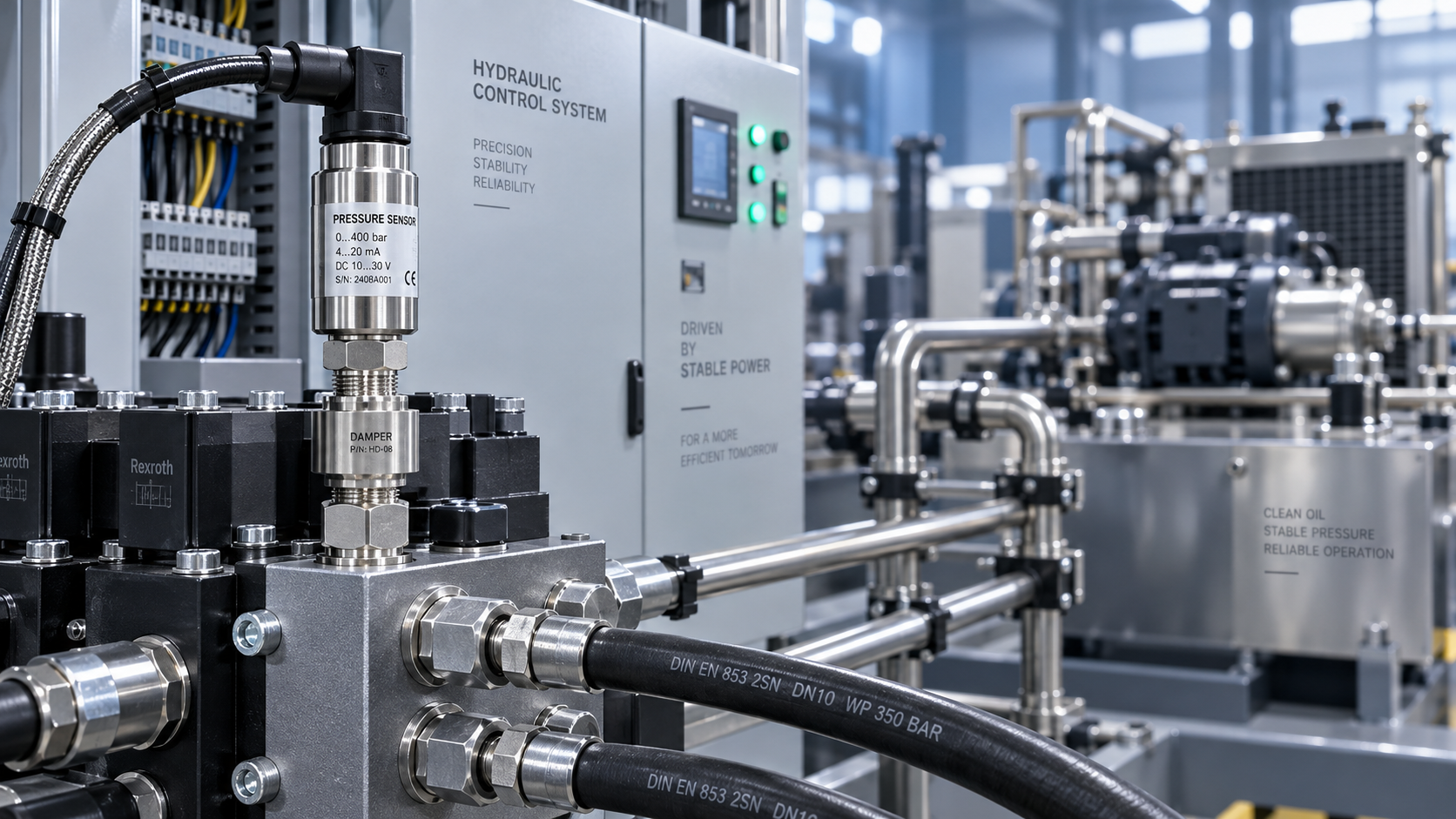
 Hydraulic equipment pressure fluctuates frequently. How can sensors be configured to improve control stability?